
Note:I posted this piece on my original blog (no longer in service) in 2011. Below it, I have added an update.
 Yizkor. It’s the part of the Yom Kippur service where all the young people hang out in the hallway. While growing up, most young Jews were told one of two things about why they were in the hallway: a) this part of the service is very solemn, so the young people are asked to leave so they don’t disrupt and/or b) it’s bad luck to be in Yizkor until you have to be. It’s an ayin hara (and evil eye) on your loved ones.
It wasn’t until my mid-teens that I even learned that Yizkor happens four times a year. Yom Kippur was the instance I knew about, but there is actually a custom ofYizkor also being recited on the three pilgrimage festivals: Sukkot, Pesach, Shavuot(the Sukkot one corresponds to the chagim of Shemini Atzeret/Simhat Torah, depending on your observance). I am no longer in the hallway for Yizkor. My father passed away on October 16, 2009. Last year, Pesach Yizkor was my first experience. It was so overwhelmingly painful. When you lose a loved one, people say, “It gets easier.”
This week was my fifth Yizkor service, and the truth is, it hasn’t gotten any easier. The tears still flowed freely, and my heart ached with the sheer reality that I had a reason to be there.When I looked around, I realized I was one of the youngest, if not the youngest, in the room (other than the rabbi himself). At 37 years old, I kept saying to myself, “I am too young to be here. It’s not fair. I still want to be in the hallway.”
(note: not sure why the paragraph coding isn’t working up here ^^)
Still Remembering (an Update)
At some point after I wrote this in 2011, I walked out of Yom Kippur services. Maybe it was that year, maybe the following year. I could not listen to “Who Shall Live? Who Shall Die? May you be sealed in the book of life… blah blah” not one more time. My father had passed away too close to Yom Kippur and the significance of the liturgy dug into me. That was it – so from that day on, I haven’t stepped foot in Rosh Hashanah nor Yom Kippur worship services (and honestly not many synagogue Yizkor services at all).
And as if him dying during Tishrei wasn’t painful enough, my mom passed away hours after Neilah (Oct 6, 2023) one year ago. Seriously Tishrei? It’s like because she was too sick on Rosh Hashanah and during the Ten Days that meant it was sealed right then and there that she had to go? Nope. (I even hate seeing and hearing any reference to being “Sealed in the Book of Life” knowing that would mean they were both sealed in the book of death right before their passing.) So here I am, self-titled “Professional Jew” rejecting the holiest holy days, the liturgy and the overall concept we’ve been handed.
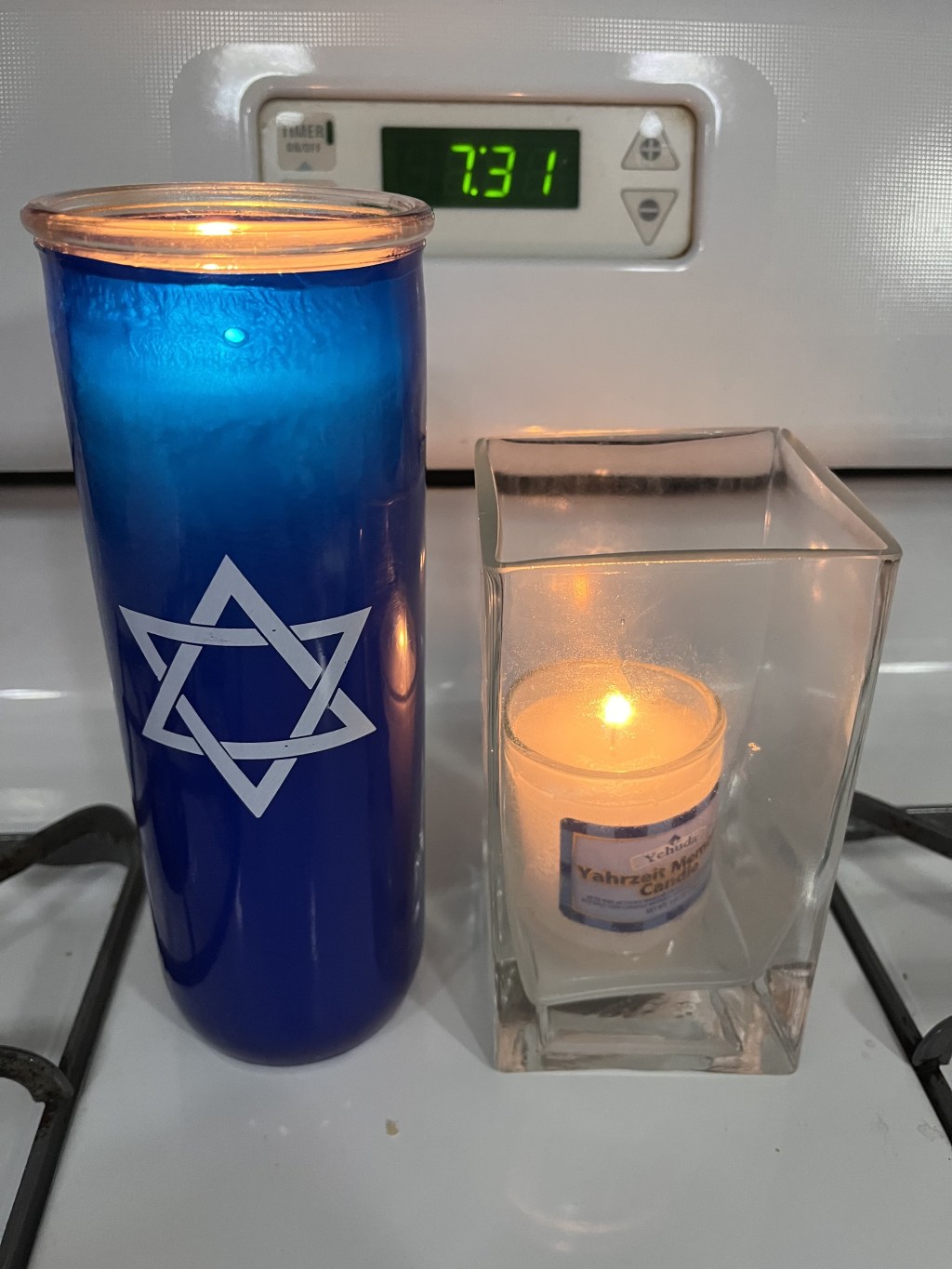
So tonight as I light two Yizkor candles (one for each parent), and tomorrow night I will use one of those to light another for my mom’s first yahrtzeit – a full 48 hours of Yizkor every year for the rest of my life- I recognize that I can both fully reject the inherited liturgy of this time of year, while still honoring all that my parents have gifted me throughout their physical and soul-ful/emotional presence in my life. It’s not zero sum. I can honor their memory – so many memories of precious time spent together – and I can reject Judaism’s framework for living and dying in the year ahead.
Thinking back on what I wrote in 2011, a full 12 years later (my dad’s English Yahrzeit is October 16), I can answer myself: I sometimes do forget the sound of his voice (but not the sound of his laughter). The painful memories of the week of his dying are as if they happened yesterday and I try not to dwell on those imagines in my mind’s eye. And I see him every day in the world around me, in my now-grown nephews (who were 3 and 5 when he passed), and especially in my commitment to them (dad was a family man in his core). And I do feel the unfairness of it all – even moreso now with the loss of my mom – making me an “orphan” before I was 50.
But, when I reflect on how I currently honor her (them) it is in being authentic and transparent. It’s in creating my own rituals of meaning. It’s in fiercely living MY life.
 JewishGPS
Leave a comment