
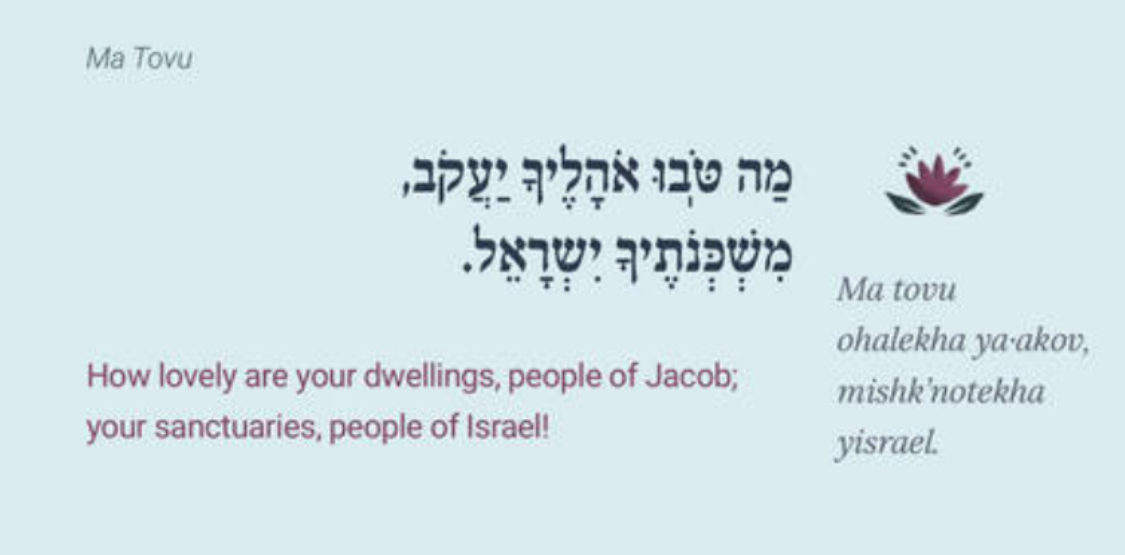
Ohalechka is often translated into “Tents” and Yaacov/Jacob’s other name was Yisrael. Jews are known as B’nai Yisrael – meaning the descendants of Jacob and
inheritors of his covenant with God (which includes the Holy Land).
A sanctuary is known as a place of holiness. The words uttered in them are sacred. Judaism extends that sacredness to all words, no matter where spoken, even those that are in disagreement. As someone who has conducted learning and dialogue about contentious topics for years, I always start by teaching the concept of Eilu v’Eilu … that “these and these” (ideas in conflict) are still all holy. I also always set the standard for what is outside the tent of holy words and ideas.
When it comes to talking about Israel or exploring concepts related to conflicts Israel is embroiled in, my tent is super wide and open for a lot of holy disagreement, but there are still basic ill -conceived concepts that fall outside of what I can deem holy and as acceptable dissent. This graphic displays some of the most polarizing ones:
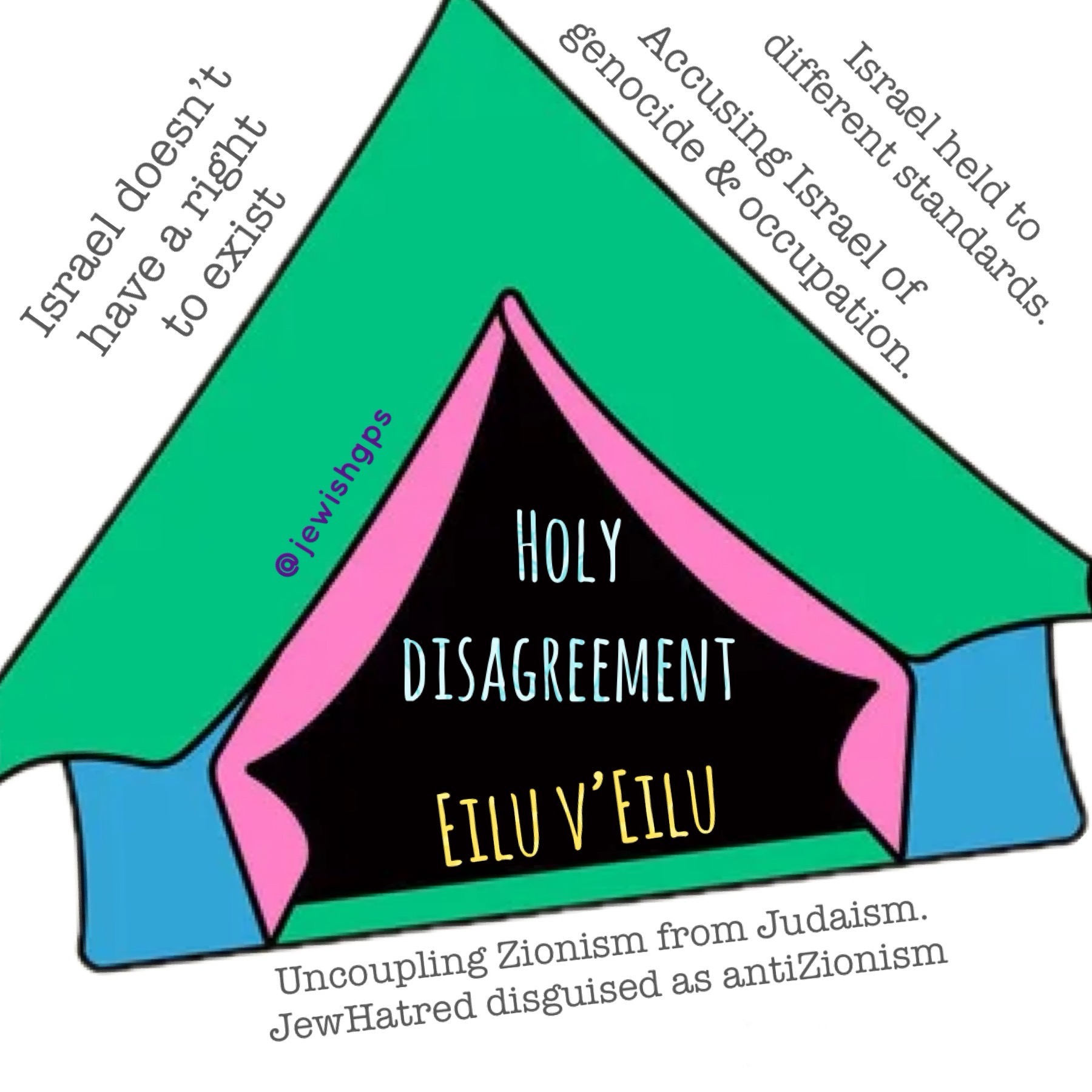
In order for me to be in conversation – there is a level of emotional safety and respect that must exist as a baseline. However, when these unholy words and concepts are uttered or inferred, I automatically don’t feel completely safe and if I continue to engage, I do so with hesitation and trepidation.
When I shared this with a few of my dear Muslim friends, they challenged me to consider that this is very one-sided and asked me what is outside the tent as it relates to Muslims and “Palestine” within the same holy debate. As a result, I have created this new graphic which illustrates statements I have heard but that I shut down and also refuse further engagement with those who insist on these unholy assertions:
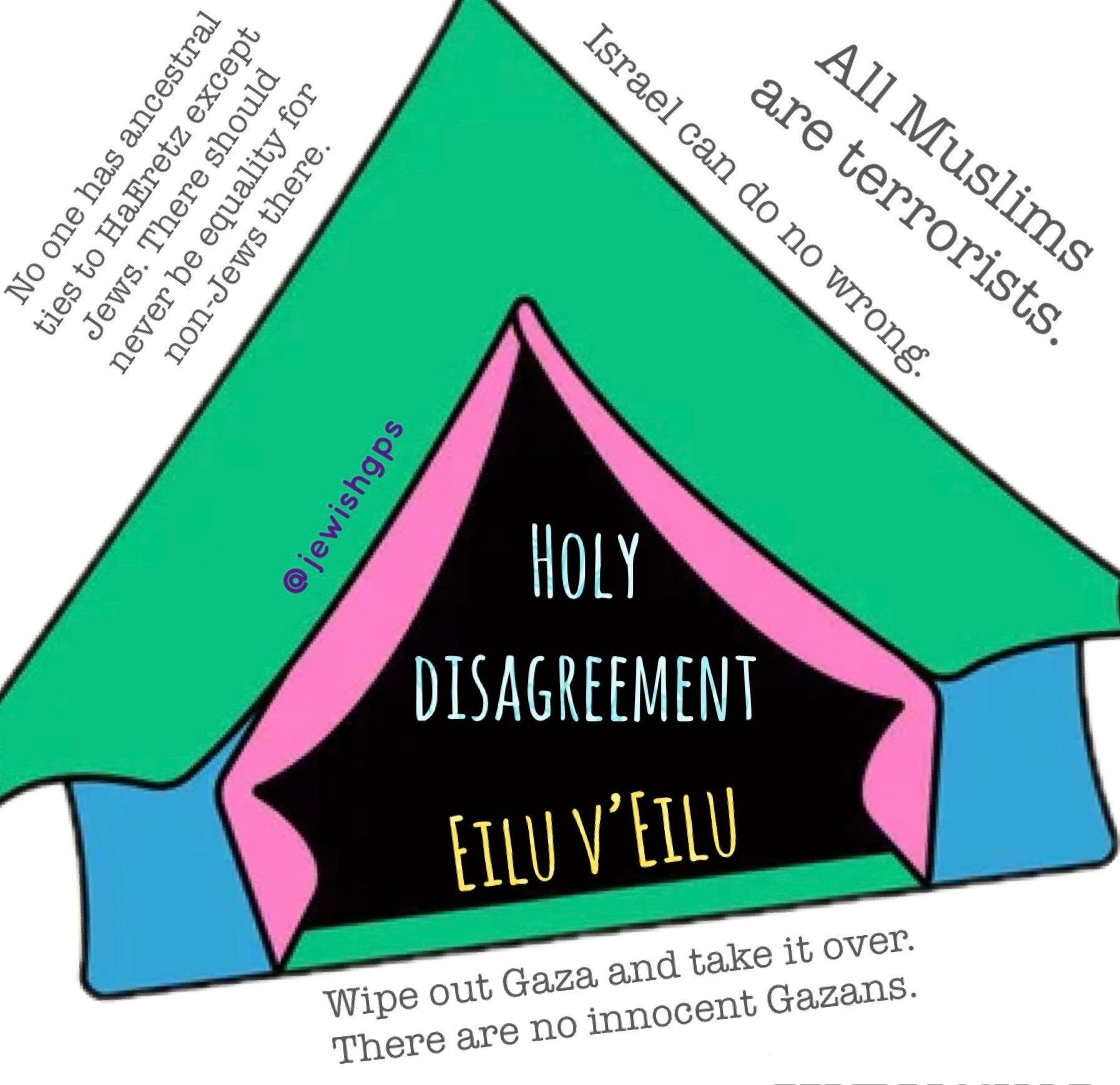
I know that the tent is different for each person and I implore people to figure out what unholy words or ideas you won’t tolerate – about Israel and the Palestinian people, or about any other complicated situation and then set those boundaries very clearly.
There is a lot of room inside the tent for hard dialogue and challenging assumptions and pushing comfort. Let’s be sure we stay in that space, and not step out into the unholy space outside the tent.
 JewishGPS
Leave a comment