
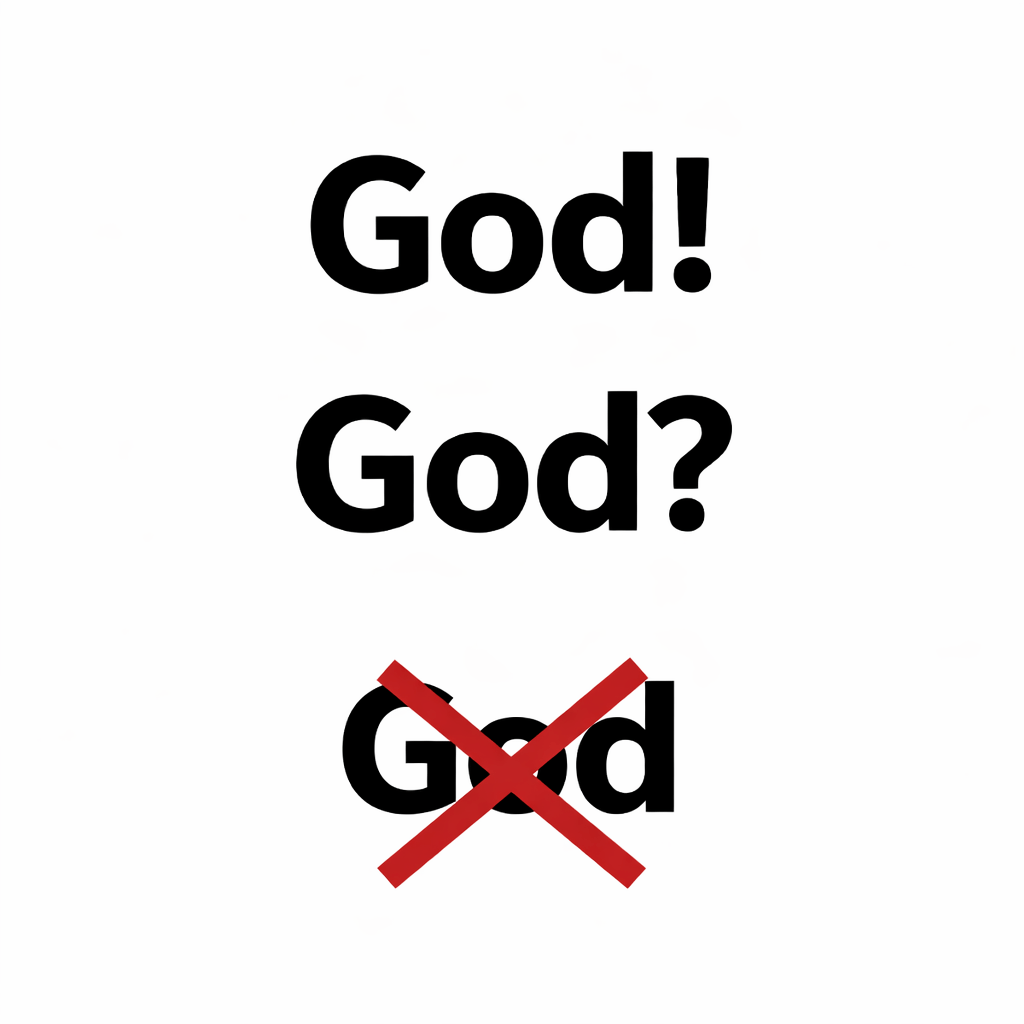
[Writer’s Note: Despite interfaith theoretical debates, I do not believe that all folks pray to the “same god.” I believe the Jewish God is specifically Adonai/HaShem/AdoShem. Please also note how I use lower case and upper case G as well as a differentiator between Jewish and not.]
The response to my recent piece on what we mean when we say “secular Jew” has been clarifying in ways I did not fully anticipate.
What people were reacting to was not a sociological category so much as a lived tension: the gap between how Jewish identity is often labeled and how it is actually experienced. Again and again, in the comments and private messages, people described Jewish lives that are ethical, communal, historically rooted, and emotionally attached, yet routinely flattened into the word secular because they do not believe in God.
What I am learning through this dialogue is that a lack of God-belief is often enough to place someone in the “secular” category, even when belief is not the most meaningful or defining dimension of their Jewish identity. For many people, atheism or agnosticism explains something about their Jewish life, but not very much.
That mismatch matters.
Belief as an Informal Gatekeeper
Judaism has never required belief in the way Christianity does. There is no creed. No moment of doctrinal assent. No theological threshold one must cross in order to belong.
And yet, in practice, belief in God often functions as an informal gatekeeper. Jews who do not believe, or who cannot articulate belief in familiar language, are subtly or explicitly treated as marginal, provisional, or incomplete. Or, they set themselves outside the communal tent.
In the responses to the earlier piece, this showed up repeatedly. The word secular was often doing shorthand work for “does not believe in God,” even when belief was not the organizing principle of someone’s Jewish life.
One commenter wrote:
“I could be defined as a secular Jew (in the American way). To me that means I identify as culturally and ethically Jewish, but I am an atheist and take no part in religious rituals. If people ask, I describe myself as an atheist Jew with a Quaker education.”
Another reflected on why she stopped using the term altogether:
“I pretty much moved away from that term because it didn’t convey what I wanted it to. I am a Jewish atheist. I love and honor the traditions of Judaism and the high holidays as taught to me by my very Reform parents. I realized in my 40s that I grew up without any faith in God.”
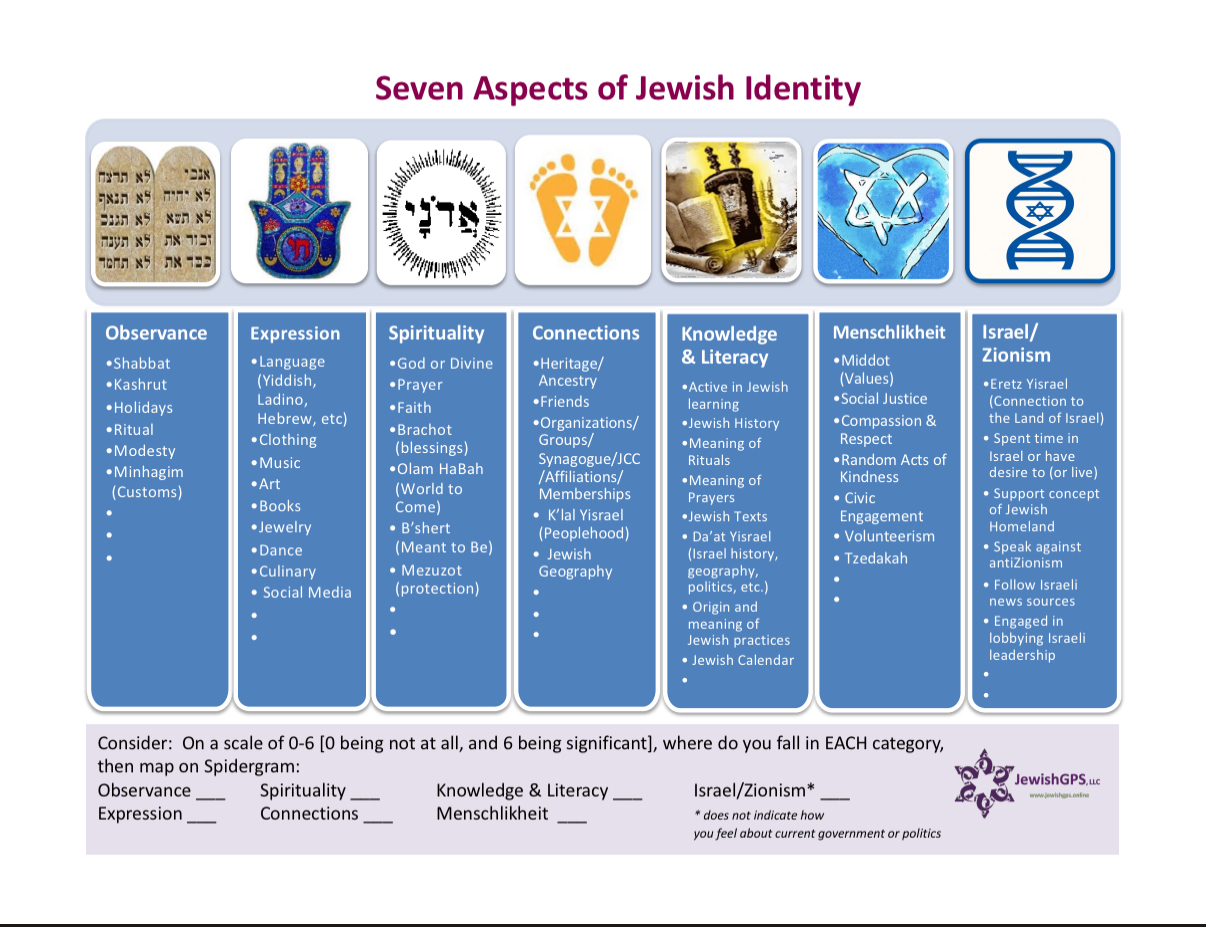
These are not statements of disengagement. They are attempts to find language that can hold ethical inheritance, cultural continuity, and Jewish belonging without theological belief. (check out my ongoing work on the multiple aspects of Jewish identity here).
Shame on anyone who tells another Jew they stand outside Judaism because of how they understand, or do not understand, God.
I say this not theoretically, but professionally and personally. I have spent over thirty years as a Jewish educator, with advanced degrees in the field, and I do not believe in Adonai. That fact has never placed me outside of Judaism.
Jewish tradition does not require belief as a prerequisite for belonging. At most, it assumes that if one believes in God, that God is understood as Adonai. Belief itself is not mandatory.
This distinction is not new.
The first commandment in the Ten Commandments (Ex 20:2) does not say “believe in Me.” It states a relationship:
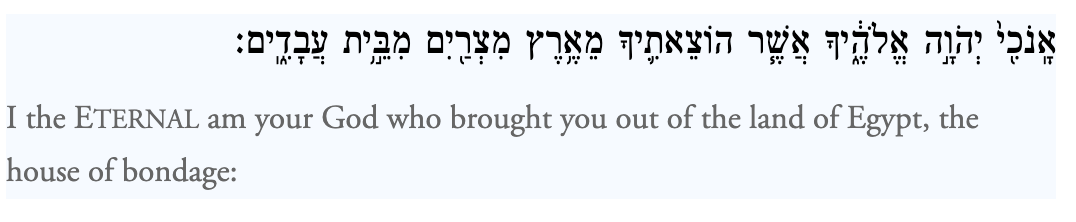
Medieval commentators noticed this as well. Ibn Ezra observes that the verse introduces God through the act of liberation from Egypt rather than through an abstract theological description.
Even the classical authorities debated whether belief could be commanded at all. Maimonides counted belief in God as the first mitzvah. Nachmanides disagreed, arguing that belief in God functions as the foundation from which the commandments are generated rather than as a commandment itself. As he wrote in his glosses to Sefer HaMitzvot, “Faith in His existence… which is the foundation and the root from which the commandments are generated… he did not count among the commandments.”
Later, the fifteenth-century philosopher Joseph Albo described belief in God as one of the foundational principles from which the commandments grow rather than as a commandment itself (Sefer Ha-Ikkarim 1:4).
Interestingly, while the Torah never directly commands belief in God, it does command: “You shall love the Lord your God” (Deuteronomy 6:5). Medieval commentators treated this as a genuine mitzvah but understood that love cannot simply be willed into existence. Instead, they argued that love emerges through relationship, reflection, and practice. Love, in other words, is cultivated. It is not identical to belief.
The rabbis offered a striking interpretation of this command. In the Sifre (Deut. 32), later echoed in the Talmud (Yoma 86a), the rabbis explain that loving God means making the name of Heaven beloved through one’s behavior. When a person studies Torah, speaks kindly, acts honestly in business, and treats others with dignity, observers say, “Happy is the one who learned Torah. See how beautiful their ways are.” In this reading, loving God is not primarily an internal feeling or even a theological position. It is something visible in the way a person lives among others.
For those who do believe in Adonai, ethical conduct becomes an expression of that relationship. But even for Jews who do not believe in God, the same ethical responsibility can remain deeply Jewish. Acting with integrity, caring for other people, and working toward the repair of our world may not be experienced as expressions of a relationship with God. They can still be expressions of covenant, community, and responsibility to the society we inhabit, the earth we share, and the Jewish tradition we carry forward. This applies to all mitzvot that agnostics/atheist Jews engage in. For me, it’s about connection to my ancestors and my community (because Bubbie did it!).
One reason the term secular fails so many Jews is that it collapses a multi-dimensional identity into a single axis.
In my own work mapping Jewish identity across multiple aspects, belief in God emerges as only one possible strand, meaningful for some and peripheral or absent for others, without determining the legitimacy of the whole.
Wrestling Is the Origin Story
One of the most formative moments in the Torah does not center belief, certainty, or obedience. It centers struggle.
Jacob is left alone at night and wrestles with a figure the text never fully names. (Genesis 32:29)
A man. An angel. God.
The Torah refuses to resolve the ambiguity. What it does resolve is the outcome: Jacob receives a new name.
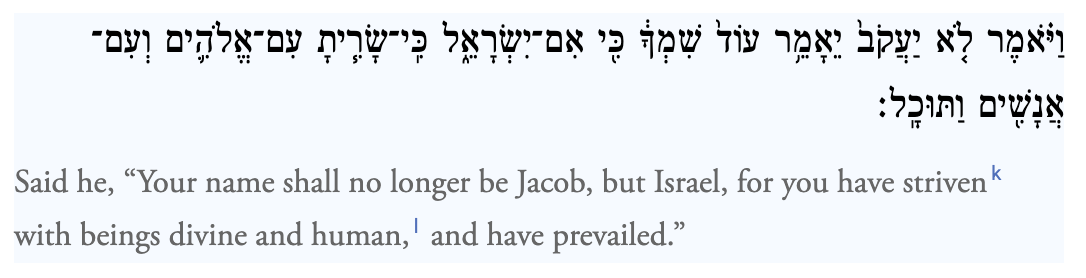
Israel: one who wrestles with God and humans and prevails. The name Yisrael literally means “one who struggles with God” and is not earned through faith. It is earned through refusing to let go without meaning and through strenuous engagement that leaves a physical wound.
And B’nai Yisrael, the Children of Israel, inherit that legacy of struggling with God.
Sometimes people challenge those of us who say we don’t believe in God by asserting, “There are no atheists in the fox hole,” but they may just not truly understand the depth of non-belief. In 2009, when my father was unexpectedly dying, I wrote this blog: Yisrael: My Struggle with G-d. In it, I share my connection to prayer and kashrut, despite not seeing them as commandments, and I share why, as my father was struggling for his life, I didn’t pray to Adonai.

Many God Languages, Preserved on Purpose
Jewish tradition does not speak about God with a single voice, a single name, a single gender, or a single description. It offers us many to consider.
The Shema (Deut. 6:4) declares oneness but does not define what that oneness must mean.

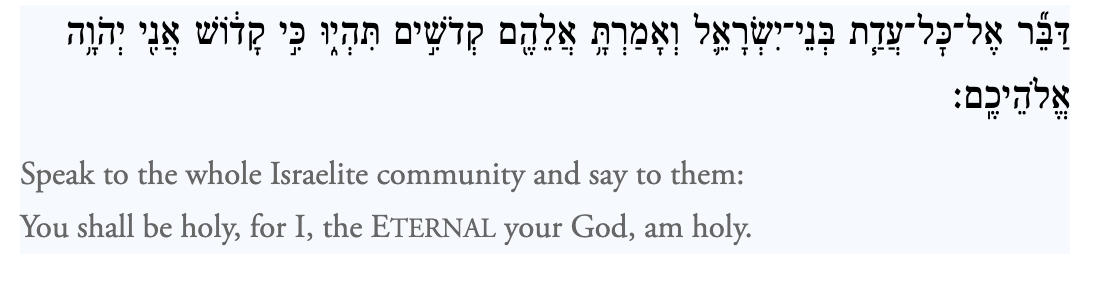
Some texts (Lev. 19:2) frame holiness as action rather than belief.
Some texts (Berakhot 10a) use metaphor to describe divine presence. Some insist on compassion as the defining quality of the divine (Ex 34:6-7)
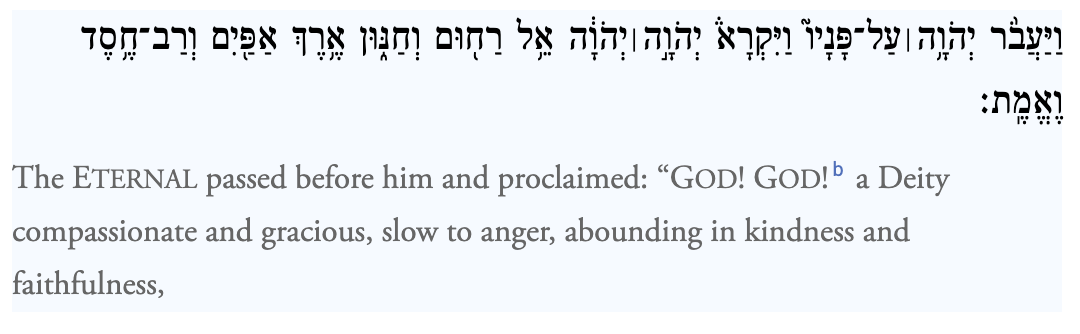
Taken together, these texts do not offer a single theology. They offer a library. They assume interpretation. They expect argument. They make room for readers who will engage selectively, symbolically, or relationally.
Engaging Jewish text has never required theological agreement. It requires willingness to wrestle.
The Shema as Recognition
Some Jewish language lives in the intellect.
Other language lives somewhere deeper.
The other day on Threads (while I was in the process of writing this blog), someone posted:
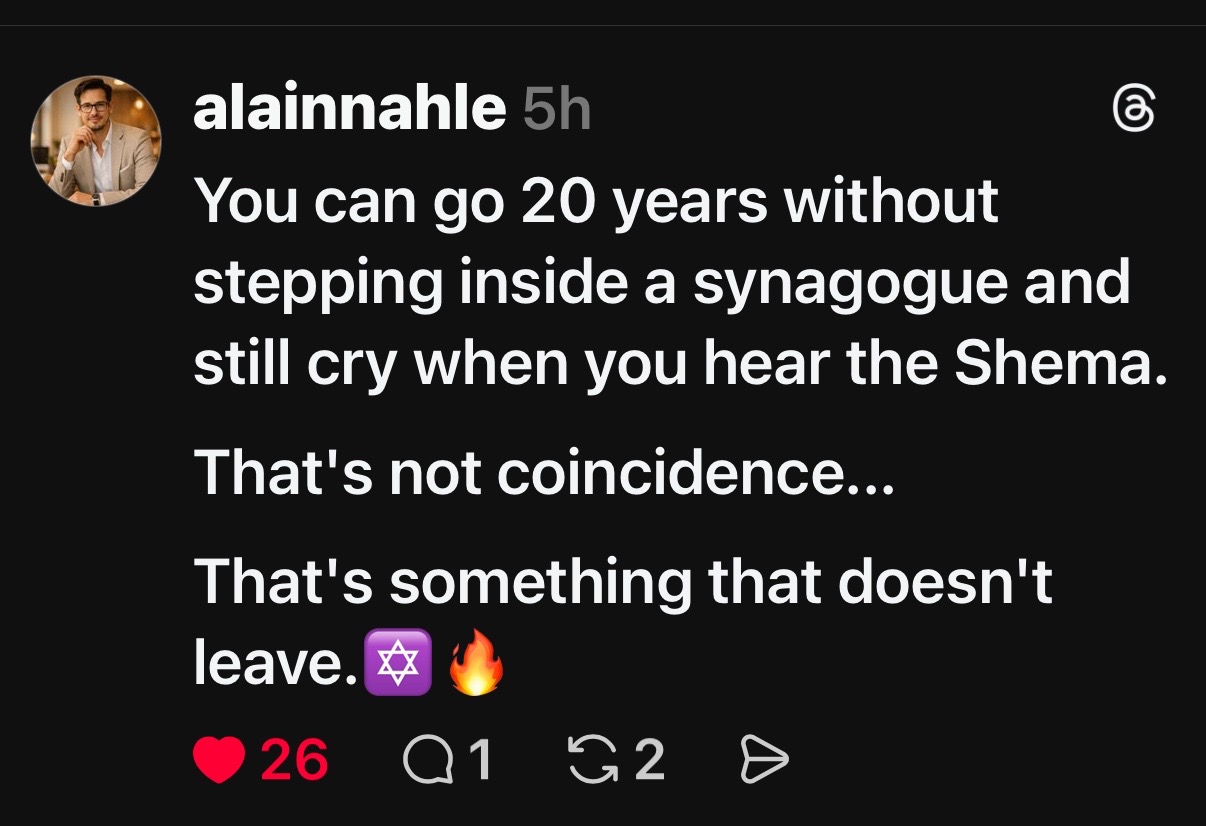
Others immediately recognized the experience.
One described being agnostic and not practicing Judaism for decades, then hearing the Shema at a niece’s wedding and being moved to tears because it had been embedded since their bar mitzvah.
I replied to the post to inquire where that connection came from, not wanting to assume anything:
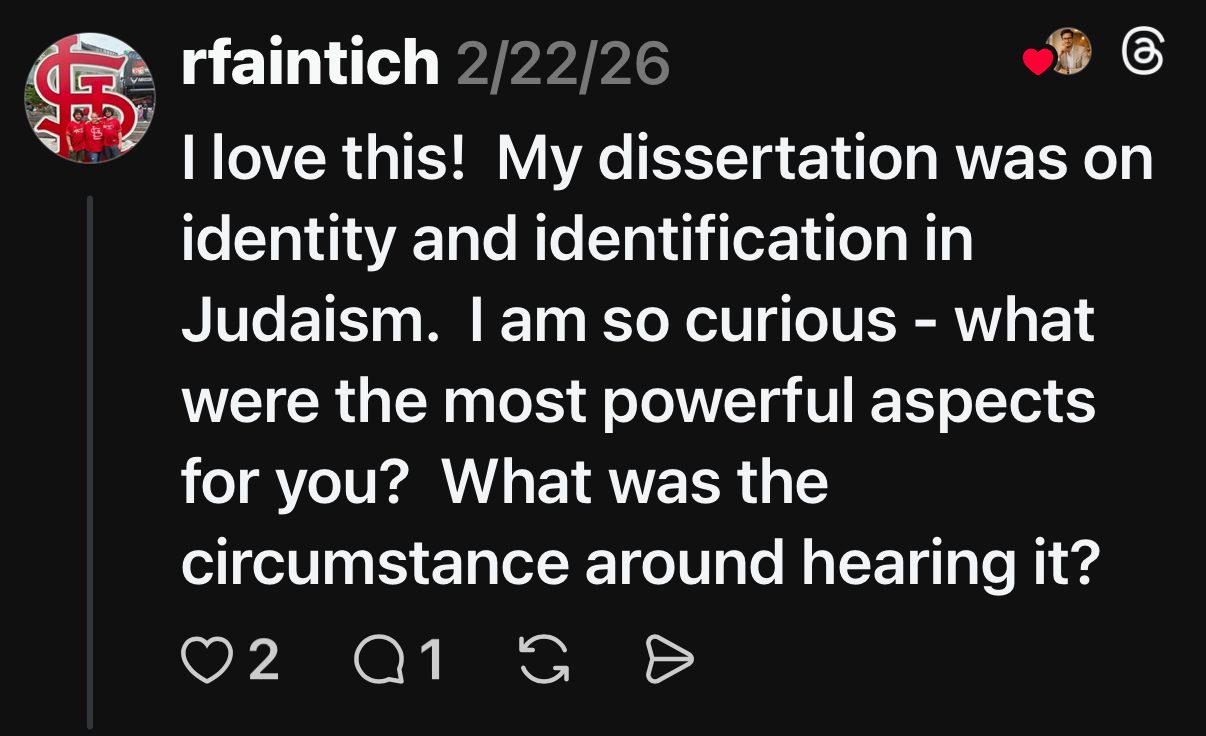

And then another added their connection to Shema. “It’s genetic. It’s in our souls.” What they were both describing was not belief. It was recognition. Something carried in sound, language, and inherited memory.
Teaching God Without Requiring God
One of the ways I test ideas about Jewish identity is in the classroom.
Years ago, while teaching tenth-grade Confirmation students in a Reform congregation, I adapted a lesson called “How Do You Think About God?” from the Ask Big Questions curriculum developed by Hillel International in partnership with the Union for Reform Judaism. The curriculum invites students to explore theological questions honestly rather than prescribing belief.
When students walked into the room, they were met with a large sign:
Then, each individual framing was posted in a different part of the room. Students were asked to stand under the one that best reflected where they were in that moment. There was no right answer. No expectation of consensus. Just movement. Some stood confidently under God! Some hesitated and drifted toward God? A few walked directly to God crossed out. What mattered was not where they landed, but what became visible immediately: Jewish teens hold very different thoughts about God, even when they share the same community, education, and rituals.
Letting the Questions Do the Work
Students then interviewed one another using open-ended questions about God, doubt, anger, justice, prayer, miracles, and responsibility.
One question stayed with the room: If you were God, what would you do differently?
Students who rejected belief answered fluently. They spoke about justice, compassion, inequality, and responsibility. Belief quickly stopped being the dividing line.
This is where my doctoral research echoes the classroom experience. My dissertation research with eleventh- and twelfth-grade students found that many teens struggled to articulate belief in God. But that uncertainty did not translate into disengagement.
Instead, teens described Jewishness through action: visiting nursing homes, volunteering at food banks, confronting sex trafficking, comforting friends in mourning.
These acts were not described as generic altruism. They were described as inherently Jewish. Across age and affiliation, the pattern held. Jewish meaning was articulated through action long before belief was resolved. Social responsibility as Jewishness not as God-commanded obligation.
Adults Say This Too
Adult respondents to the earlier essay on secular Jewish identification echoed the teens in a different register.
One commenter wrote:
“I’m a secular Jew. I was born to two Jewish parents. I was raised with no Jewish religious training or rituals, yet both my parents had strong Jewish identity and so do I. I do not believe in the deity described in the Abrahamic religions. I identify as Jewish. I strive to adhere to tikkun olam. I can’t describe what I feel in my soul but I know it is Jewish.”
She went on:
“There are those who do not regard me as Jewish, and if that’s the case, then what I would say is that Jews today can’t afford to kick anyone out for lack of belief.”
This is not abstract — it is lived. Here is someone naming Jewish identity through responsibility, ethical striving, and inherited sensibility while also naming exclusion as a real experience. The objection is not to tradition, but to the assumption that belief is the price of admission.
Across these responses, belief, disbelief, and doubt coexist alongside deep Jewish attachment. Belief explains some things. It does not explain belonging.
Community and Belonging Before Belief
Long before belief is settled, or even named, Jewish life is experienced relationally.
Showing up.
Being counted.
Taking responsibility for one another.
Needing community in order to become ourselves.
As I mentioned before, prayer for me is not about a relationship with Adonai, but about a communal ritual. Back in 2009, I reflected on this and on other Jewish rituals that require community or minhag that are framed in community. As a result, I wrote this blog about how Judaism functions because it is practiced together. Belief varies within a community, but a sense of obligation remains.
What Comes After “Secular”
Rereading that blog I wrote years ago about Yisrael as struggle, I am struck that the question itself is not new to me. It is a decades old theme.
What changed this time is the context. What once felt like a personal theological tension now shows up as a communal fault line:
Who gets counted as Jewish.
Whose voice is legitimate.
Which Jewish lives are deemed authentic enough to speak.
If Judaism cannot hold Jews who live Jewish values without God-belief, then it misunderstands its own history. To be B’nai Yisrael is not to agree about God. It is to inherit the right, and the responsibility, to wrestle.
 JewishGPS
Leave a comment