

In Jewish life, we are rarely afforded the luxury of a single, uncomplicated value. Instead, we live in the tension between competing obligations. For years, I have sat between shmirat halashon (guarding one’s speech, Sefer Chofetz Chaim) and tochechah (the responsibility to offer rebuke, Arakhin 16b). I have tried to uphold lo levayesh, the prohibition against causing shame, even as I have watched patterns unfold in our communal spaces that raise deeper concerns about harm, exclusion, and belonging.
Jewish wisdom does not ask us to ignore these tensions. It asks us to weigh them.
After months, and in truth years, of attempting to prioritize restraint, I no longer believe silence is the more ethical choice. I have attempted private tochechah (Rambam, Hilchot De’ot 6:7), sometimes gently, sometimes with sarcasm and bluntness amid frustration (I am human, afterall). Nothing I have attempted has changed the underlying dynamics. At this moment, I am choosing to elevate a different set of values: protecting communal dignity, sustaining pluralism, and refusing to normalize behavior that pushes people out of Jewish life.
Jewish tradition does not only call us to kindness and restraint; it also calls us to challenge the misuse of authority and to speak when harm is being done.
We see this tension throughout our texts. Abraham argues with God over the fate of Sodom, refusing to accept collective destruction without moral challenge. The daughters of Tzelofehad step forward to demand their rightful inheritance, reshaping the law through their insistence. And the Talmud (Shabbat 54b-55a) teaches that one who can protest wrongdoing within their family, their city, or the wider world, and does not, is held accountable.
This is not a tradition that asks us to stay quiet for the sake of comfort. It is a tradition that asks us to act when silence becomes complicity.
So today, I choose to confront the bullies behind the keyboards in two Atlanta Jewish women’s Facebook groups.
The Moment I Chose Not to Stay Silent
This piece is not written in the abstract. It was written because of something that happened this week.
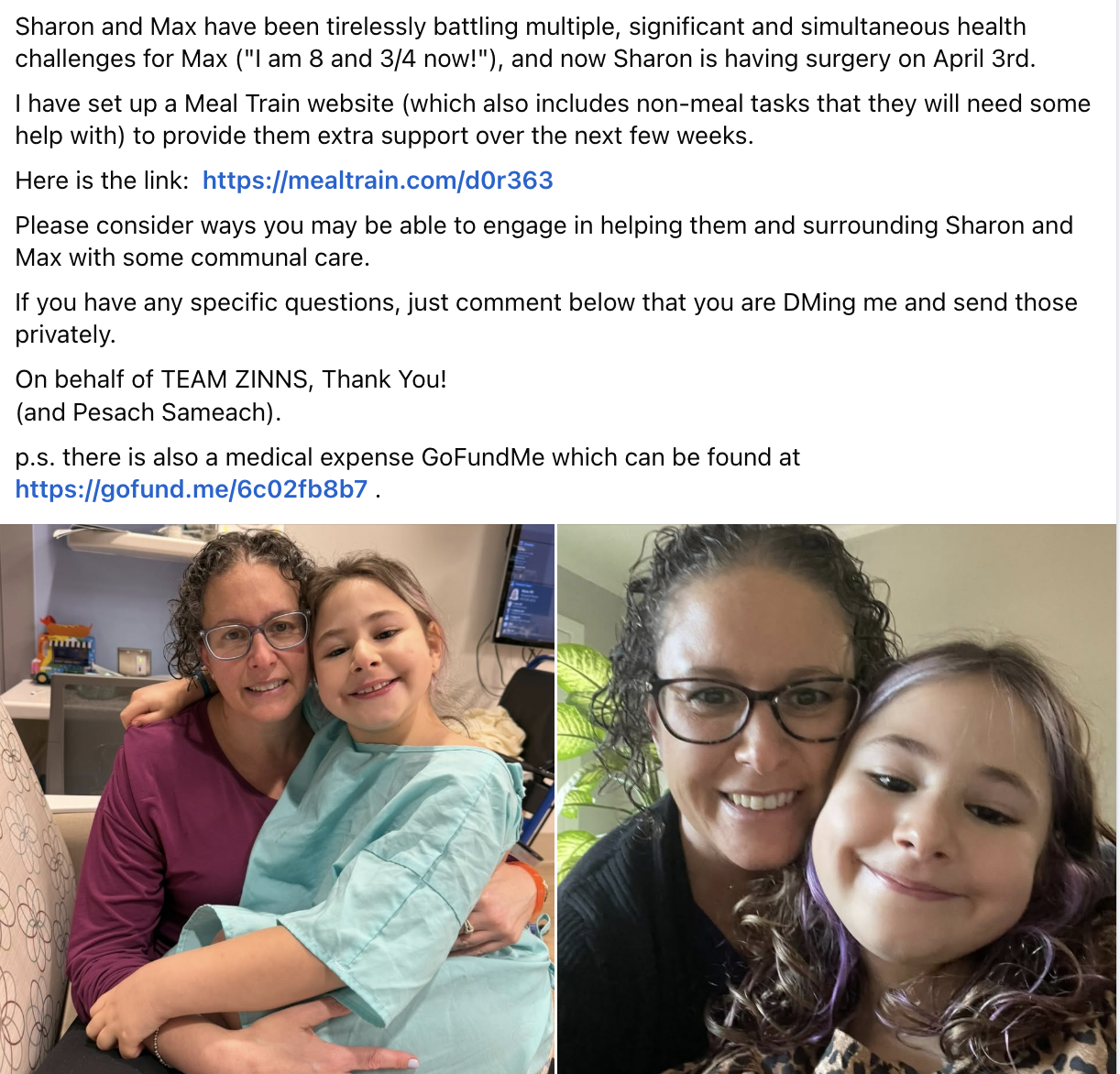
I attempted to advertise a meal train for a family in need within the Jewish Women of Atlanta (JWOA) Facebook group. It was a straightforward act of chesed and bikkur cholim, obligations for us to show up for others with care and support in a moment of vulnerability. At the very bottom of that post, I included a brief reference to the possibility of additional financial support connected to medical need.
The entire post was removed.
Not edited. Not flagged with a request for revision. Removed.
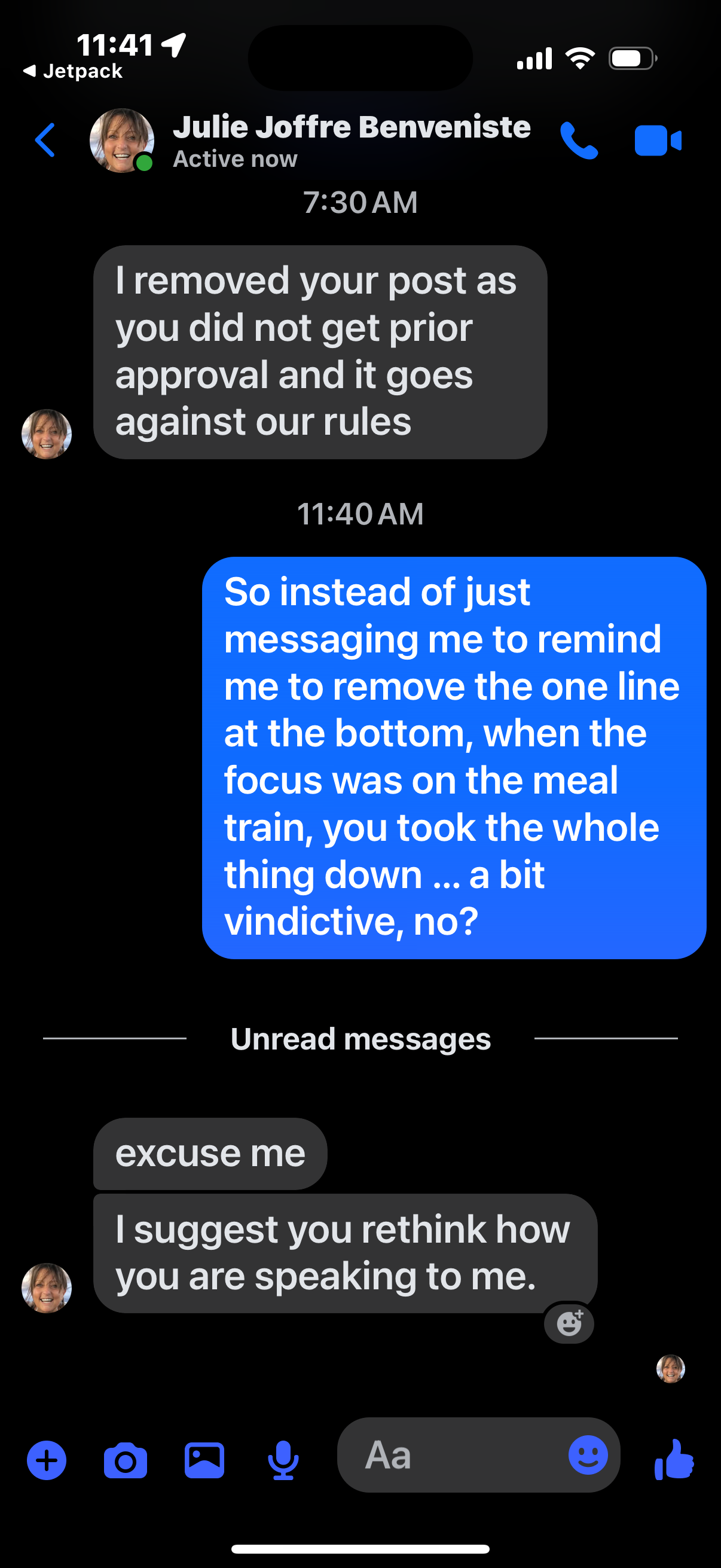
When I suggested to the admin, Julie Joffre Benveniste, that maybe the more appropriate way to handle it would be to send me a simple message: remove one line, adjust the post, and move forward with helping a family (I did include a slap remark about it being vindictive which you will understand more in a moment), her reply was based in ego and power: “I suggest you rethink how you are speaking to me.”
This act of communal care was shut down entirely over a minor rule about the advertising of fundraising. It was not met in the way a Jewish community leader should respond.

Jewish tradition treats chesed and bikkur cholim as obligations. In addition, the group rule that all instances of personal fundraising must be approved by Julie, is a violation of Jewish wisdom. Our sources caution against creating unnecessary barriers when someone is in need. While communities may set guidelines, there is a long-standing ethical instinct not to over-interrogate or obstruct requests for help in ways that undermine dignity (Talmud Sanhedrin 73a, Shulchan Aruch Yoreh Deah 251:10, Talmud Ketubot 68a).
To remove an entire act of care rather than facilitate its success raises a real question about priorities. About motivation.
For me, this was not an isolated moment. It landed in the context of prior interactions with Julie, including instances in which the needs of this same family had already been questioned in ways that felt misaligned with the values of compassion and presumption of good faith that our tradition encourages (hence my snark about being vindictive).
With the exchange this week, I made an immediate decision. I didn’t respond, I simply blocked Julie and left Jewish Women of Atlanta.
That decision followed years of engagement, repeated attempts to navigate similar dynamics, and a growing recognition that participation in this space required a level of self-silencing I am no longer willing to accept.
The Question of Belonging
This week’s unacceptable interaction with leadership of Jewish women’s spaces is not the first time.
Nearly a decade ago, I was removed from Jewish Mom’s of Atlanta (JMOA) by a former admin because I did not meet a narrow definition of motherhood rooted in biology or legal status.
Jewish tradition offers a different lens. In Sanhedrin 19b, the Talmud teaches that one who teaches or raises a child is regarded as if they had given birth to them. Our tradition recognizes caregiving, guidance, and presence as forms of parenthood.
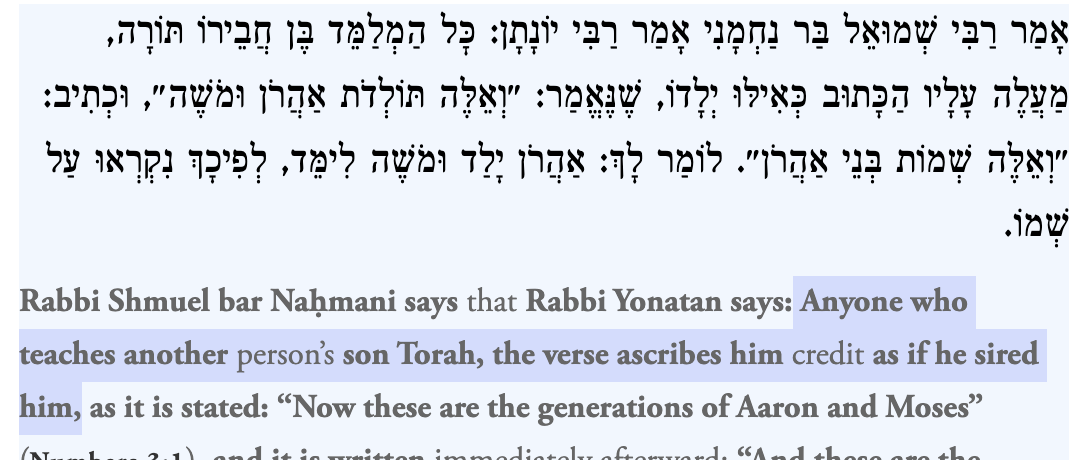
Many children rely on what might be called “safe adults” and “chosen moms” as women who show up consistently for young people when others don’t or can’t. To exclude those relationships from belonging is not only painful. It stands in tension with the values we claim to uphold.
And these instances of group mis-management have also happened in more public scenarios.
Leadership, Moderation, and Power
In a 2024 profile in the Atlanta Jewish Times, Julie Joffre Benveniste described Jewish Women of Atlanta as a space she shaped intentionally, declining to allow certain discussions she believed would not “end well” or that she did not have the capacity to moderate them. She also described the group as “powerful” but despite saying, “we are all Jewish and need to stick together,” her actions don’t reflect that.
Moderation is necessary. But when belonging depends heavily on one person’s judgment, what is acceptable, what is discussable, what is removed, and WHO is excluded based on personality conflict, those decisions shape not just content, but culture.
The Pattern We Can No Longer Ignore
This is not about one leader or one moment.
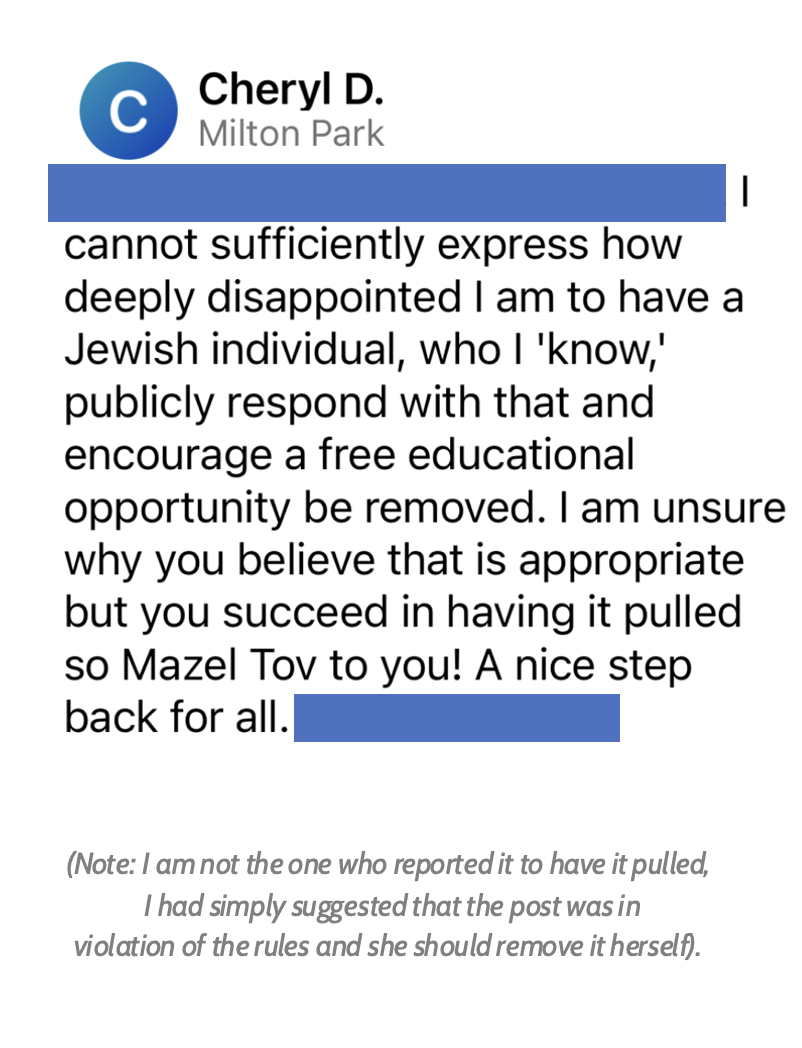
On a non-Jewish platform, which has strict rules about only posting content related to local events, I commented about this rule on a post by Jewish communal leader Cheryl Dorchinsky of Atlanta Israel Coalition regarding a national program her organization was co-sponsoring. In response, I immediately received a private message from Cheryl that escalated quickly in tone and intensity (see excerpt). The exchange did not reflect a simple disagreement about rules. It felt disproportionate and personal.
Over time, I have received a significant number of private messages from women across these spaces regarding significantly negative interactions with Julie and Cheryl. Honestly, I was shocked at the severity of the scenarios they shared and the intensity of emotion their messages conveyed. Many are (or were) active participants in one or both on-line spaces. Some are long-time volunteer leaders in Jewish organizations. The consistency of what they describe is what makes this impossible to ignore.
People describe feeling silenced. They describe being warned privately after posting. They describe removal without explanation or opportunity for dialogue. They describe environments where even mild disagreement feels risky. Some even describe interactions that move beyond tone into intimidation, messages that feel personal, aggressive, or professionally uncomfortable to engage with. (I clearly have experienced aspects of this directly as well.)
And perhaps most tellingly, a few describe no longer feeling cared for by the very communities that are meant to hold them. Not disagreed with, not challenged, but uncared for. This is simply un-Jewish.
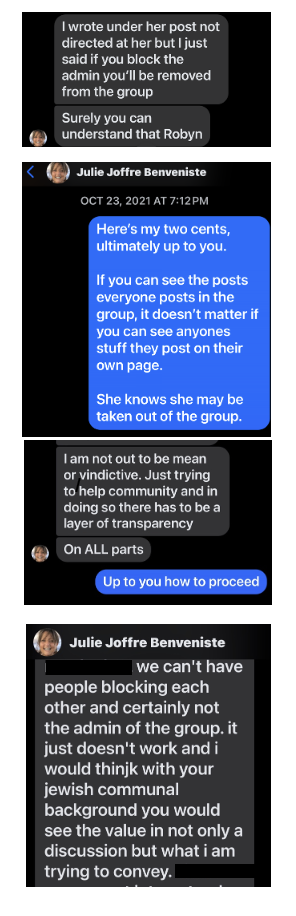
I had another private negative engagement with Julie after I was shown messages indicating that individuals were told they cannot remain in the JMOA group if they have Julie personally blocked on their private accounts, despite this not being a stated rule. When I told her I didn’t agree with her stance on this, her response was hostile (excerpts provided). I cannot verify the full scope or frequency of times she told people of this “rule,” but their existence reflects the degree to which personal authority and communal access have become intertwined.
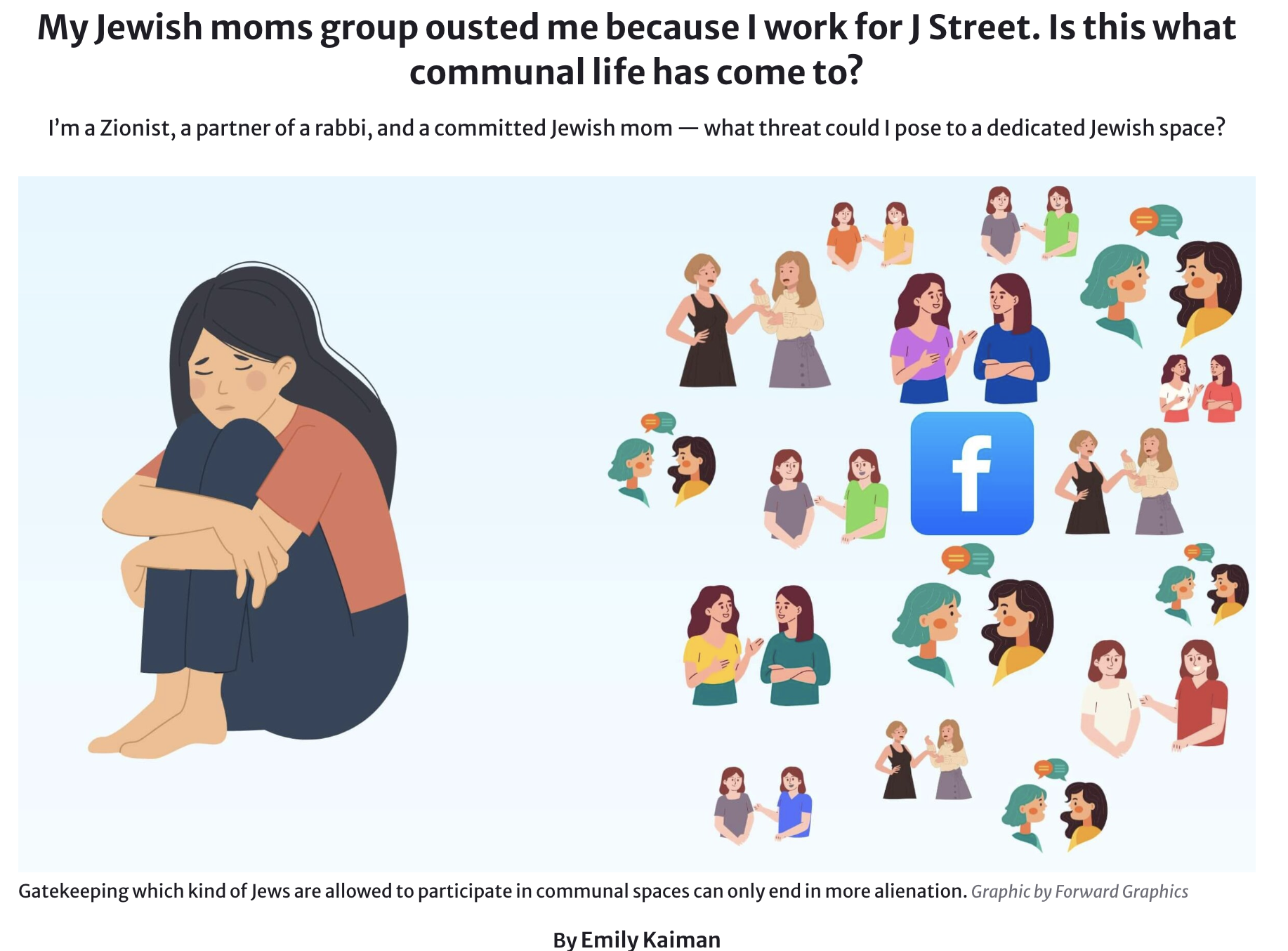
The most visible public example of this happening in our on-line Jewish women’s spaces came in April 2025, when Atlanta educator and J-Street staff member Emily Kaiman wrote in The Forward about being removed from JMOA because of her professional affiliation. She describes learning of her removal through a screenshot of a moderator’s post rather than direct communication, and being met with silence when she attempted to engage afterward.
A decision is made. A boundary is declared. Dialogue is closed. No process. No relationship. No path back in.
Emily also wrote, “In speaking with friends who are still a part of JMOA, I have been told that anyone who disagrees with the new hard-line policy on attitudes toward Israel has been kicked out of the group. So there are no dissenting voices, either because they have been removed, or because they are simply too scared to speak up.”
In my own investigation of this situation when the information started coming to light, a source who has asked to remain anonymous intimated that it was common knowledge that it was Cheryl, as a group moderator, who made this unilateral decision. In the immediate days that followed, I heard similar accounts from a few people that the group admin, Kerri Nusbaum Kaufman, wasn’t even consulted on the decision. [Note: Keri’s response confirming it was done without her knowledge and her pledge to the JMOA community can be found here.]
This is not simply moderation. It is a pattern of gatekeeping in which a small number of individuals hold significant power over who belongs, how they belong, and whether they are allowed to remain.
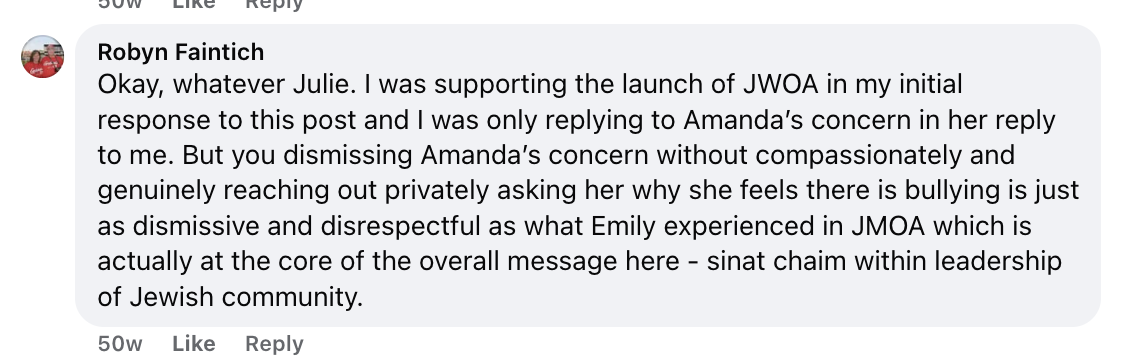
Ironically, in a discussion on Emily’s own Facebook post when this article was published, Julie attacked another commenter for her opinion about the toxicity in these two Jewish groups and when I responded, once again Julie took a bullying tone. My attempt at tochecha with her even back then:
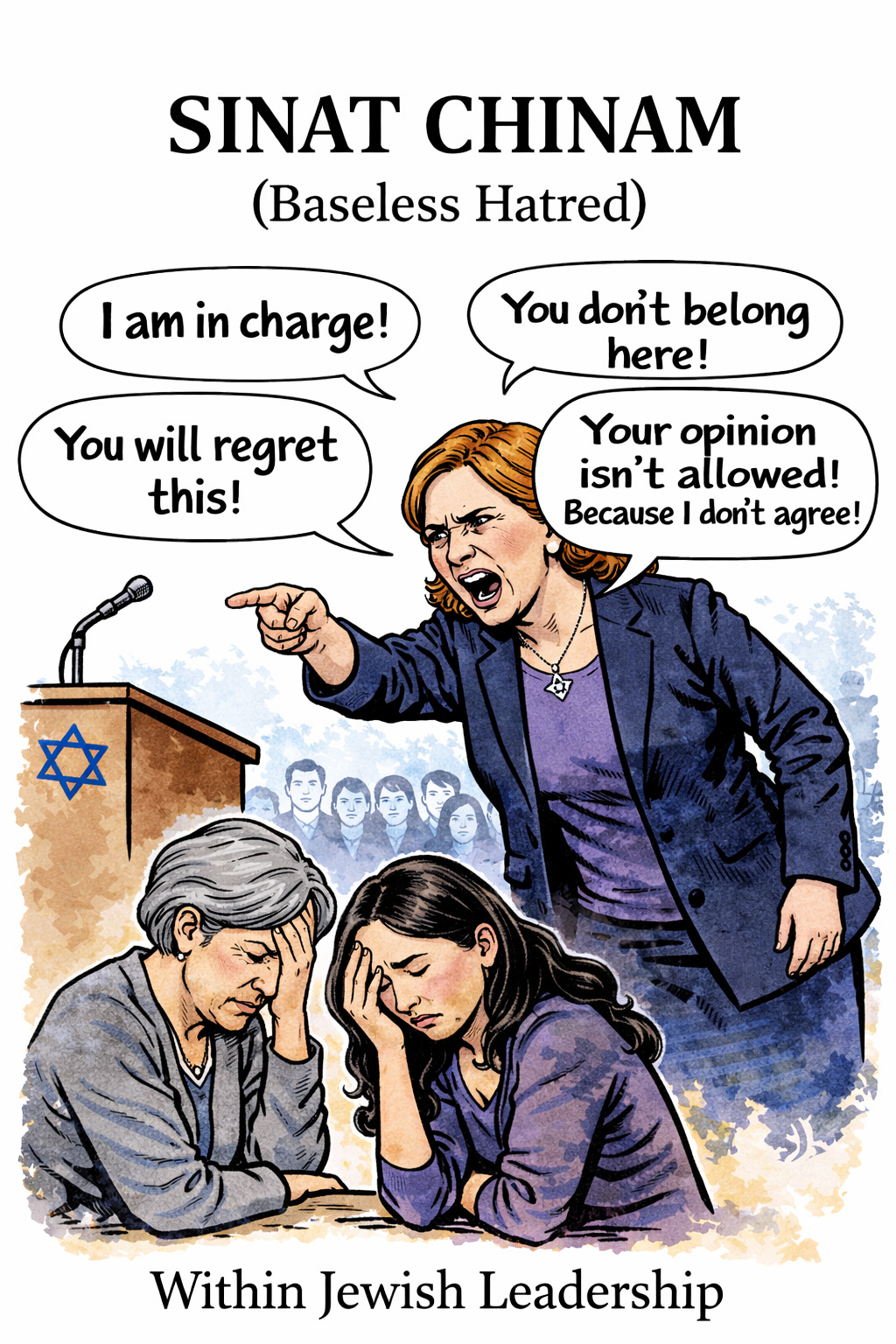
Over time, the impact is predictable. People withdraw. Then they disengage.
The Quiet Cost: Who We Are Losing
As a 30-year Jewish professional, I have seen communities thrive when they can hold complexity and fracture when they cannot.
Drawing on his work in The Dignity of Difference and Not in God’s Name, Rabbi Lord Jonathan Sacks taught that “unity in heaven creates diversity on earth,” a reminder that Jewish unity is not built on uniformity, but on the capacity to hold deep conviction while remaining in relationship across difference.
What happens when the capacity to remain in relationship across differences erodes is not always visible at first. It looks like silence. It looks like self-censorship. It looks like people stepping back quietly.
I know women across the Atlanta Jewish community who have done exactly that in both JMOA and JWOA, not because they no longer care, but because they no longer trust these spaces to hold them with dignity.
That is not just personal. It is a communal loss.
Choosing a Different Path
I am not writing this because I am disconnected from Jewish life. I am writing this because I care deeply about it. I am also writing because I want to be the voice for those that feel silenced, for those that now feel disconnected from other Jewish women in our community due to the on-going abuses in the power seats of these online spaces. And I am writing to encourage us all to actively engage in another space instead:
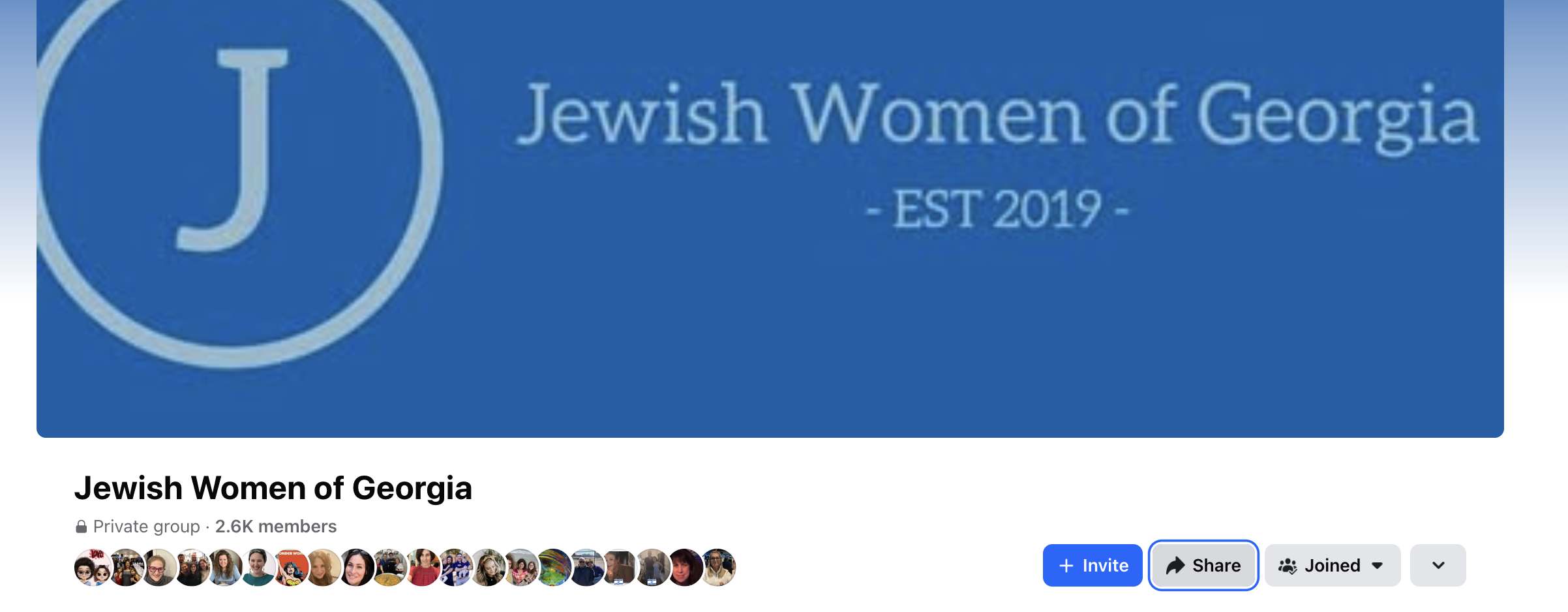
This space exists without the same history of conflict and without the same patterns of gatekeeping.
My choice is to step away from spaces where participation requires self-silencing and to invest in one that allows for something healthier to grow.
If you are already there, use it. If you are not, consider joining.
Final Reflection
I acknowledge that I may be wrong to say all this publicly.
But I was willing to take the risk because I know what happens when patterns like this go unnamed. I have seen what they do to individuals, to leadership, and to the long-term health of the community.
Jewish wisdom asks us not only to avoid harm, but to prevent it.
At this moment, I believe that requires saying this out loud.
 JewishGPS
Leave a comment