Tamrurim (Guideposts) are brief thoughts about Israel.
Check back for updates!
-
Zionist and Pro-Palestin….
The terms: Free Palestine. Pro-Palestinian. Pro-Palestine. are all at the heart of very tense exchanges (sometimes violent) between those that identify as Zionist and those that see Zionism as the antithesis of these terms. First of all, a person can be “yes, and …”, and secondly, I don’t think we are all even on the same page about what these terms mean. So I would like to attempt to offer some frameworks and considerations for each.
“Who is a Palestinian?”
Let’s first define a contemporary framework for “Who is a Palestinian?” I don’t want to engage is the rhetoric which denies the existence of a people who have built their geographic, cultural and faith identities around this term. To do so is completely counter-productive, dismissive, and de-humanizing.
It has taken me many years of learning with those who identify as Palestinian, studying history, exploring comparative nomenclature, and asking a lot of questions, to form the following conclusion. There are FIVE distinct sub-groups of Palestinians.
1. Gazans. These folks have been governed solely by internal forces (first Fatah and then Hamas) since August 2005. They were cheated out of a fully flourishing and safe life by the hands of Hamas. Israel was forced to put unspeakable protections in place as a result of abuses by Hamas (like restricting the imports of certain materials because Hamas was using them for tunnel and weapon development).
2. Residents of the Disputed West Bank/Judea-Samaria. Palestinians living here are caught between a lack of Israeli citizenship while still be heavily controlled my Israeli government, military, and police. They experience the highest levels of oppression, racism, and violence. They are often placed on curfews or total lock downs which cause undue stress and financial hardship. They are antagonized by a right wing government (often having their ancestral land and homes bull-dozed for what amounts to “eminant domain”). They are also victims of extreme agitators and murderers who are Jewish settlers in this territory. They have been offered citizenship over the years to both Jordan and to Israel and have rejected it.
3. Arab Israelis identifying as Palestinian descendants are full citizens of Israel. They vote, serve in all levels of government, serve in the IDF, own land, etc. They experience similar micro-aggressions that Black and Brown people in the US do: more frequent traffic and security stops, some employment discrimination, an erasure of history and contributions to society, an under-representation in pop culture and symbols of the country (like the flag and national anthem). This is wrong and needs to be addressed, but it isn’t “apartheid.”
4. Descendants of Arabs living in British Mandate Palestine who were displaced during the transition of power in 1948 and are now settled in other countries have a significant tie to the land and should have freedom of movement within the land. They are not, however, refugees. Refugee status (as defined by the UN) given to descendants of displaced persons only applies to this one group of people and represents a bias and prejudice against Israel. No other peoples are granted this inherited status. If that were the case, then almost every Jew in the world would be a refugee from Judea/Samaria. And the descendants of the 900k+ Mizrahi Jews expelled from Arab lands would be refugees from those lands, and so on. The UN and the UK have a major responsibility in the displacement of Palestinians in 1948. The lack of thoughtful transfer of power created a terrible crisis. Arabs taken from their homes and businesses deserve reparations.
5. East Jerusalem residents aren’t citizens of Israel, but instead hold permanent residency with Israeli ID cards. That means they can access services, but they can’t cast a vote in national elections—and their status (as well as their homes) can be taken away. It’s a very difficult framework to live within. And while they are eligible to apply for Israeli citizenship, most hold tight to their Palestinian identity (knowing that it means navigating the uncertainty of policies that could uproot them at any moment).Each of these five groups have distinct needs on a journey for equality and rights within the framework of Israel and Zionism. We cannot lump these groups into one entity and believe we are making a difference for ANY of them.
“WHERE/WHAT IS PALESTINE?”
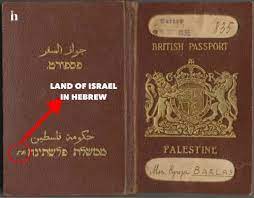
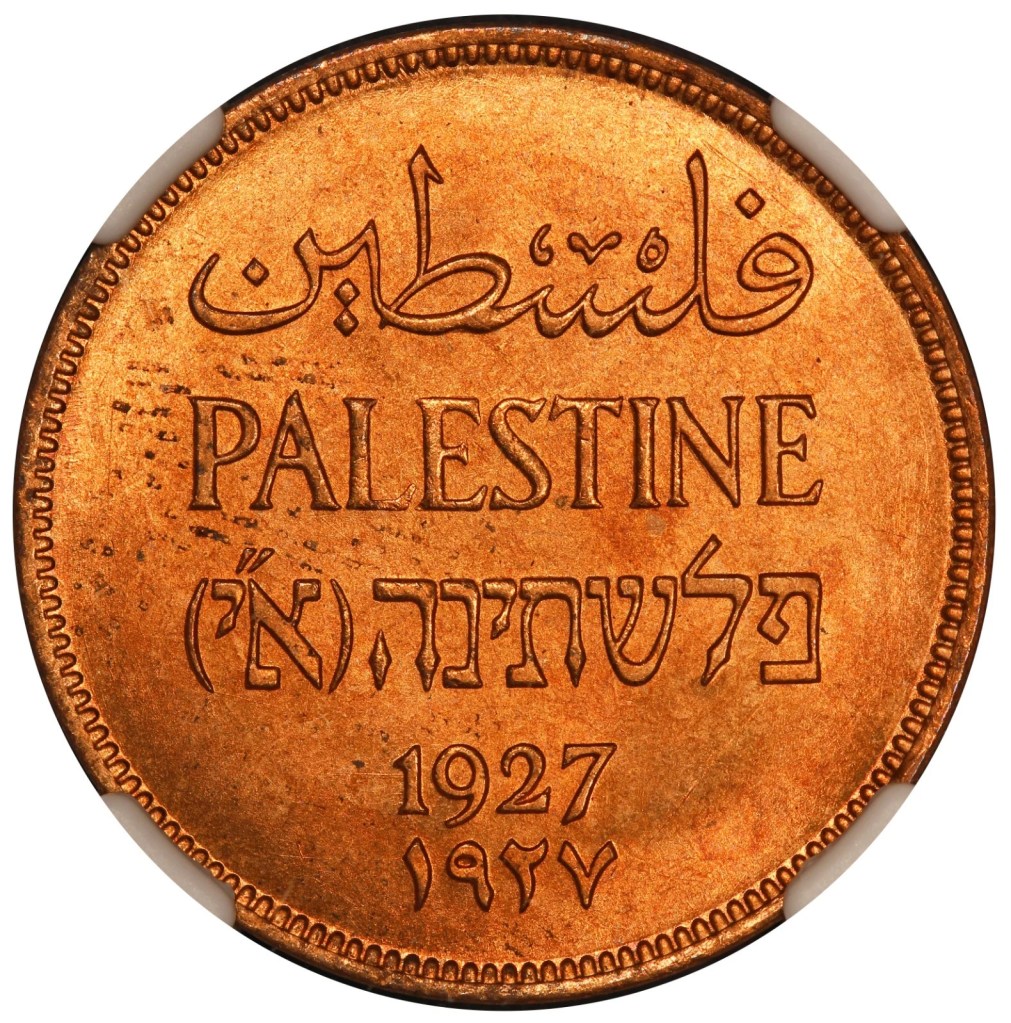
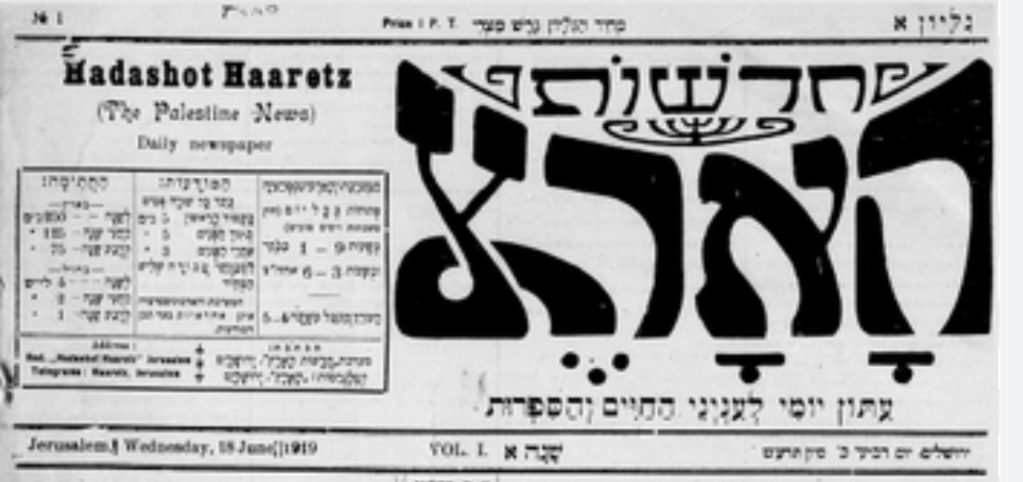
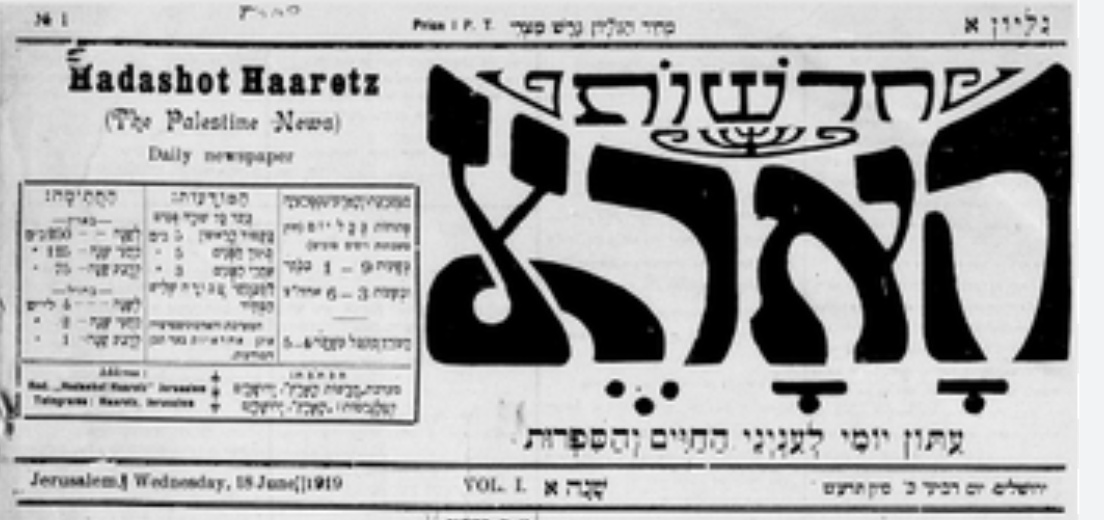
It is important to recognize that while the British Mandate controlled land was called “Palestine” (the only time it has ever been officially called that) it is critical to note that all legal tender, the English and Hebrew newspaper, and official documents (like passports) also contained a symbol with an Aleph and a Yud – which means “Eretz Yisrael” or the full language itself.
The borders of this land have been pushed and pulled for centuries via wars, peace agreements, changes in ruling parties and international agreements. The land that is currently identified as Israel, Gaza and the Disputed West Bank/Judaea-Samaria, has had portions a part of Syria, Jordan, Egypt, Lebanon and unclaimed land space. The phrase “From the River to the Sea” which is often used in this struggle, would indicate all land from the Jordan River to the Mediterranean Sea and down to the Red Sea should be Palestine. The northern part of Israel known as the Golan Heights would return to Syrian control in this definition and the border with Lebanon (known as the Blue Line) would be maintained.
Israel’s control of Gaza, the Disputed West Bank/Judaea-Samaria, and the Golan Heights came to be via wars they did not start. The international community has mistreated Israel in ways it doesn’t treat other sovereign entities who have acquired land via war and treaty. I do believe Israeli leadership could have done something vastly different with the West Bank (another blog post to come), as to not antagonize, but ultimately they came to that land rightfully.
ZIONIST AND PRO-PALESTIN(E)(IAN)?
Yes.
I can strive for a vision in which ancestral strongholds are acknowledged and celebrated for for Jews, Palestinians, Christian Arabs, Druze, Armenians, and historic Christian denominations represented in the Christian quarter of the Old City. A vision that abolishes claims for only one people or another.
I can strive for a vision in which each sub-group of Palestinian peoples receive equality, freedom of movement, representation and dignity under a partnership with Israel. A vision in which K’lal Yisrael supports adaptations or inclusion of additional pieces to certain symbols, national identity and laws.
I can strive for a vision in which the entirety of the land is jointly administered by these people with the ancestral ties, while still providing global protection for the Jewish people. A vision that ensures a Shoah does not happen again.
I can strive for a vision in which the international community treats Israel equally as it does other lands. A vision which included complete and permanent peace with Israel’s neighbors and a universal condemnation and global leadership actively working to destroy IRGC and similar terrorist entities.
-
In Memory: 12 Druze Children
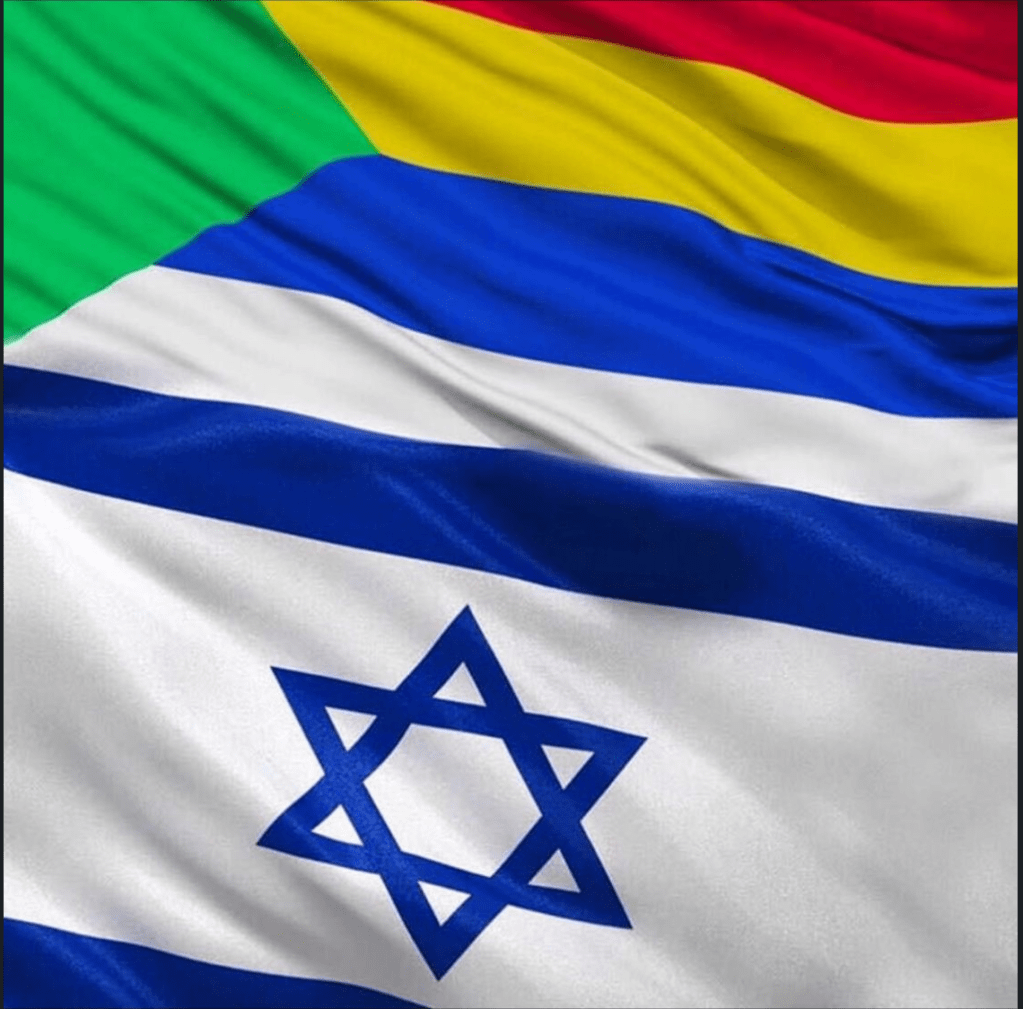
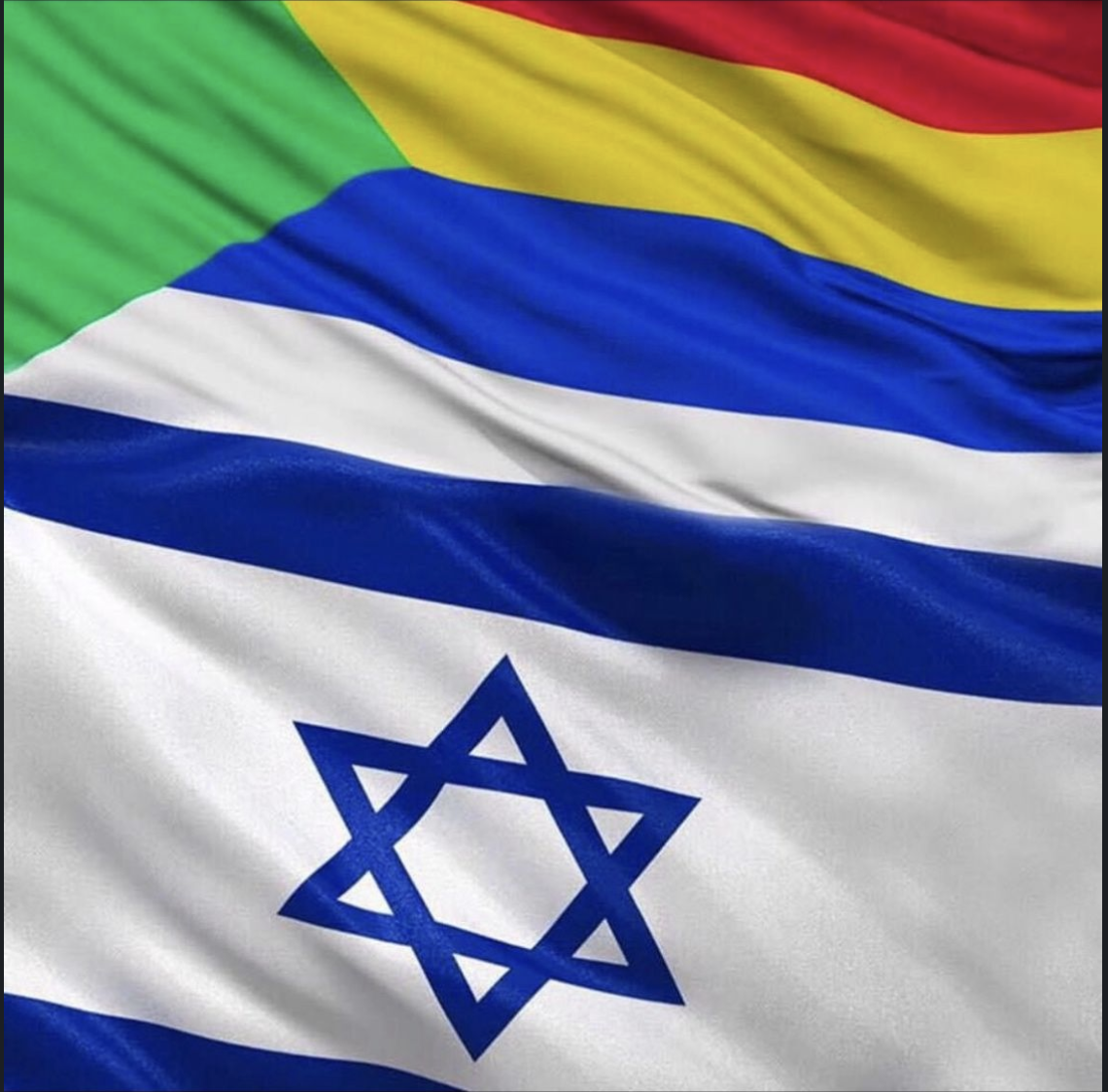
When I moved to Atlanta, the Counsel General (aka Ambassador) from Israel to this region was Reda Mansour. Mr. Mansour is a Druze-Israeli and brought to our community a deeper understanding of the lives of non-Jewish Israelis. He represented their commitment to a strong and lasting Israel for people of all faiths.
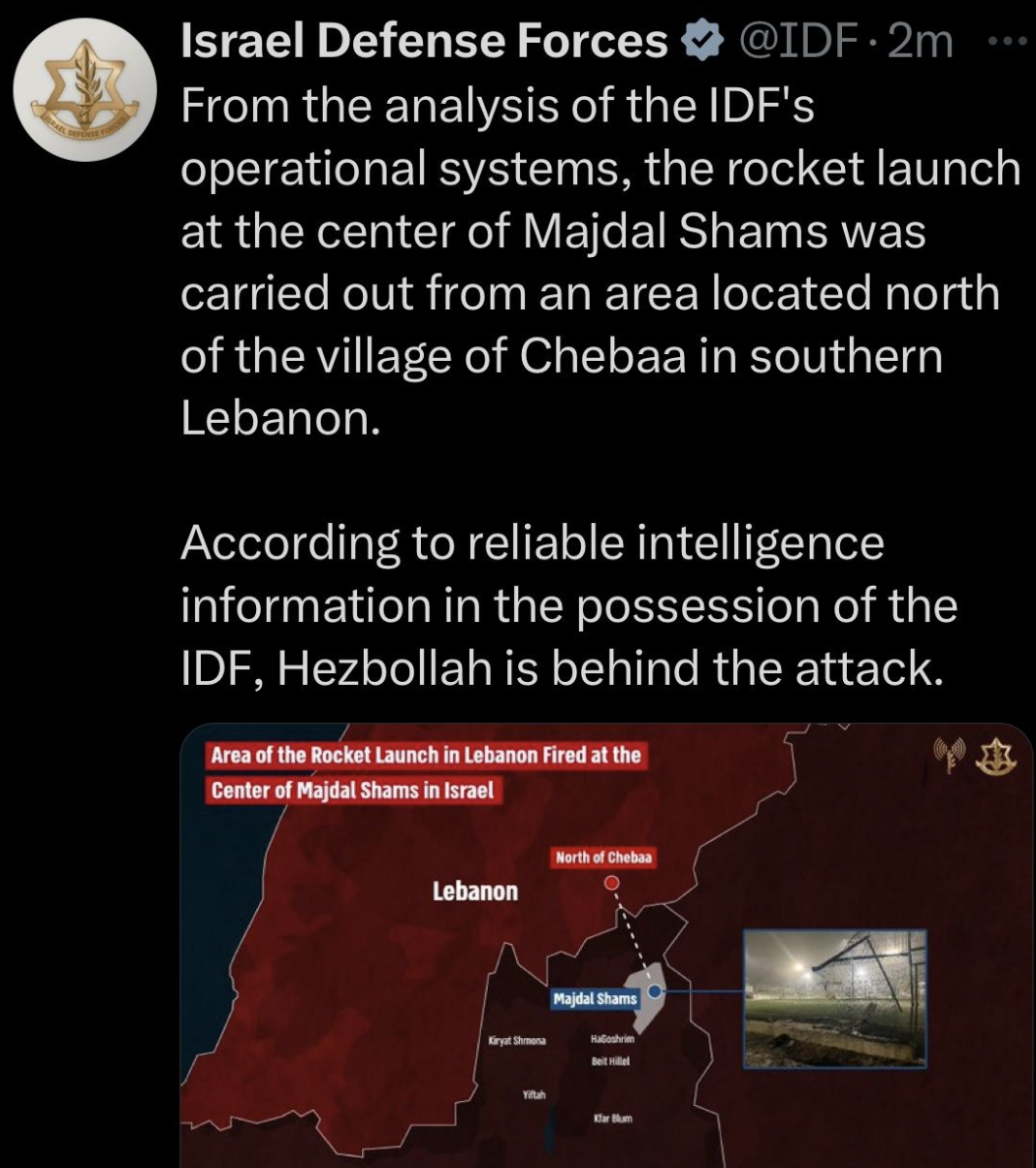
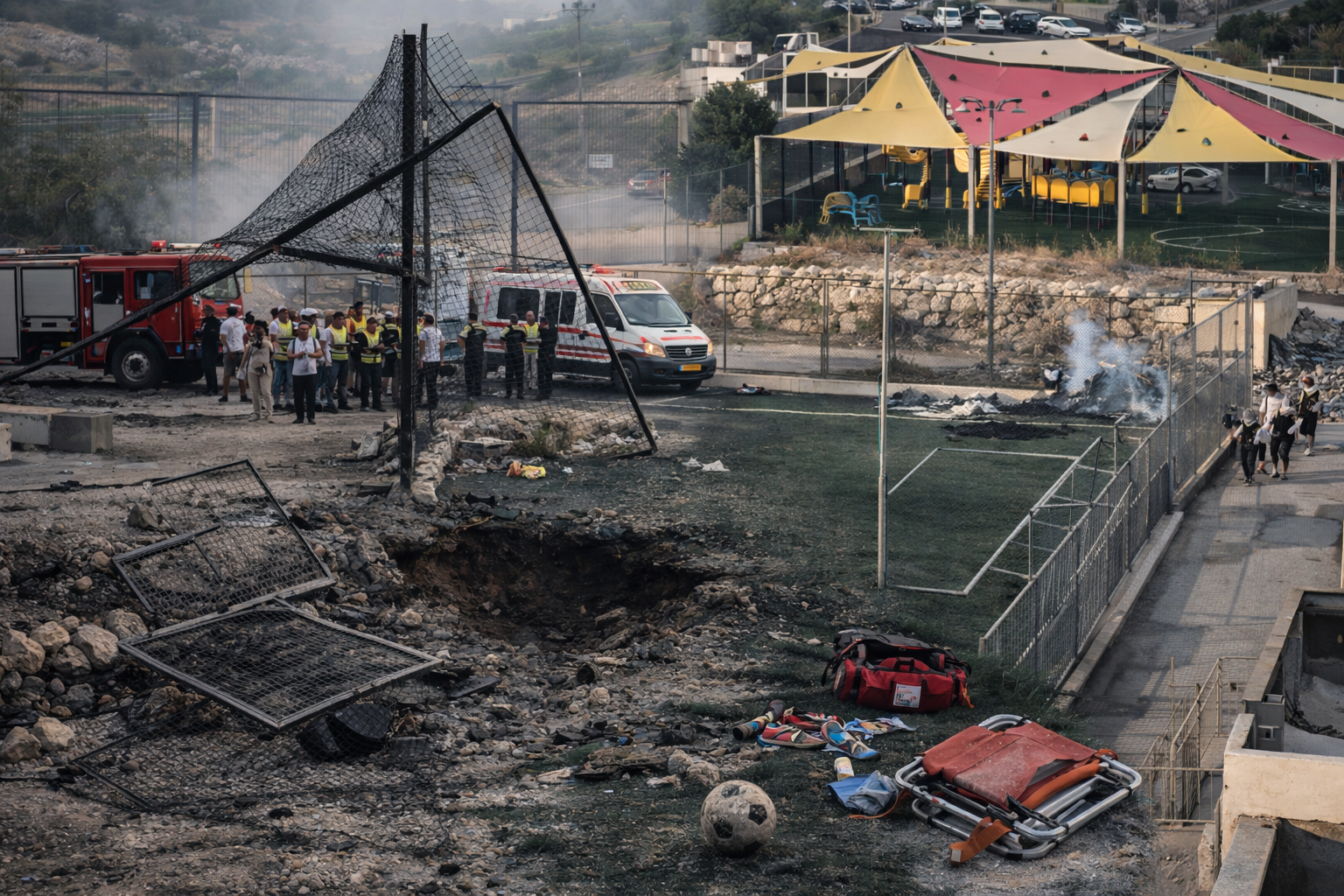
Today, a Druze village (not his specifically) fell victim to a missile attack from Hezbollah. A rocket manufactured by Iran, fell on a soccer (aka football) field, killing 11 children and teens. Israeli citizens. Futures cut short by a regime aimed at wiping Israel off the map.
More horror stories such as these aren’t told EVERY day because the anti-missle systems of Israel (thanks in part to support from the US) intercept dozens and dozens day and night, preventing the mass murder Iran proxies want. Today alone, over 100 missiles fired at Israel from Hezbollah, sadly this one got through the defense systems … and the consequences unimaginable.
If you don’t support Israel’s right to defend itself, its children of all faiths, then what do you actually stand for?
Ambassaor Mansour, please accept my condolences on behalf of your entire Druze community. May the memories of these children be a blessing to all who knew them and may their legacy be a lasting peace.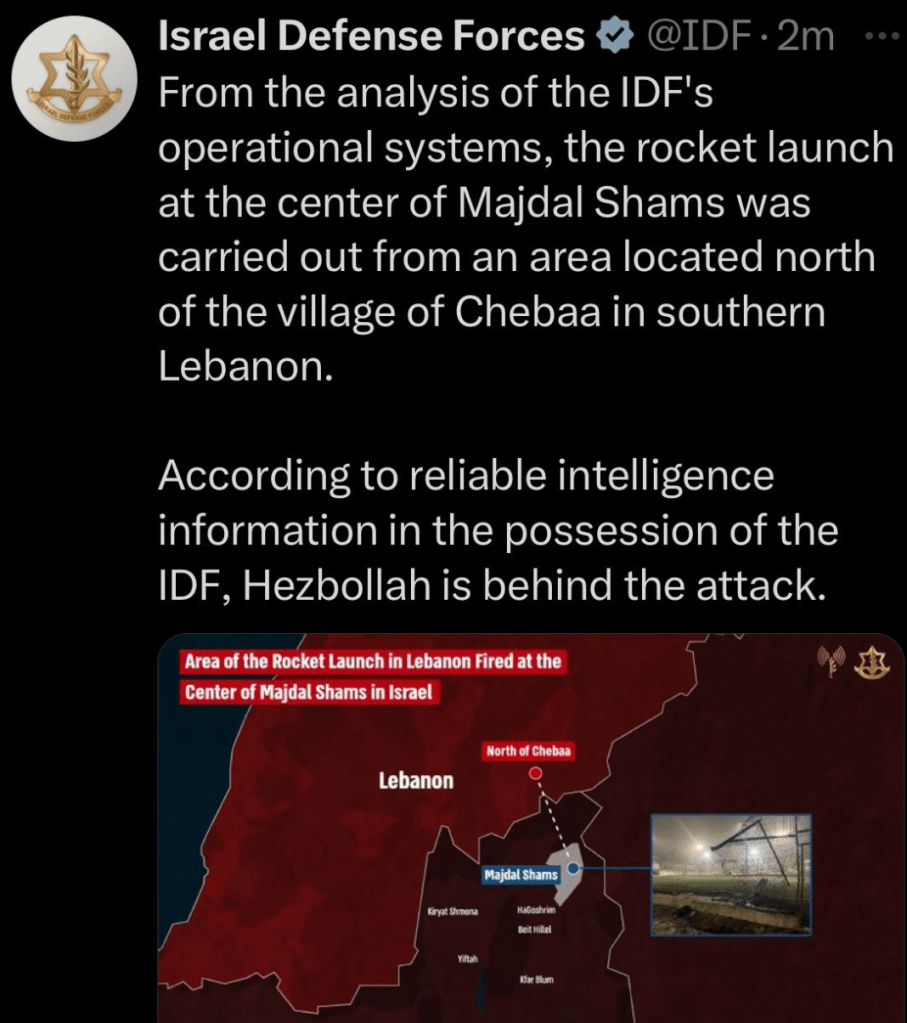
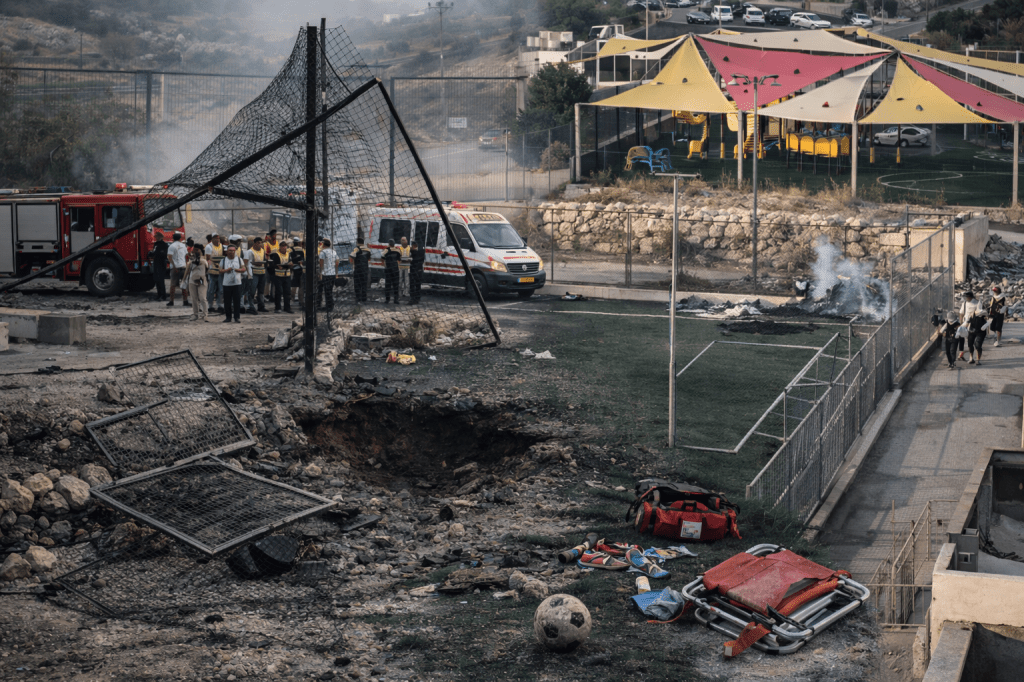
For images actually taken that day, click here. -
My Holy Tent of Dialogue
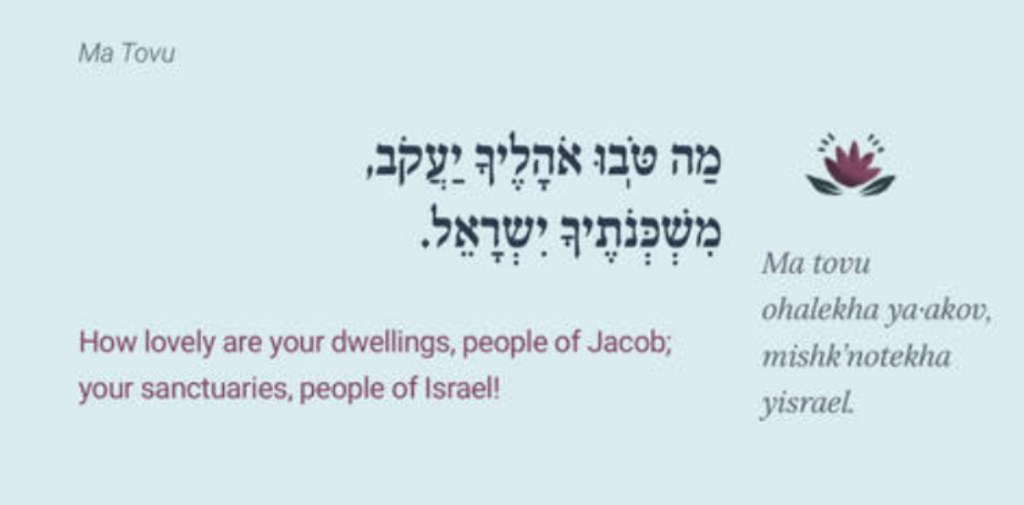
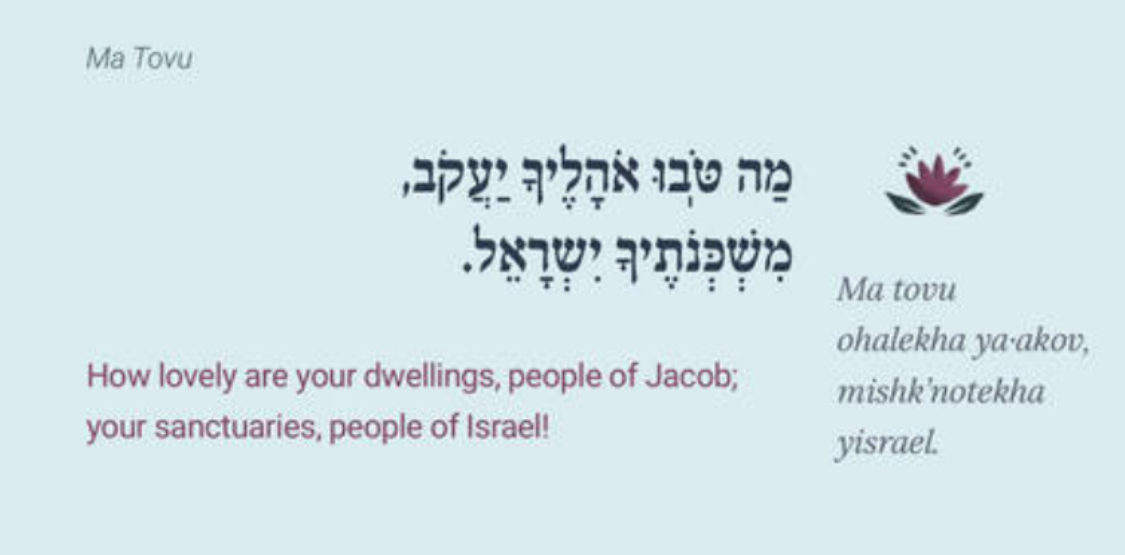
from “Siddur for Youth” by Cantor Azi Schwartz. Ohalechka is often translated into “Tents” and Yaacov/Jacob’s other name was Yisrael. Jews are known as B’nai Yisrael – meaning the descendants of Jacob and
inheritors of his covenant with God (which includes the Holy Land).A sanctuary is known as a place of holiness. The words uttered in them are sacred. Judaism extends that sacredness to all words, no matter where spoken, even those that are in disagreement. As someone who has conducted learning and dialogue about contentious topics for years, I always start by teaching the concept of Eilu v’Eilu … that “these and these” (ideas in conflict) are still all holy. I also always set the standard for what is outside the tent of holy words and ideas.
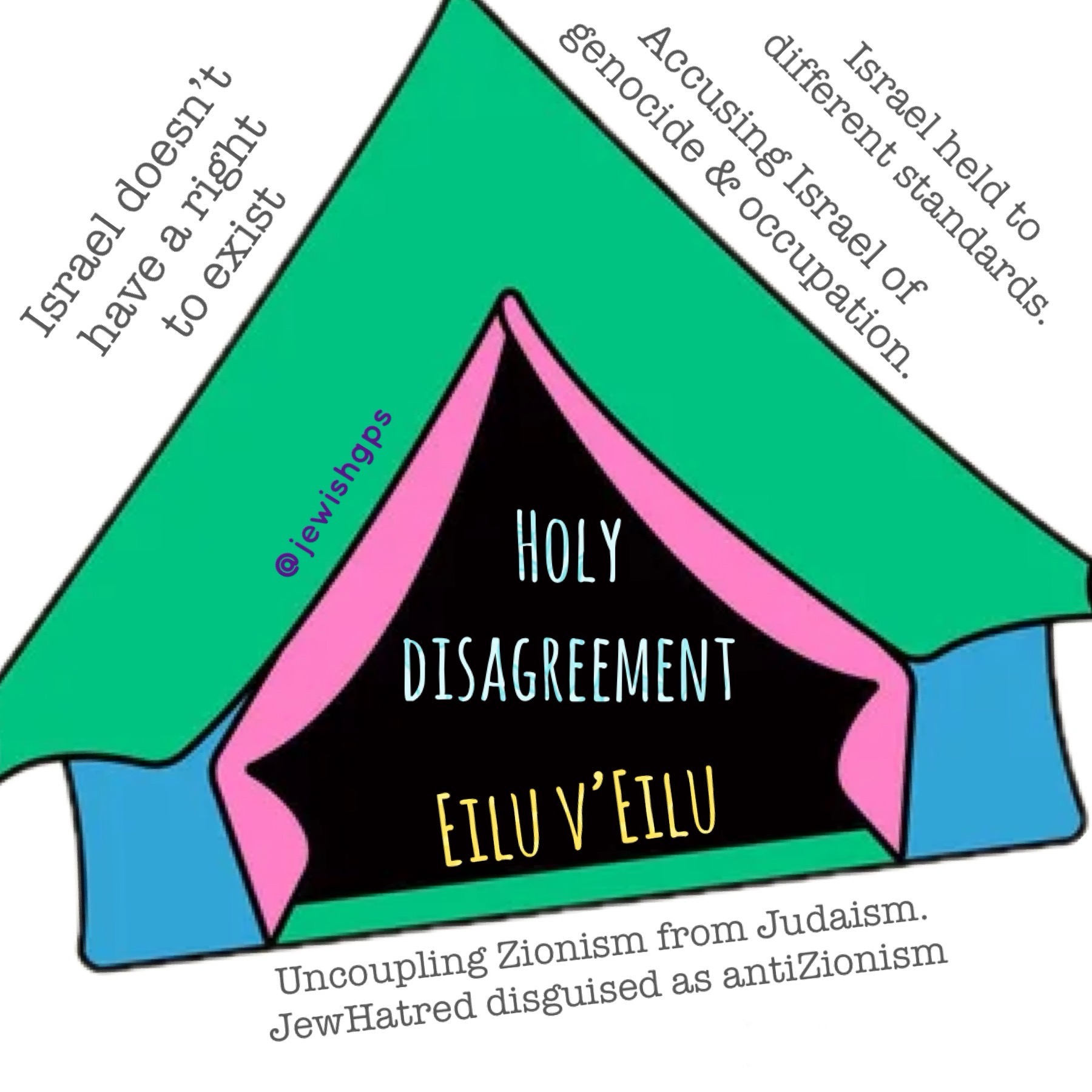
When it comes to talking about Israel or exploring concepts related to conflicts Israel is embroiled in, my tent is super wide and open for a lot of holy disagreement, but there are still basic ill -conceived concepts that fall outside of what I can deem holy and as acceptable dissent. This graphic displays some of the most polarizing ones:

In order for me to be in conversation – there is a level of emotional safety and respect that must exist as a baseline. However, when these unholy words and concepts are uttered or inferred, I automatically don’t feel completely safe and if I continue to engage, I do so with hesitation and trepidation.
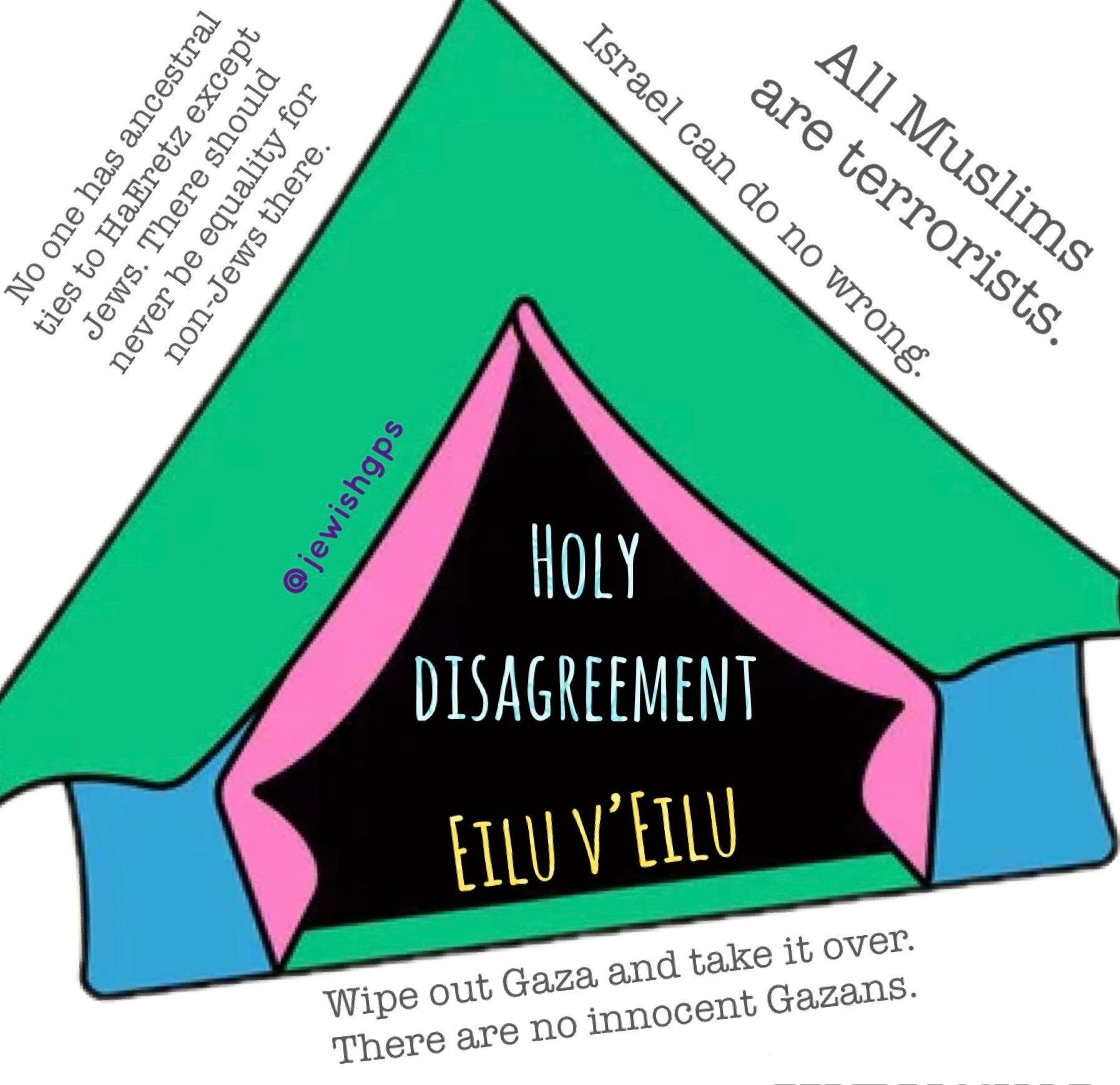
When I shared this with a few of my dear Muslim friends, they challenged me to consider that this is very one-sided and asked me what is outside the tent as it relates to Muslims and “Palestine” within the same holy debate. As a result, I have created this new graphic which illustrates statements I have heard but that I shut down and also refuse further engagement with those who insist on these unholy assertions:
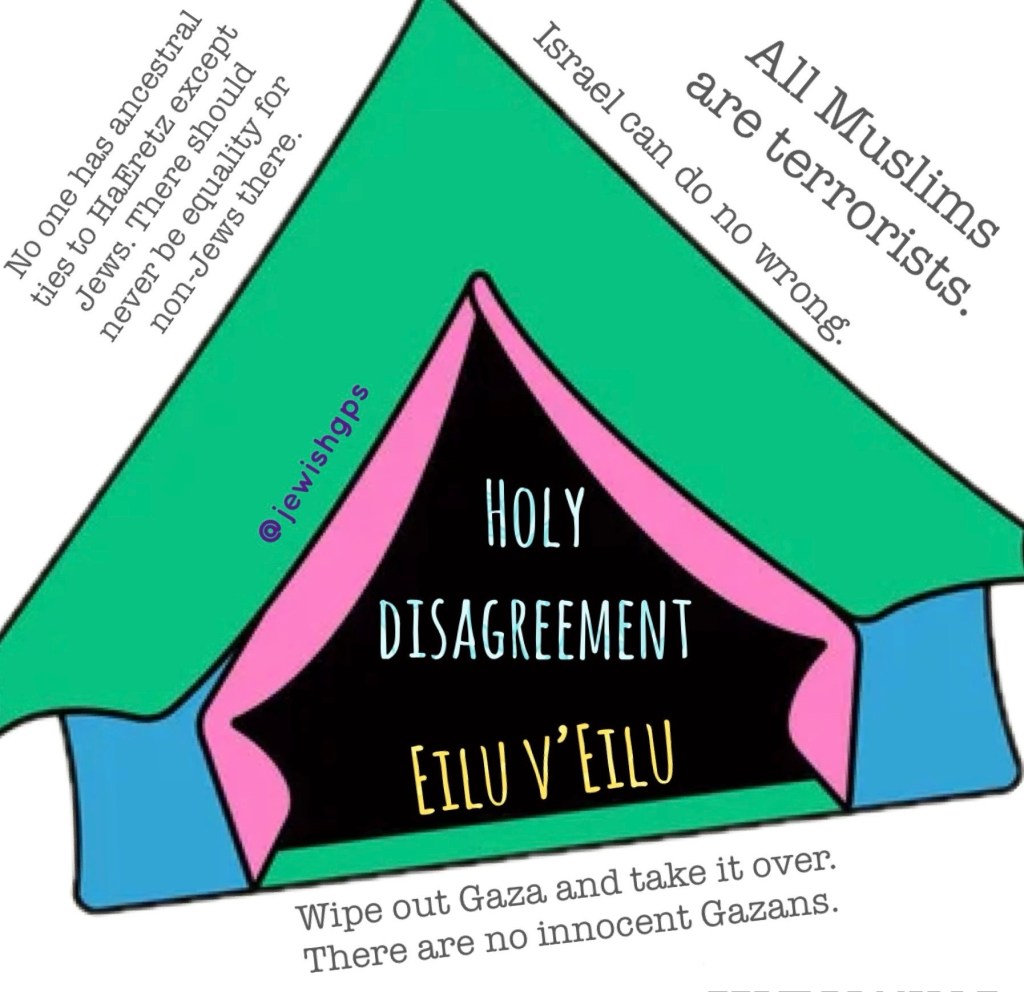
I know that the tent is different for each person and I implore people to figure out what unholy words or ideas you won’t tolerate – about Israel and the Palestinian people, or about any other complicated situation and then set those boundaries very clearly.
There is a lot of room inside the tent for hard dialogue and challenging assumptions and pushing comfort. Let’s be sure we stay in that space, and not step out into the unholy space outside the tent.



You must be logged in to post a comment.