
Tamrurim (Guideposts) are brief thoughts about Israel.
Check back for updates!
-
When Israel Is at War: What the World Sees — and What It Misses
Jewish Peoplehood Becomes Infrastructure When Crisis Hits and the Safety Net Activates
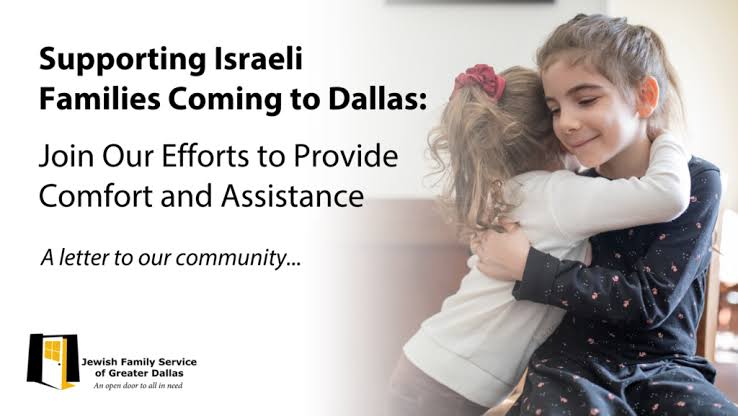
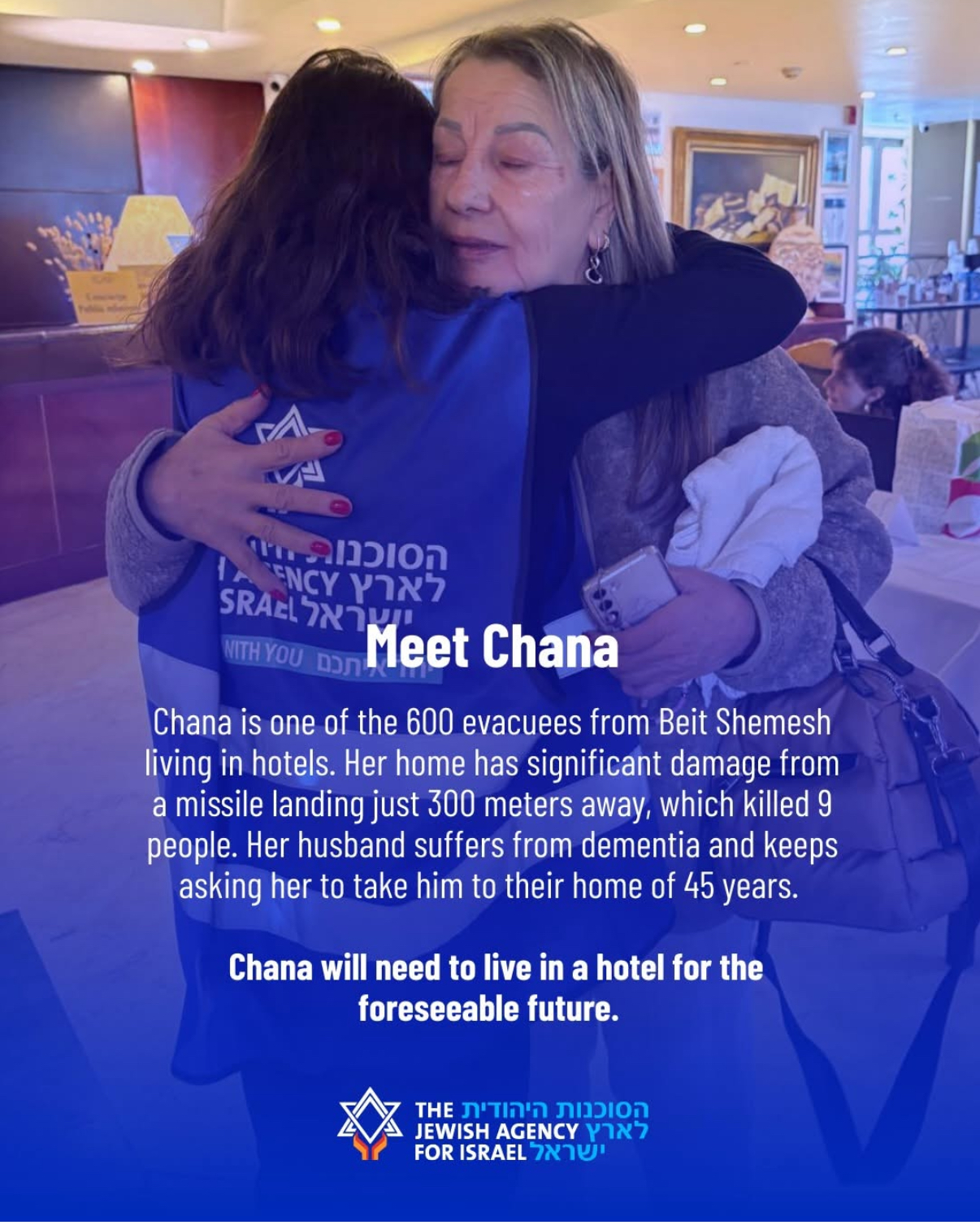
The image represents a very difficult reality.
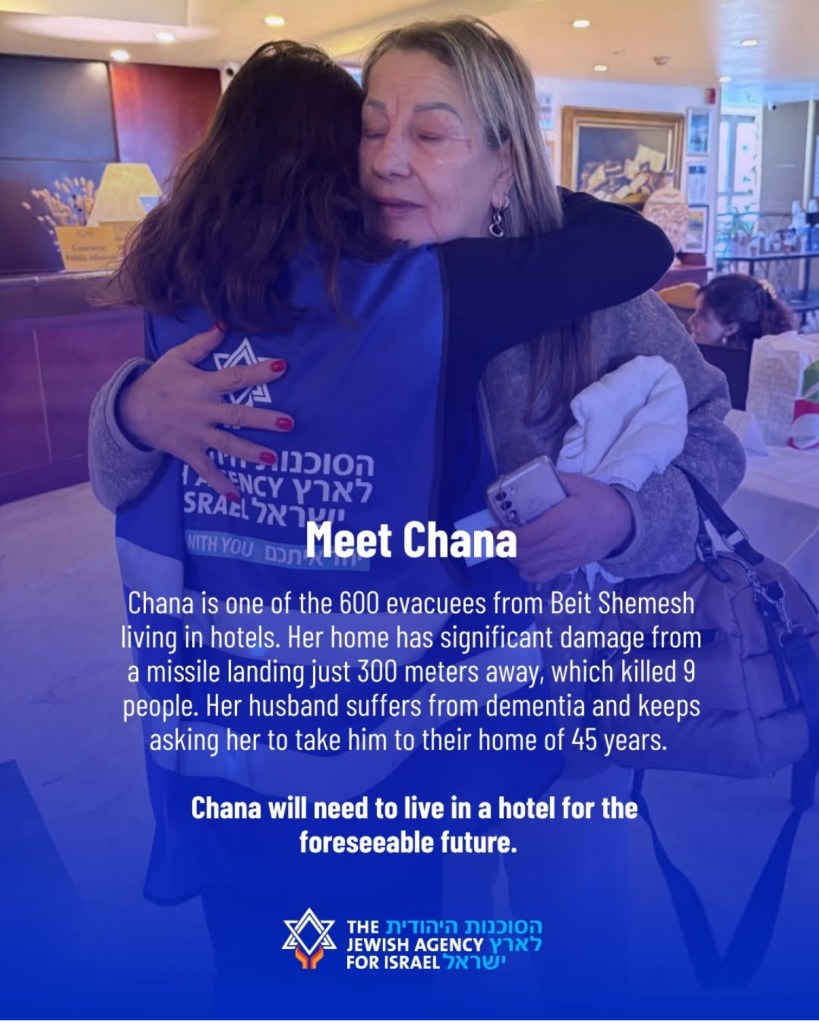
A woman embraces Chana, an evacuee from Beit Shemesh. Her home was damaged by a missile strike in the most recent war with the Iranian Regime. Her husband, living with dementia, keeps asking to go back to the house they lived in for forty-five years.
She is now living in a hotel.
For the foreseeable future.This is what displacement looks like in Israel.
And that detail matters.What People See and What They Miss
Globally, over the last two and a half years, people have been watching two sets of images, two very different narratives.
From Gaza, they see: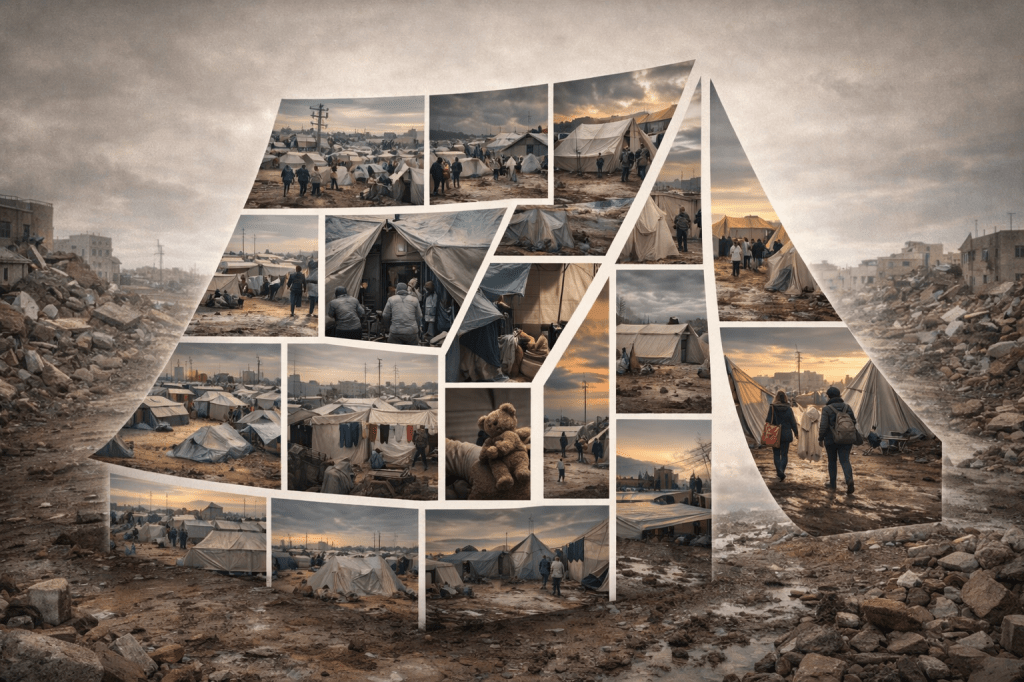
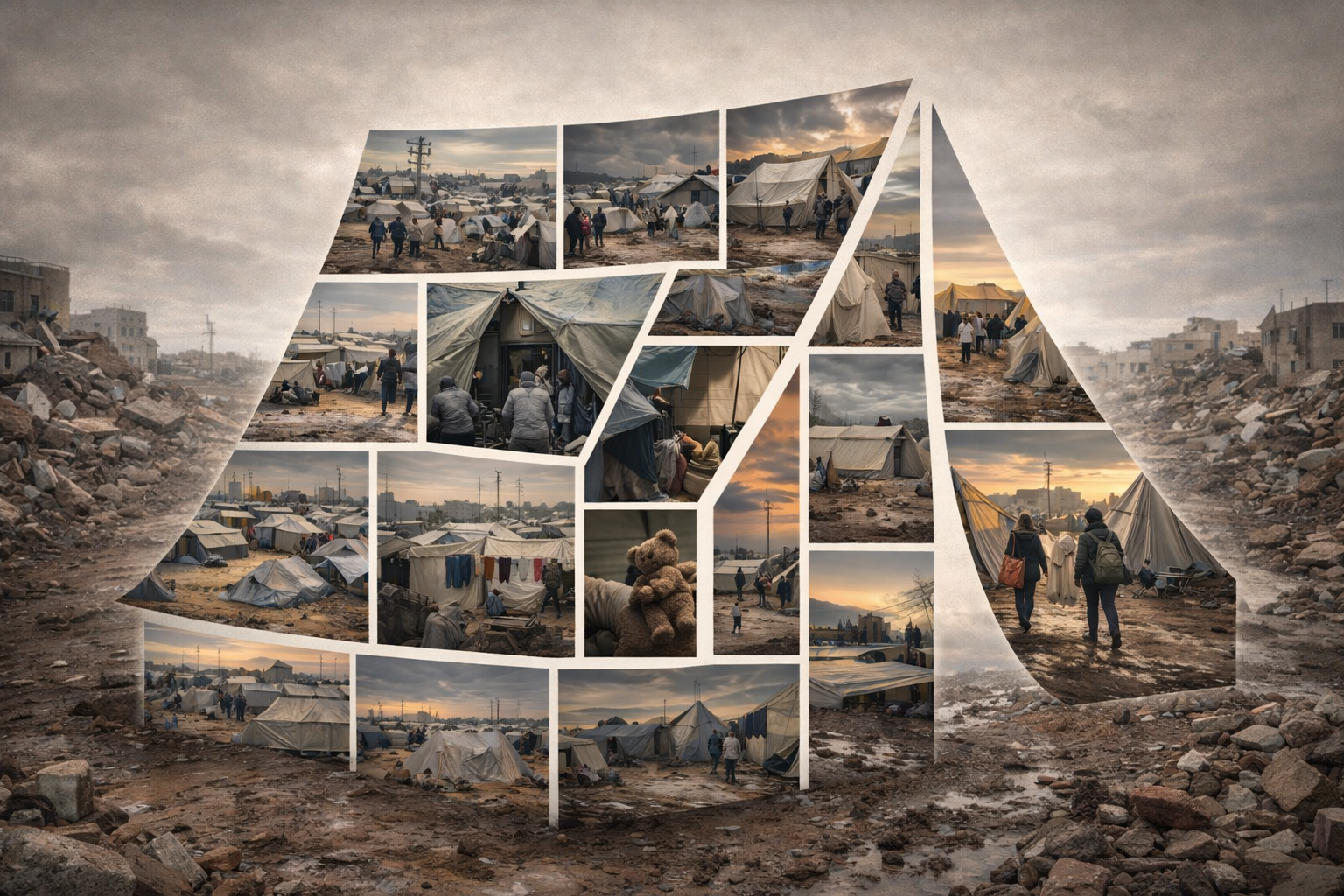
widespread destruction – tent encampments – visible humanitarian collapse
human suffering – education disruption – unmet medical needsFrom Israel, the world sees something vastly different:
- cities still functioning relatively well
- kids still getting an education
- rapid medical response
- families not living on the streets among rubble
From those images, some draw a conclusion:
That the impact on Israelis and Gazans is unequal.
That the war is disproportionate.
That one side is protected while the other is exposed.What the World Does Not See
But what those images do not show is the infrastructure behind them. Because what looks like the absence of suffering is often the presence of systems that absorb it.
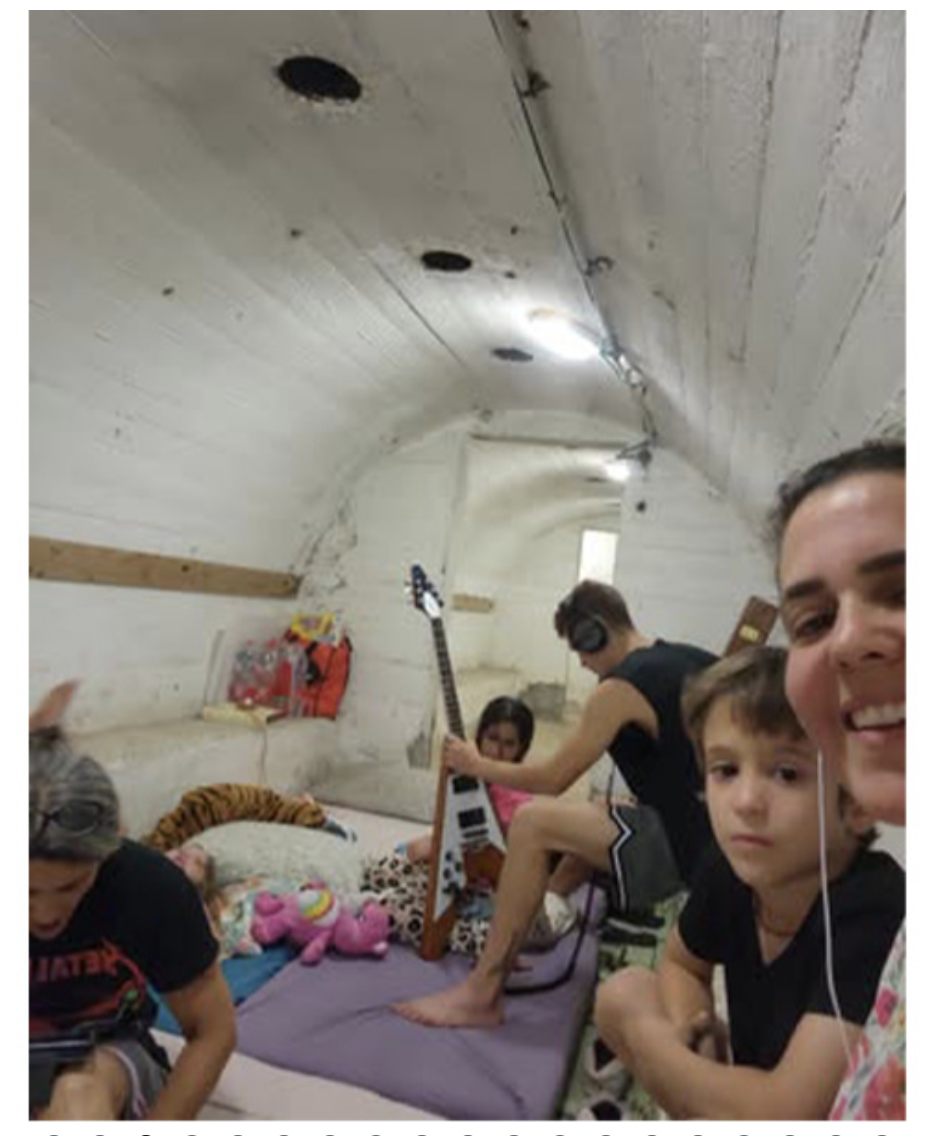
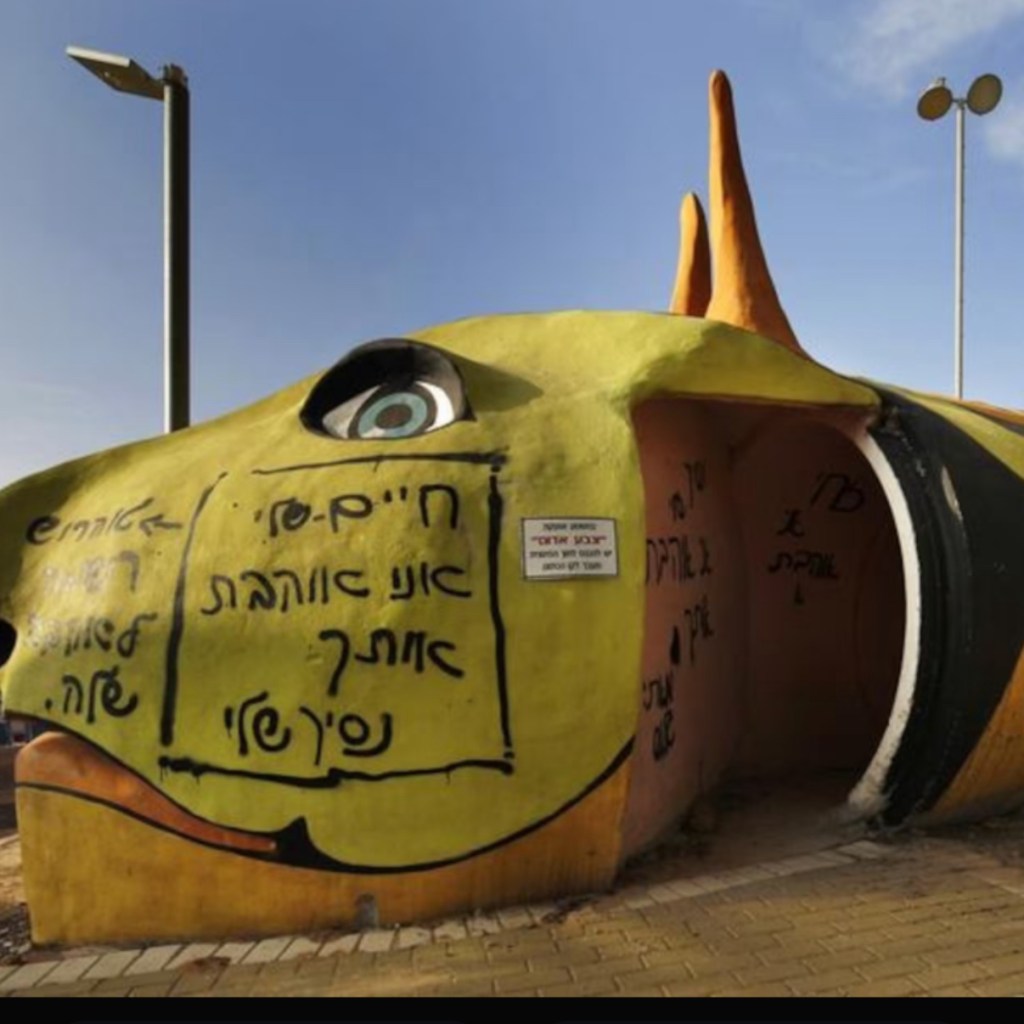
Due to a constant threat from its neighbors, Israel has spent decades building:- reinforced safe rooms in many homes
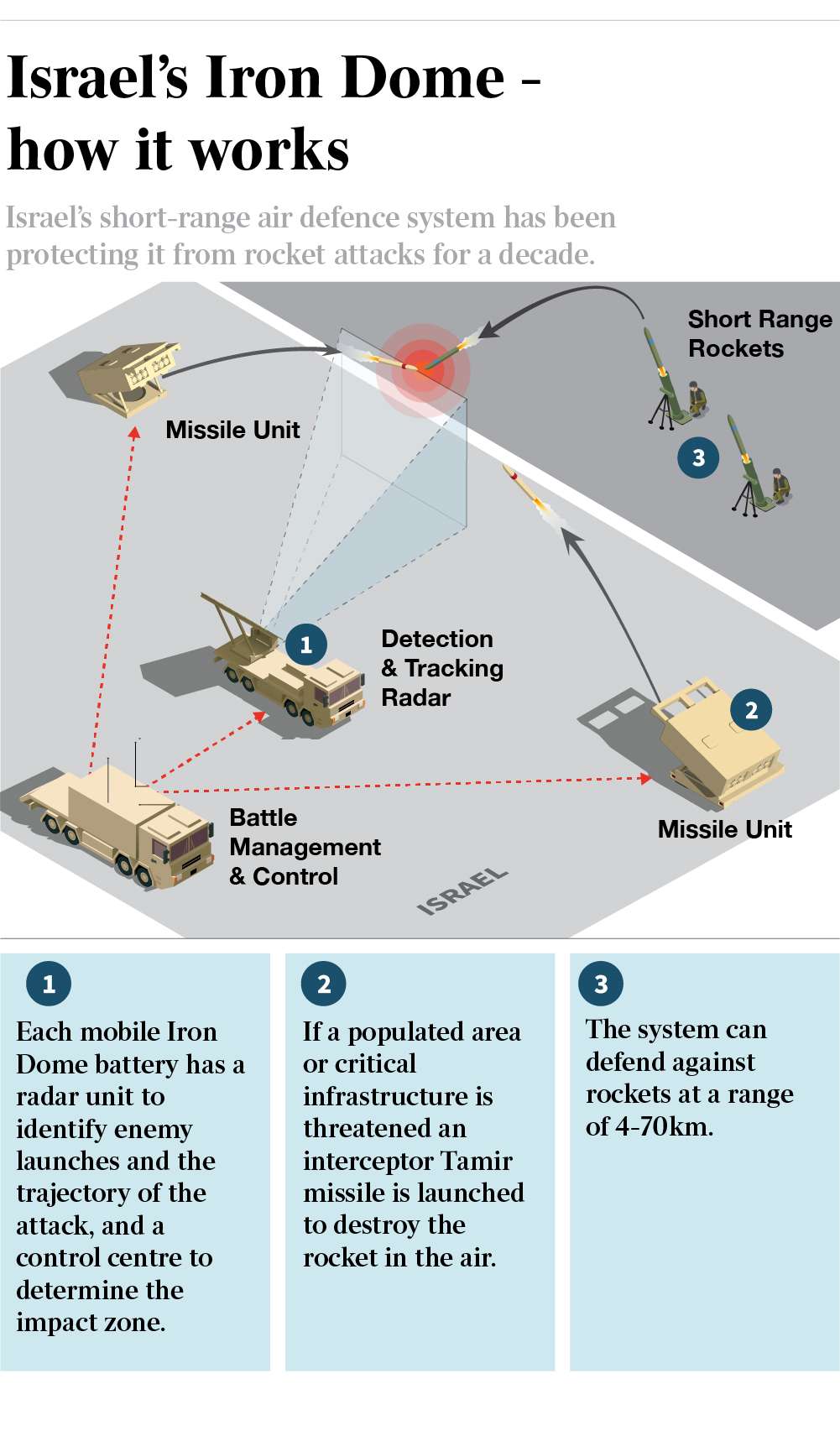
- missile defense systems like Iron Dome
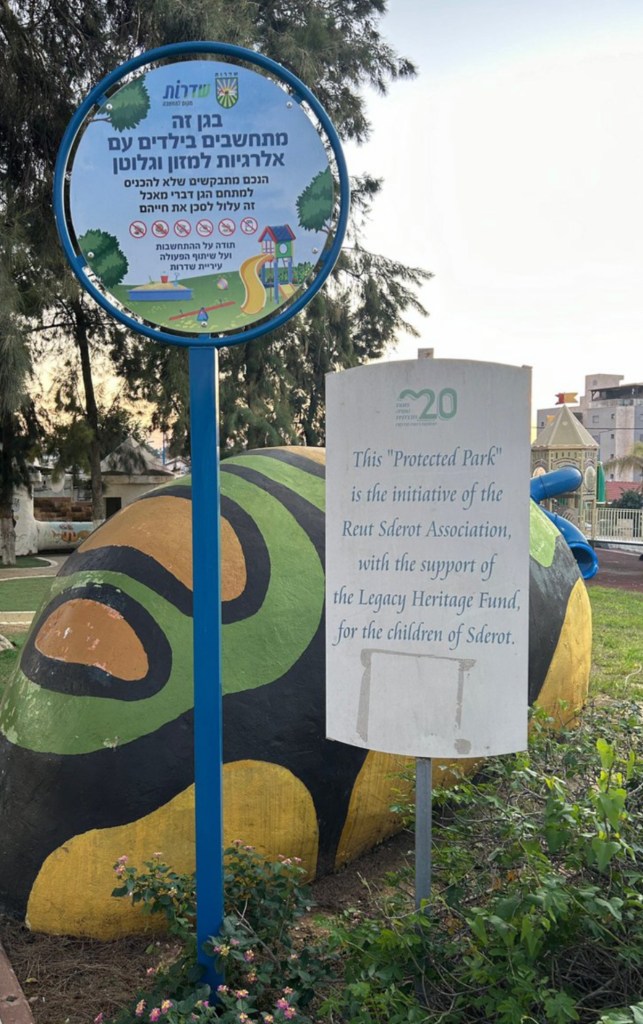
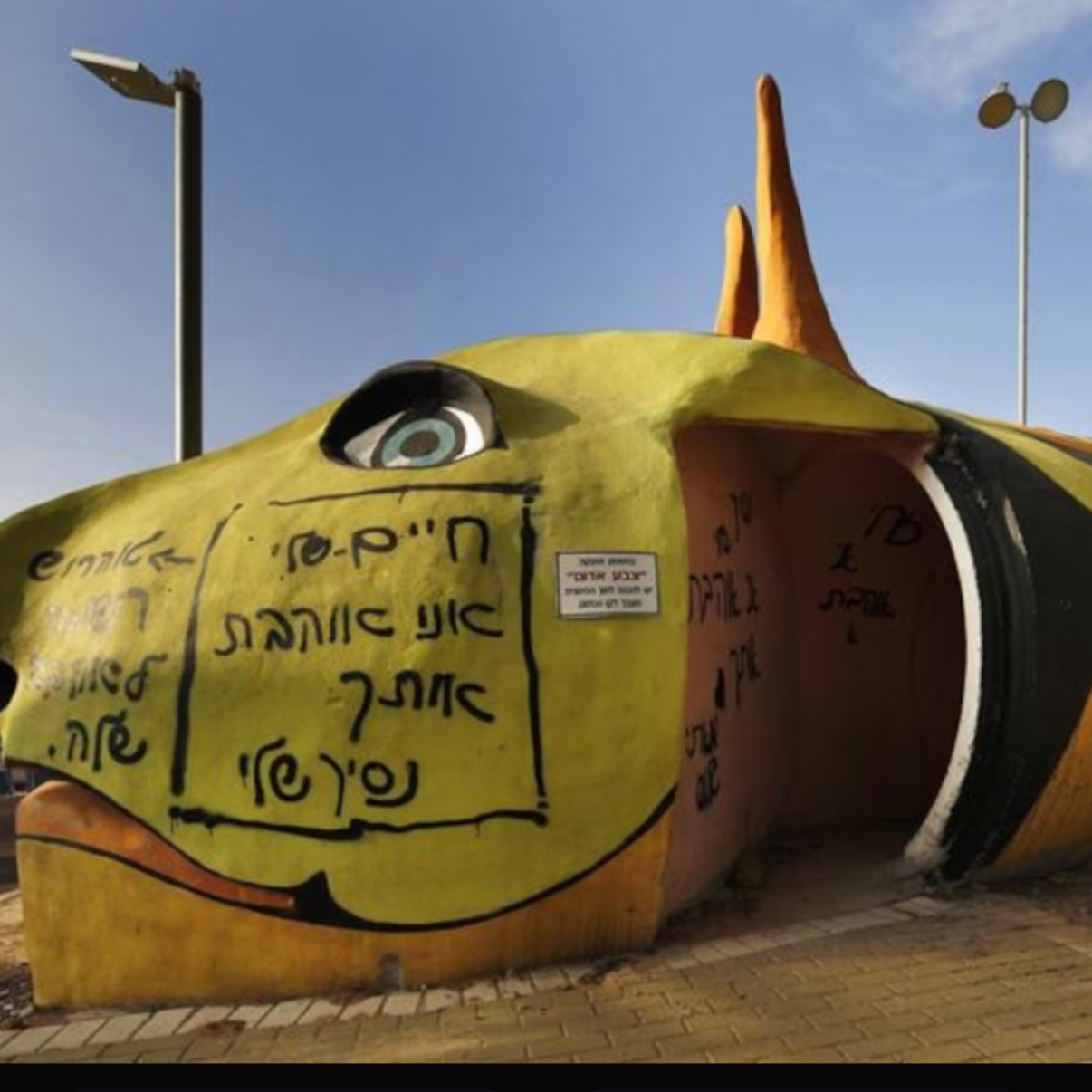
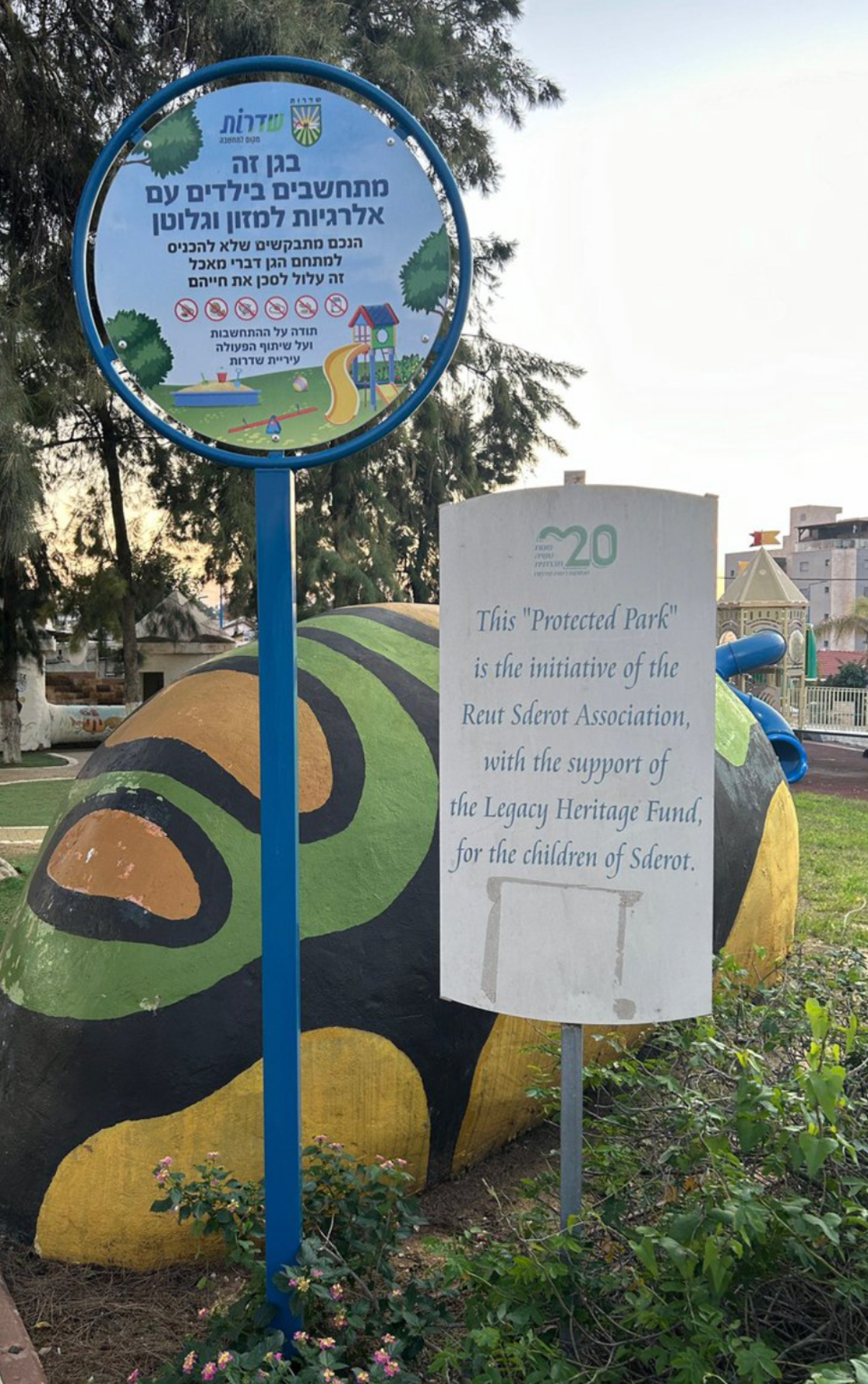
- bomb shelters all over the country from inside private homes to surrounding playgrounds.
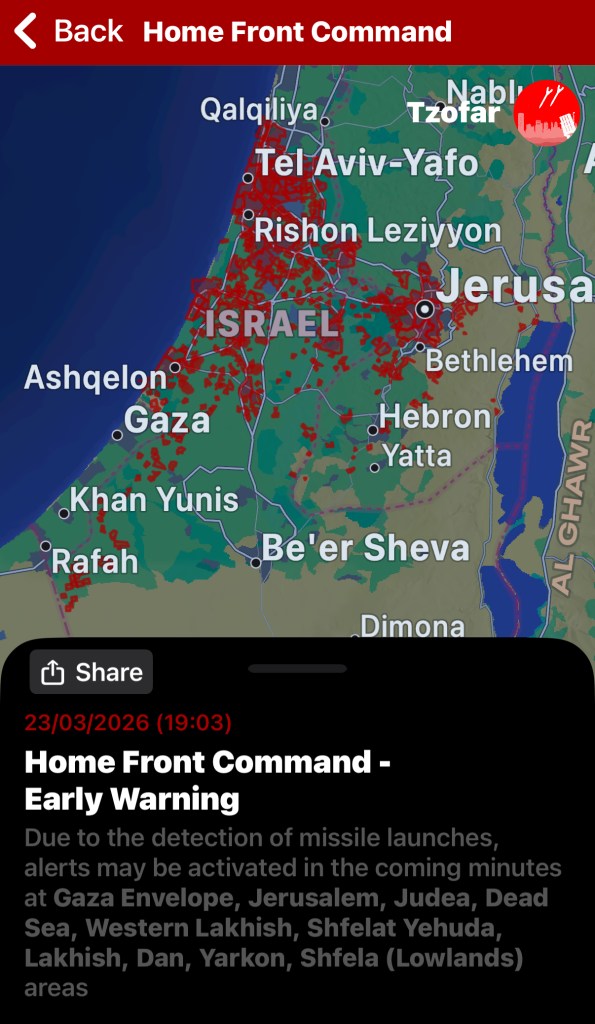
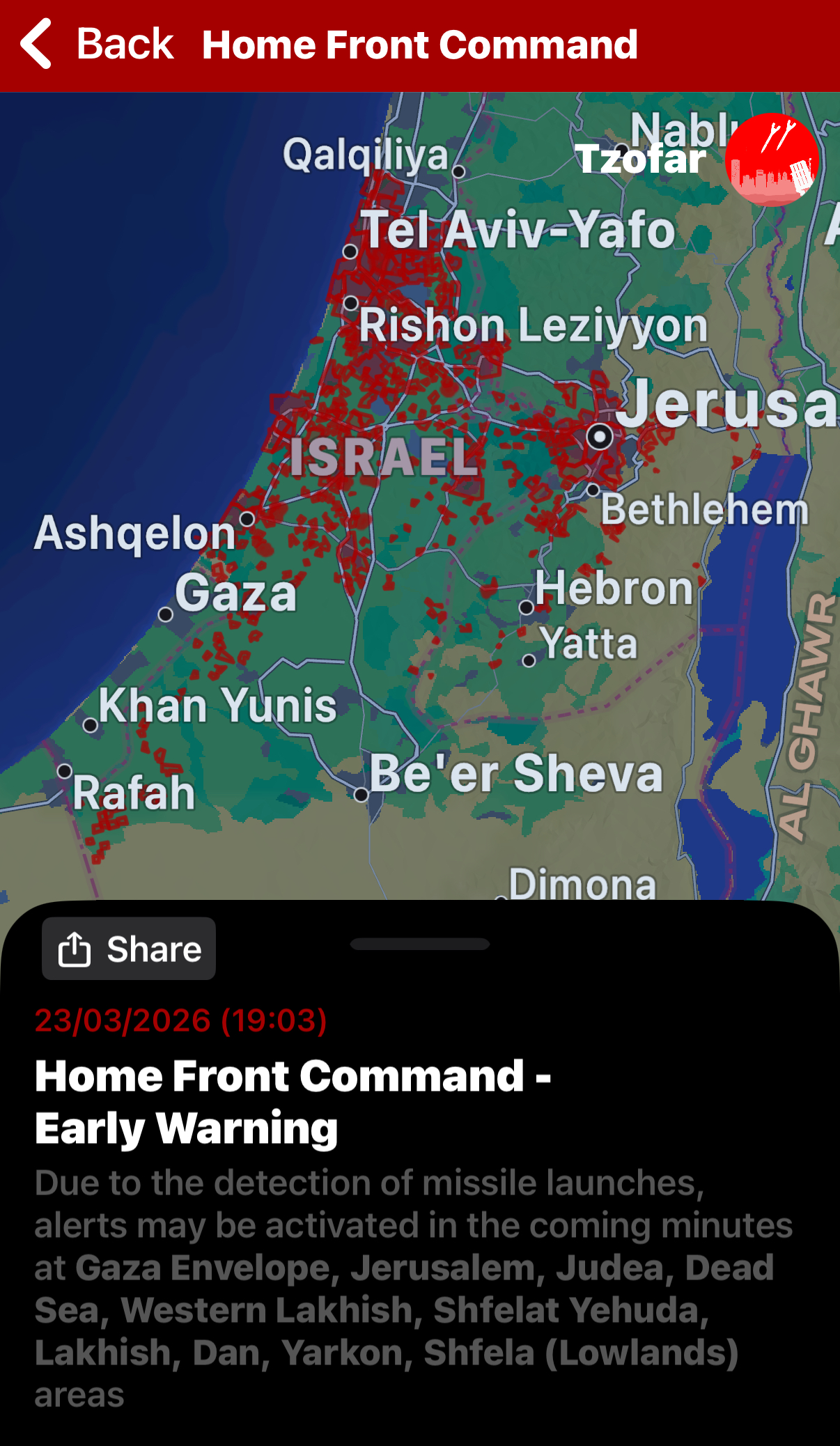
- early warning networks that give civilians time to reach shelter
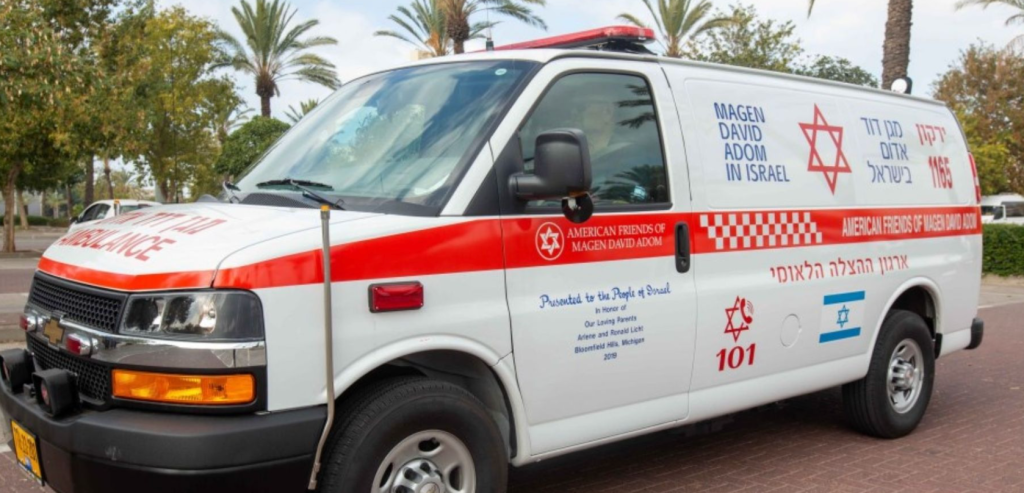
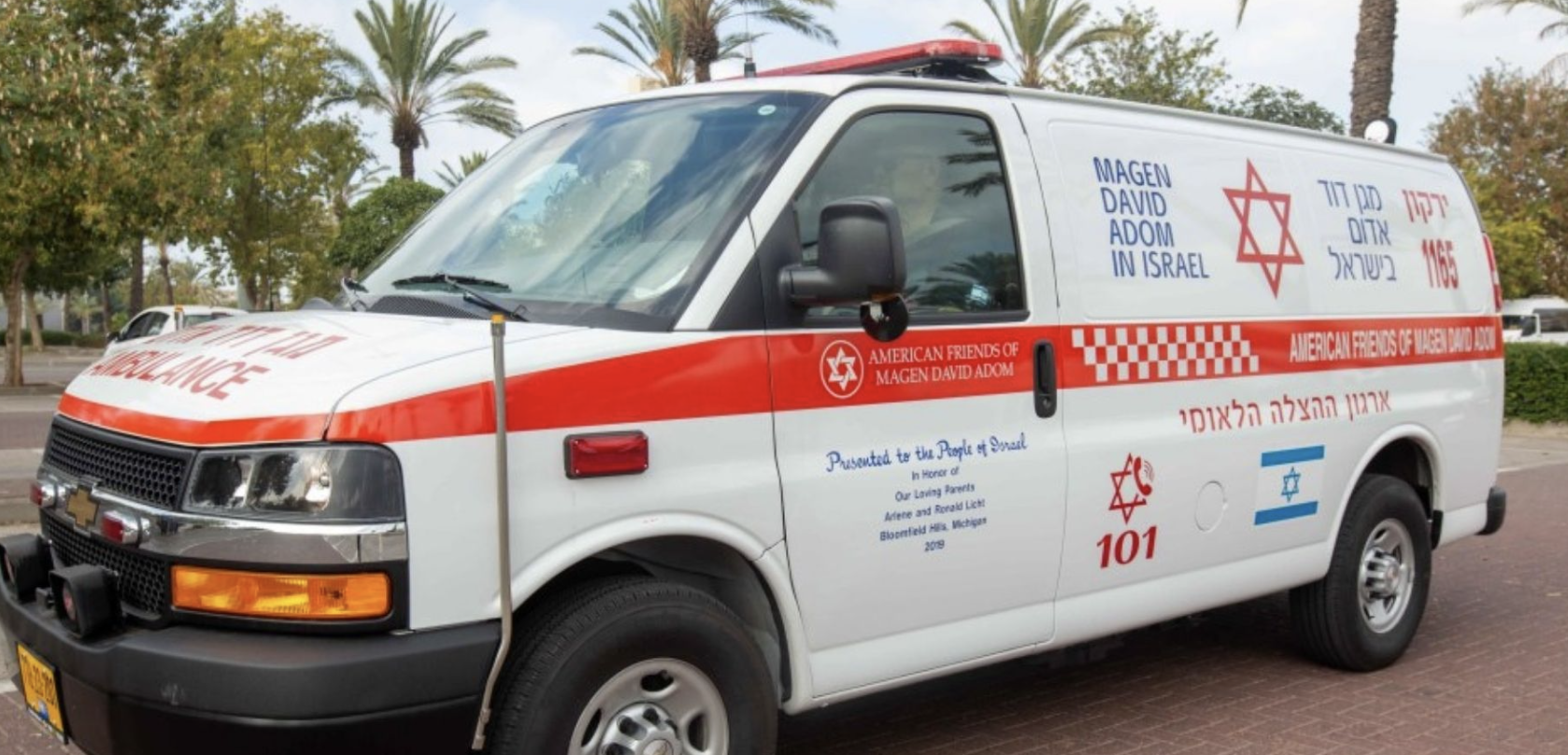
- ambulances and extensive emergency response systems
- four hospital wards across Israel that are underground.
(Home Front Command; Ministry of Defense)
And beyond the state, Jewish communities globally have invested in civilian protection — funding shelters, emergency systems, and medical infrastructure that operate long before and long after any single moment of crisis:
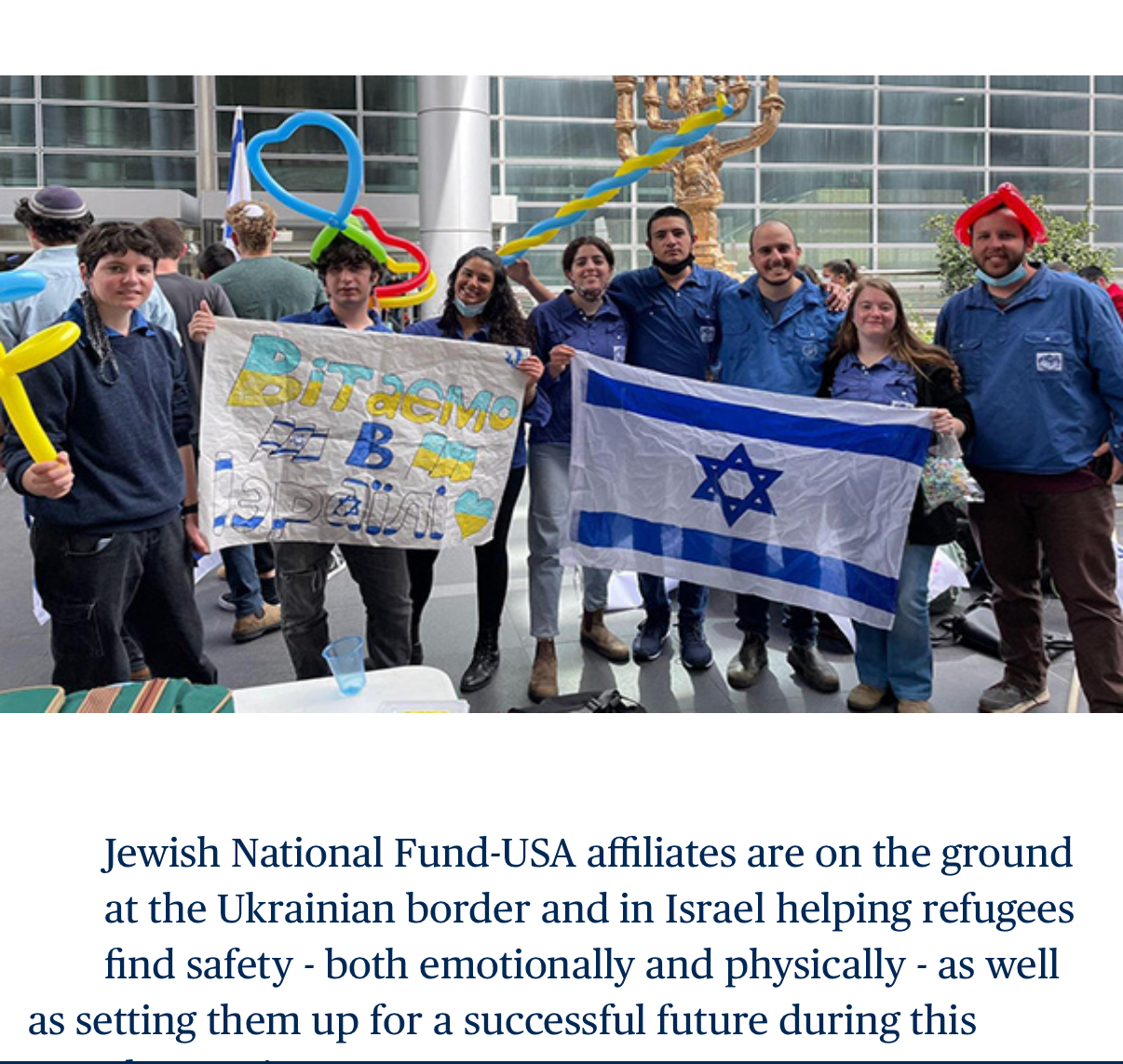
- hundreds of bomb shelters funded by the Jewish National Fund-USA
- ambulances and emergency systems funded by the American Friends of Magen David Adom
- a coordinated platform and effort for training and response tools funded in part with multiple diaspora supports.
These systems do not eliminate danger. They change what danger looks like. They alter the outcomes after danger strikes.

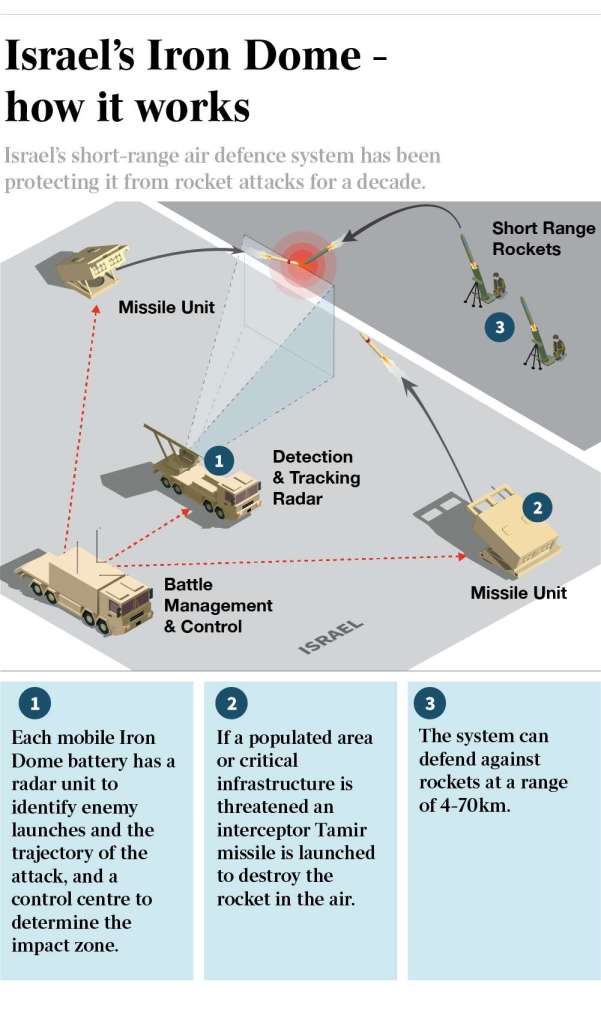
Rapid Response: When Crisis Hits, Civil Society Moves
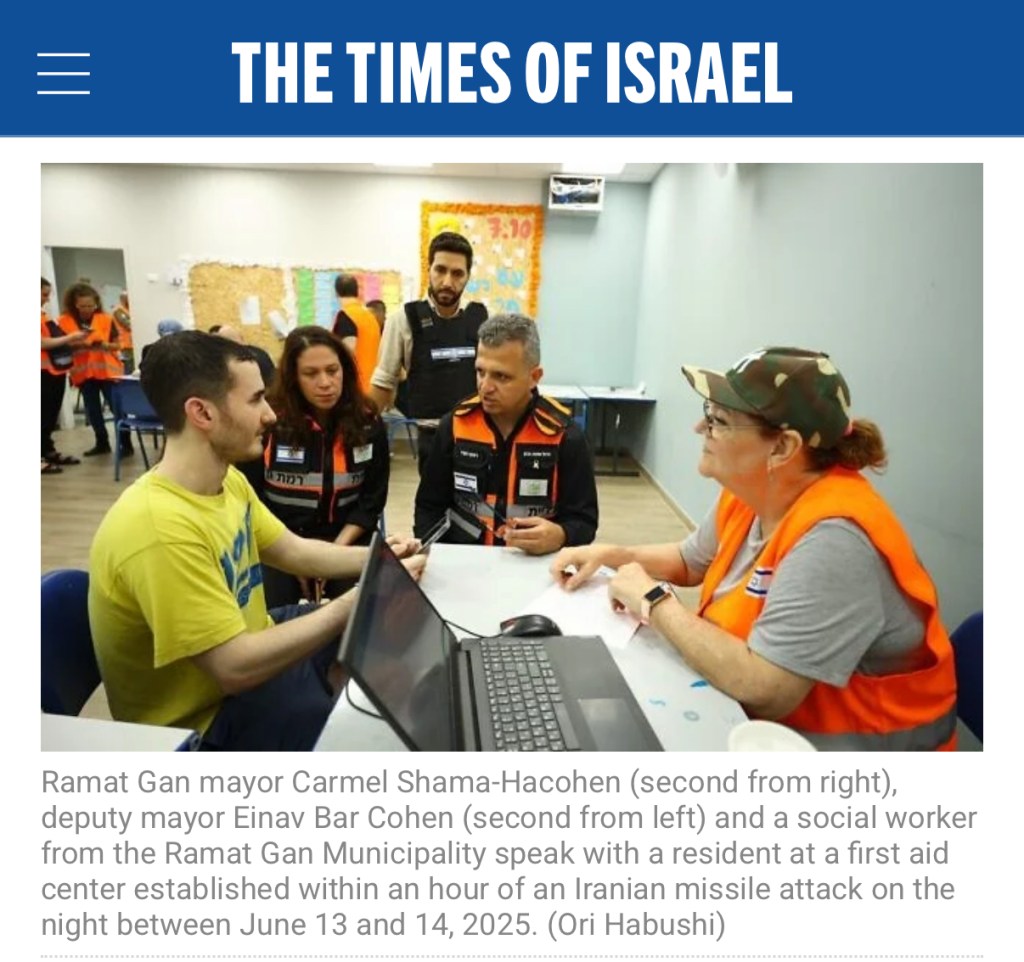
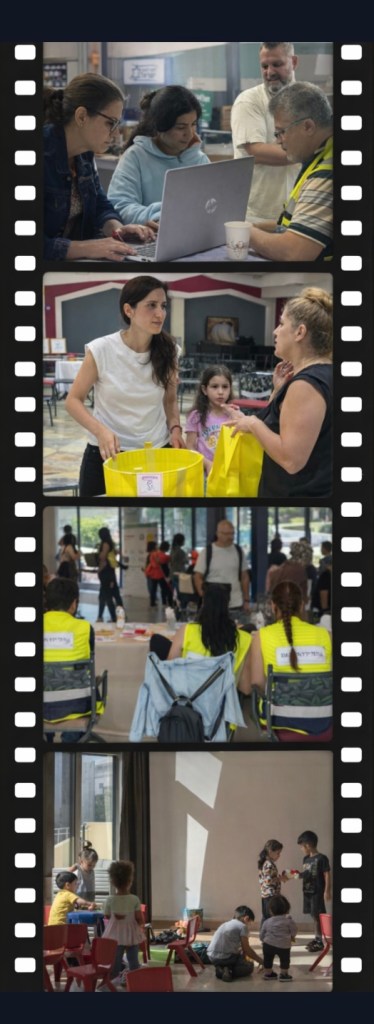
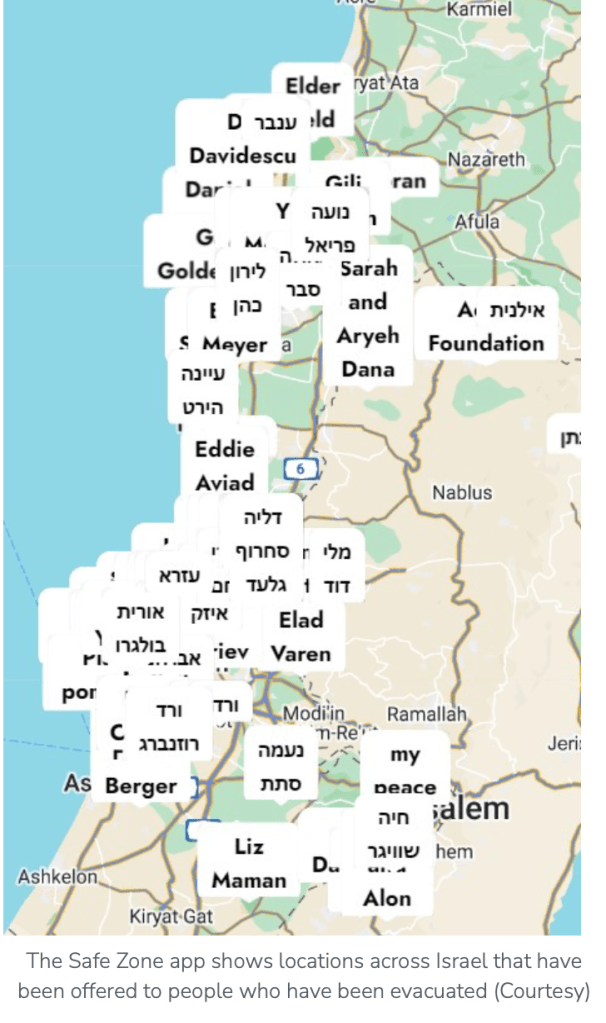
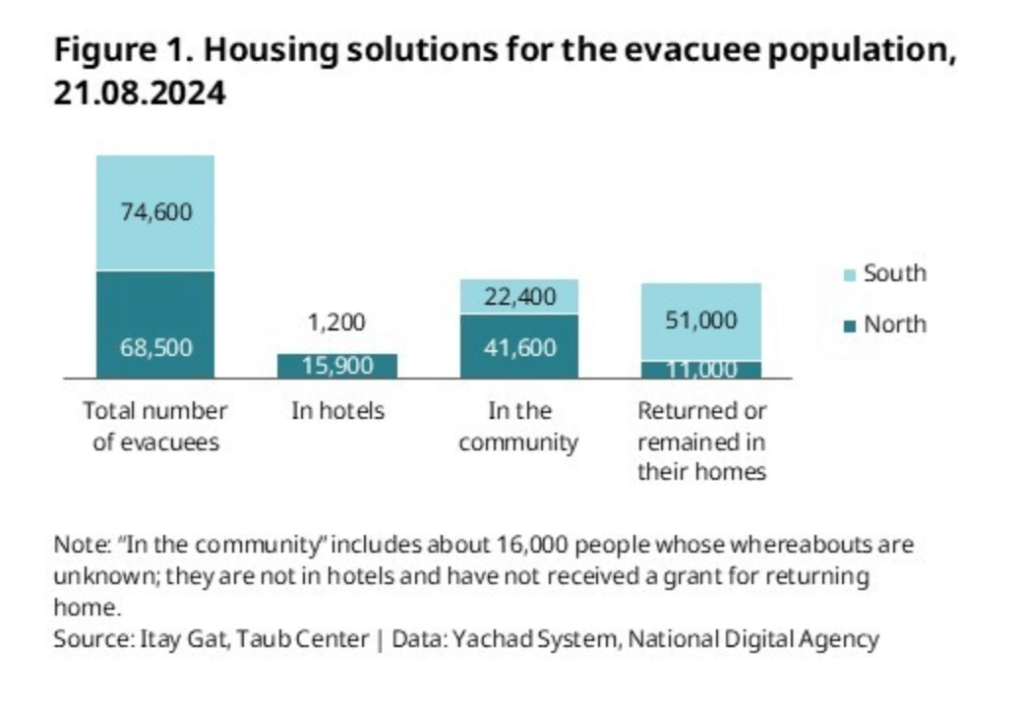
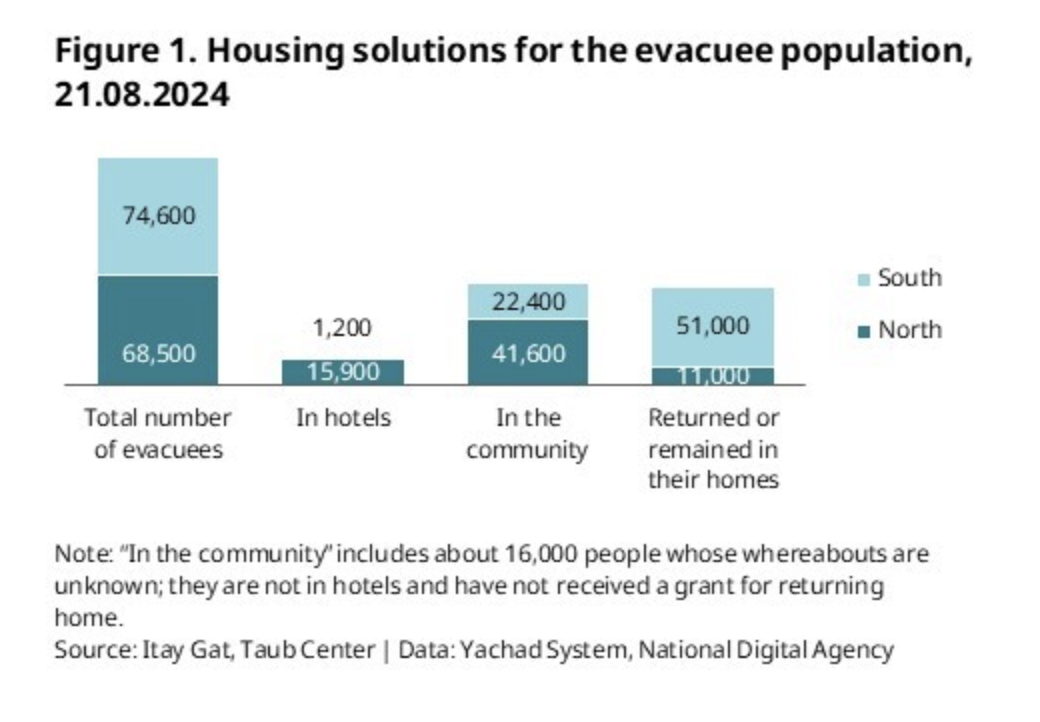
After October 7, roughly 200,000 to 250,000 Israelis were displaced from their homes. (Sources: INSS; Taub Center).
Entire communities were evacuated overnight. It was sudden. It was chaotic. It was devastating.
And yet, those families were not living in tent cities.
They were living in:
- hotels
- temporary apartments
- host communities
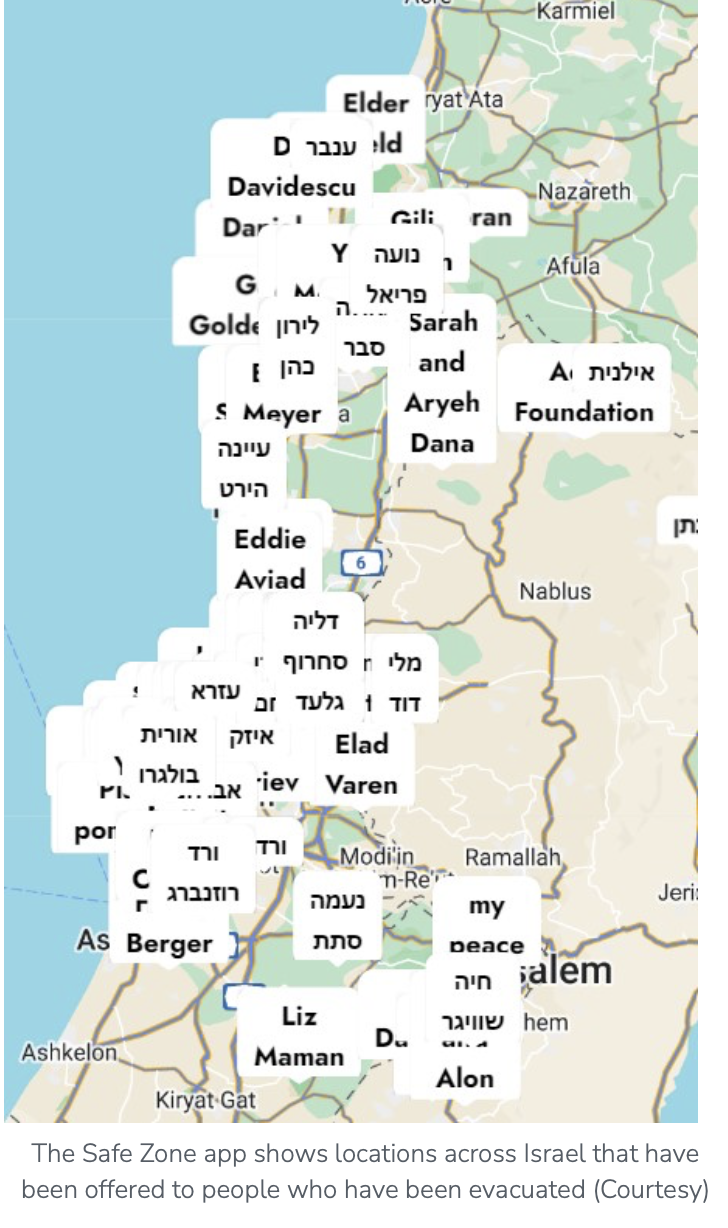
- homes opened by strangers
(graphic from Taub Center)
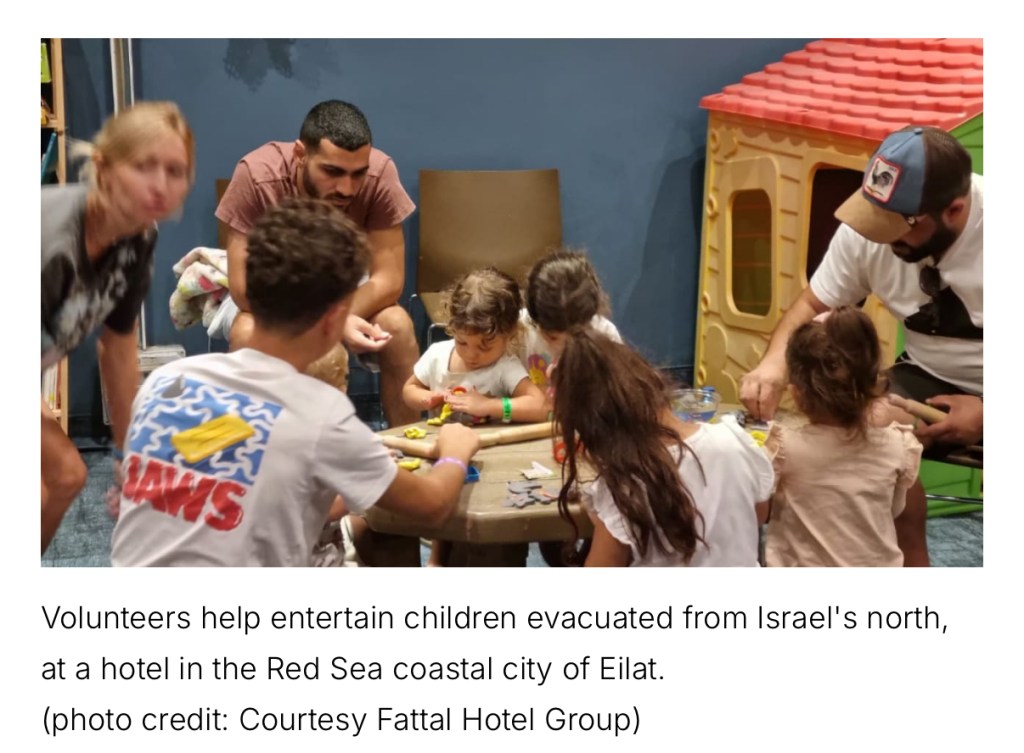
Within weeks, schools were rebuilt inside those hotels. Israel’s Ministry of Education created hundreds of temporary classrooms for roughly 54,000 displaced students. (Ministry of Education).
Children went back to school. Parents who weren’t called up to the military went back to work. Life, as much as possible, continued.
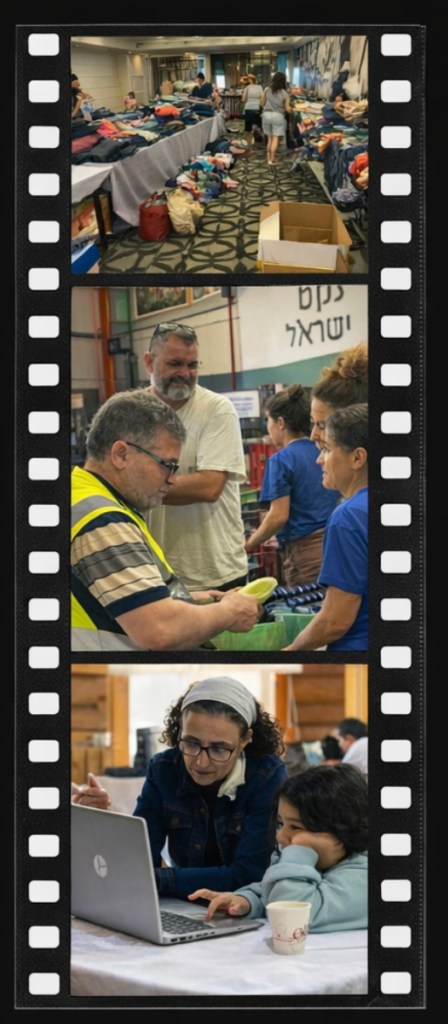
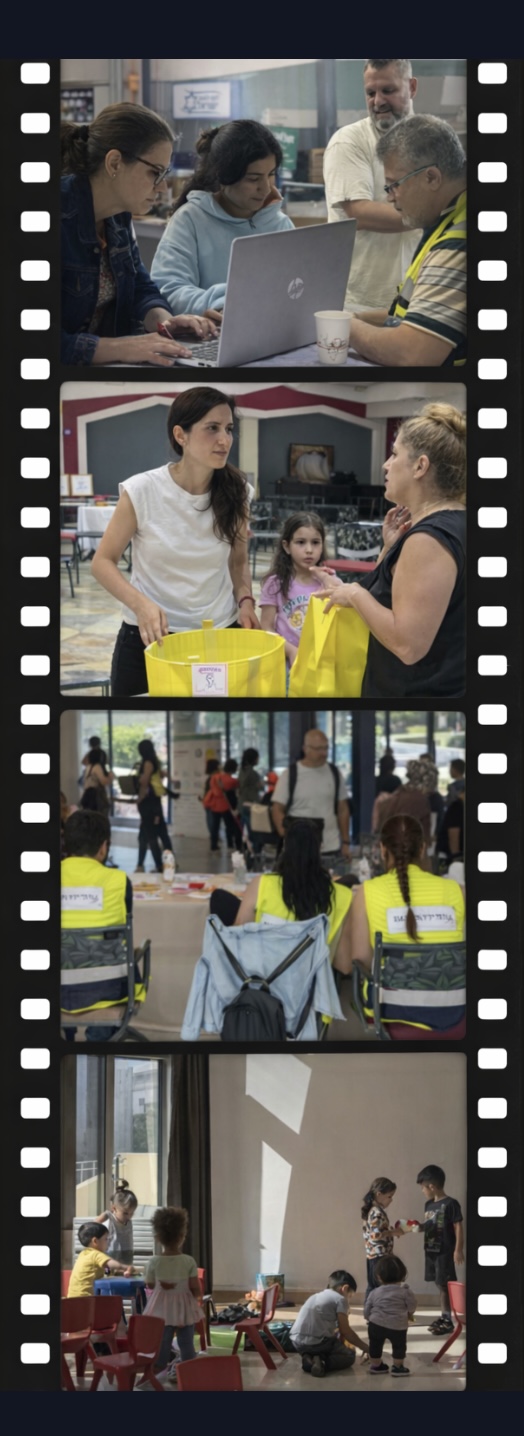
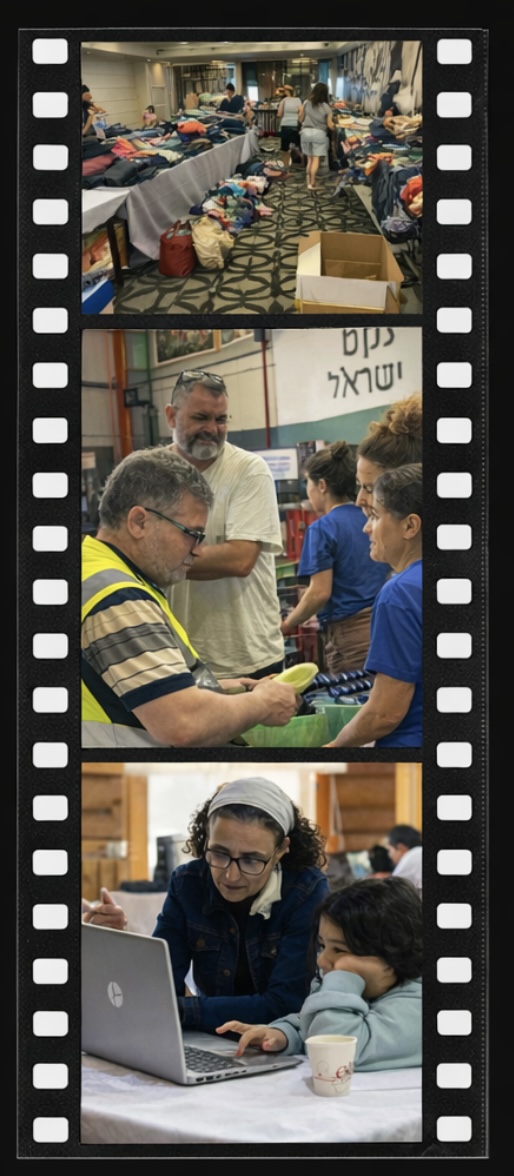
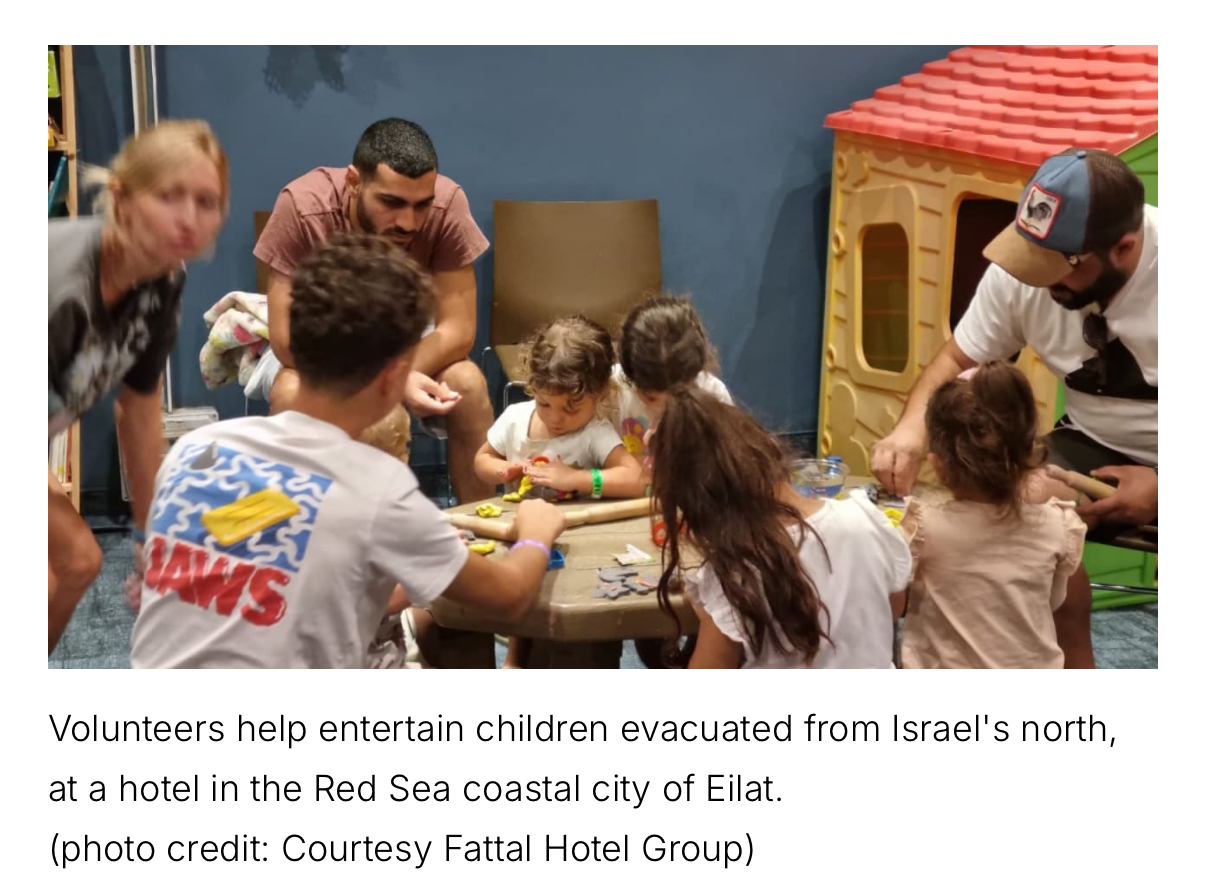
At the same time, civil society mobilized at extraordinary scale:
- After October 7, nearly 50% of Israeli citizens volunteered during first weeks of war (Times of Israel).
- By early 2024, over 500,000 Israelis had participated in longer term volunteer efforts (Times of Israel).
- More than 20,000 families opened their homes to evacuees.
- When agricultural labor disappeared overnight, tens of thousands of volunteers stepped in to harvest crops
(Reuters). - The organization Leket Israel distributed over 70 million pounds of food and more than 2.2 million meals.
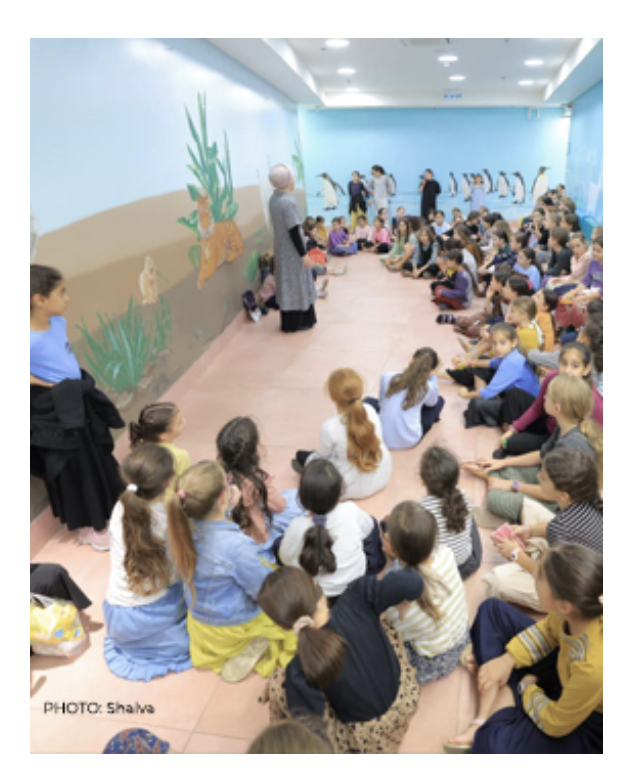
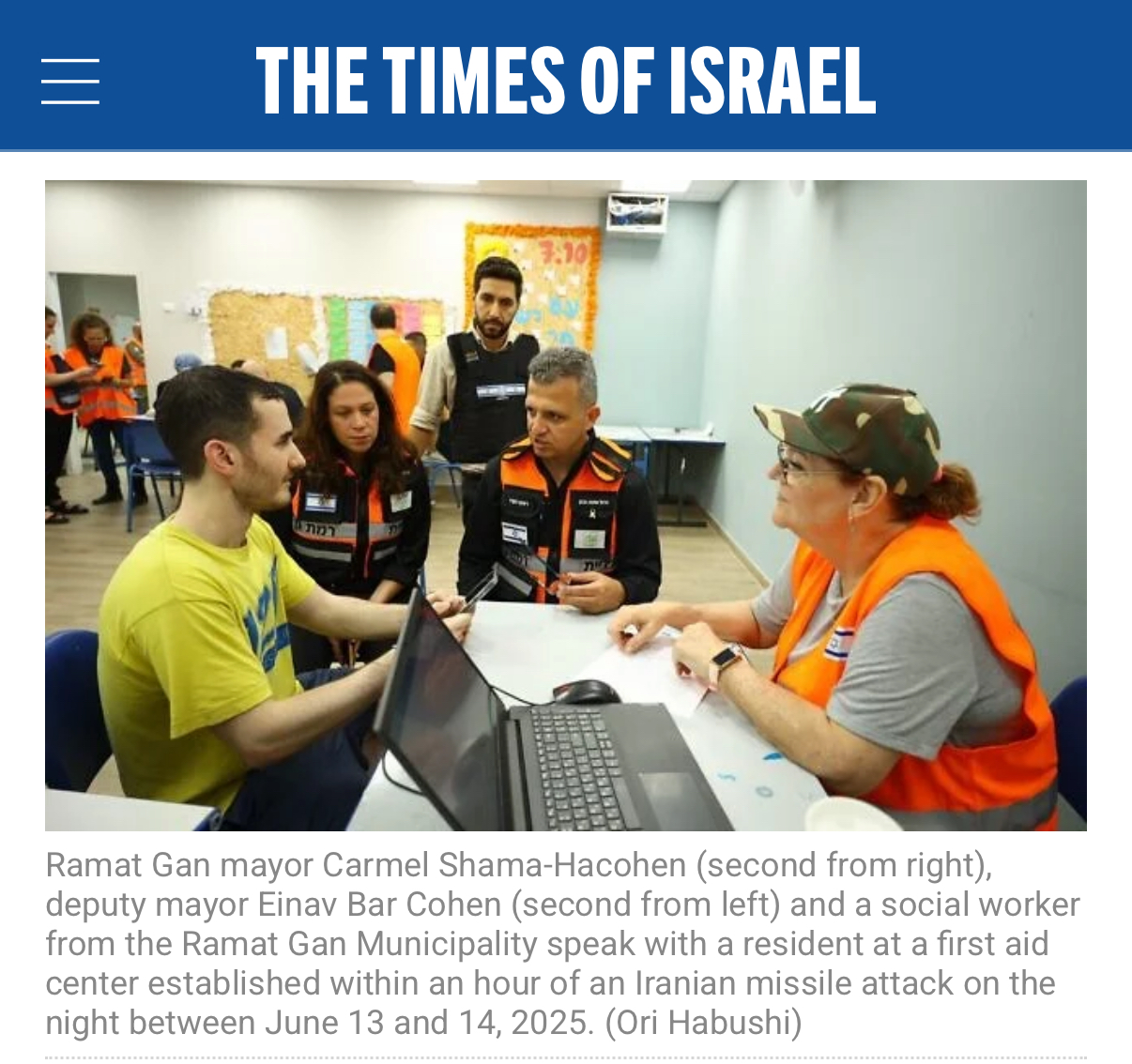
Childcare systems, educational frameworks, and trauma services were rebuilt inside evacuation centers so that families could function.
This is not simply aid. It is a society reorganizing itself in real time.
A Global System
At the same time, the global Jewish community activated.
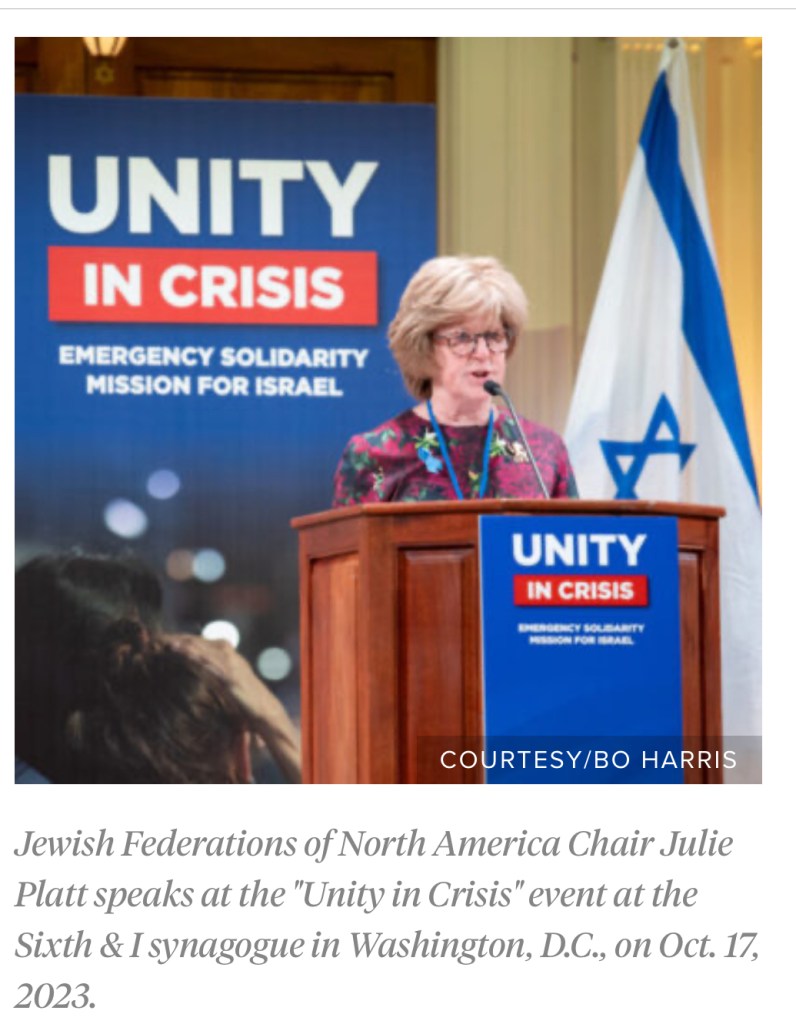
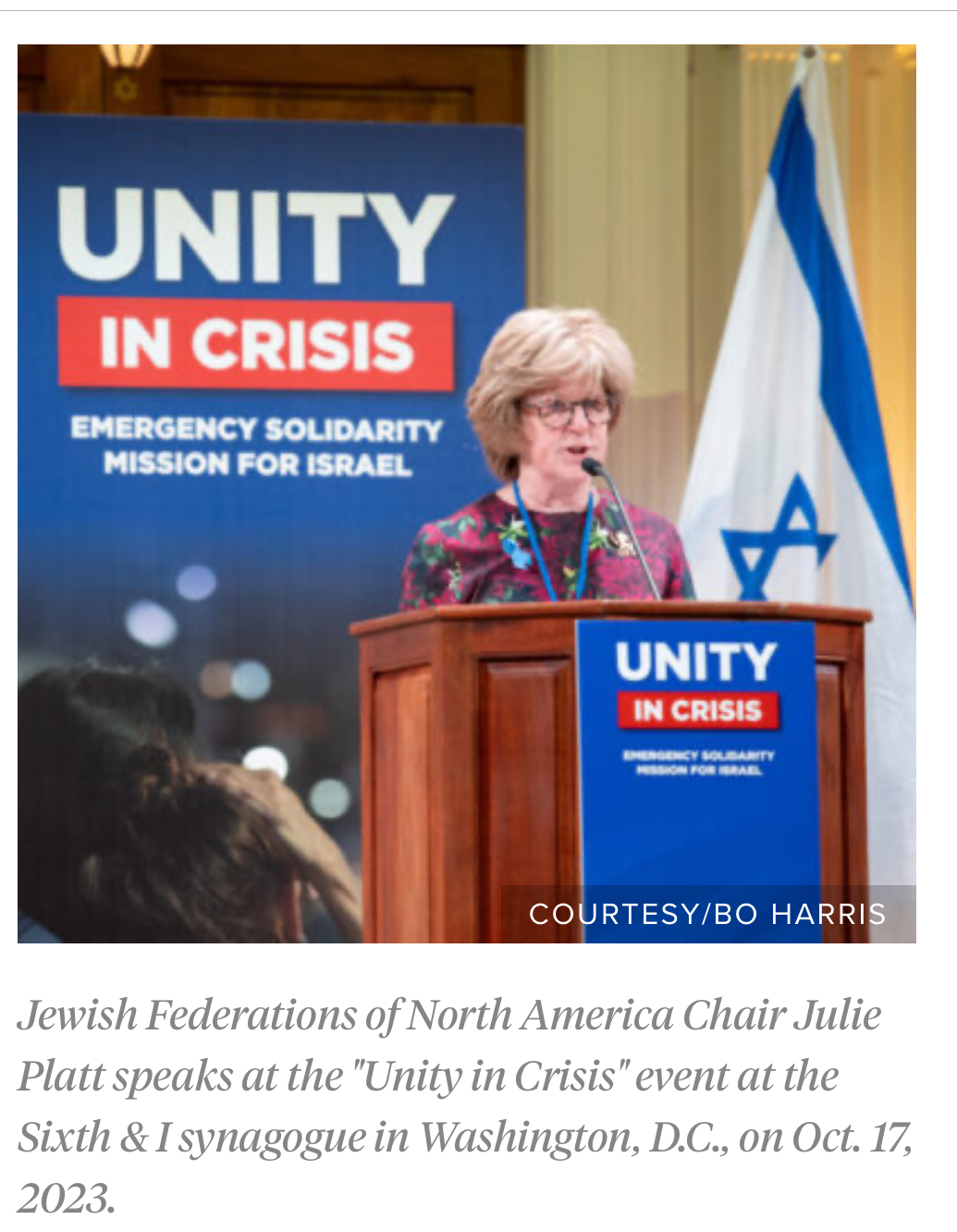
The Jewish Federations of North America raised $908 million within months.
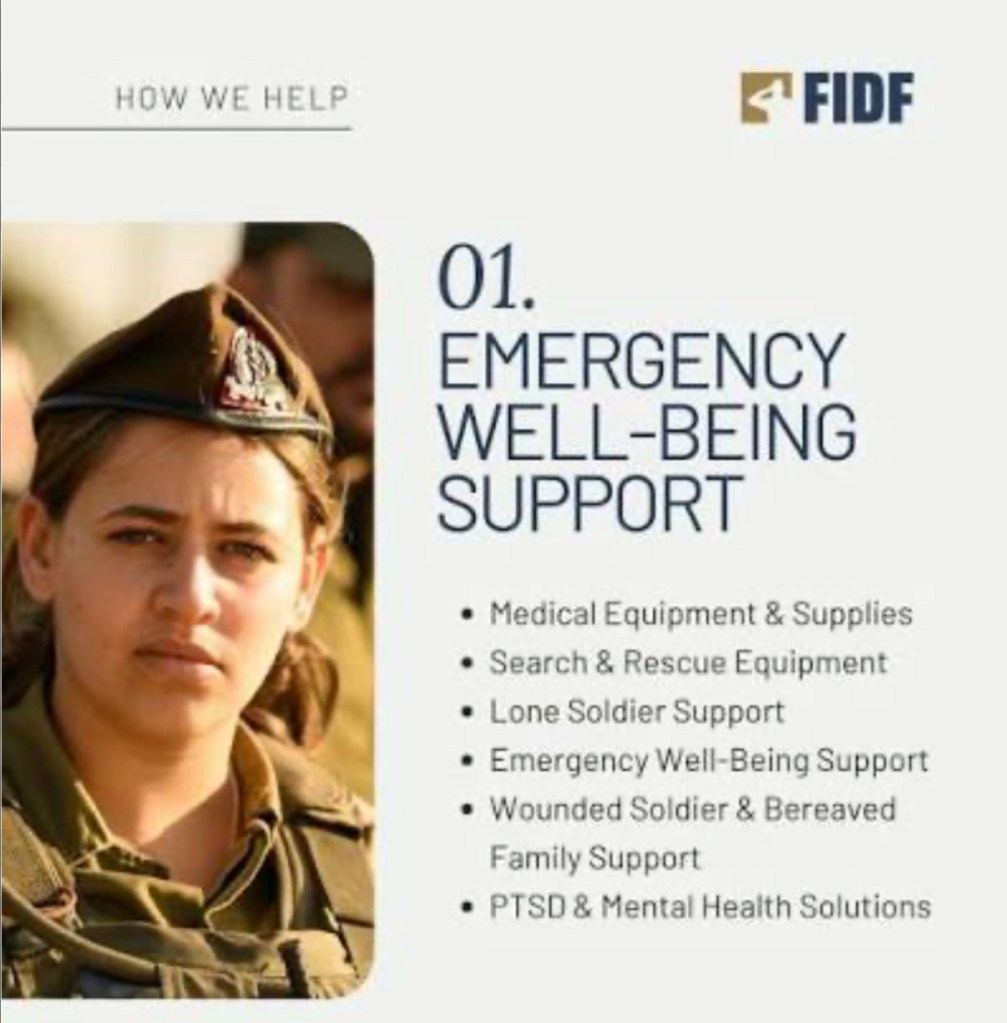
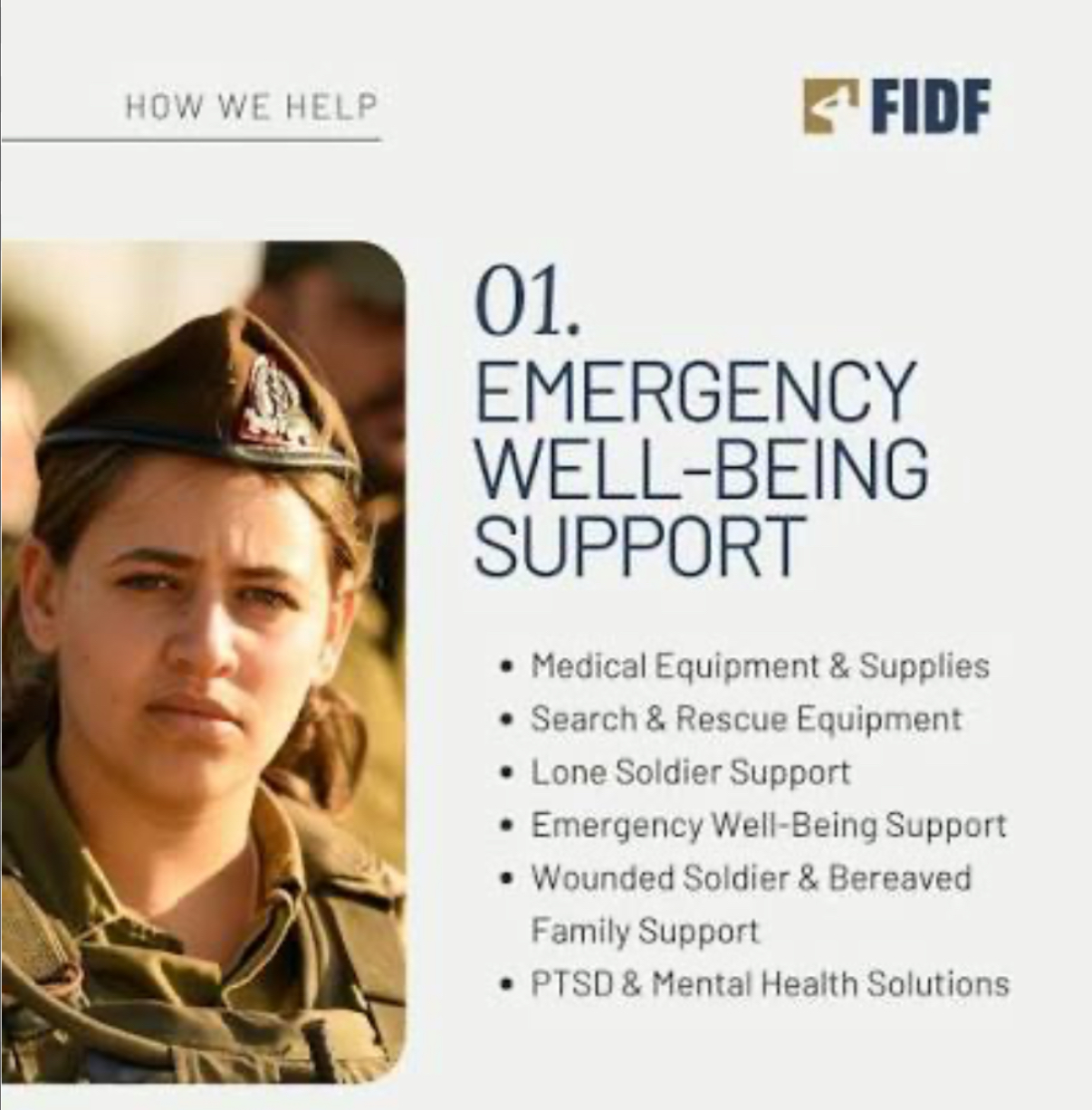
The Friends of the Israel Defense Forces raised over $280 million for mental health services, rehabilitation, education, financial aid and assistance to bereaved families and Lone Soldiers. Many Jews around the world organized friends and family to raise money for extra supplies for soldiers including protective gear, medical supplies, personal items, and tactical gear.
Organizations like the Jewish Agency for Israel and the American Jewish Joint Distribution Committee (aka JDC) coordinated:- evacuee support
- trauma care
- emergency grants
- global aid distribution
Global Jewry mobilized to volunteer in Israel as soon as flights opened up.
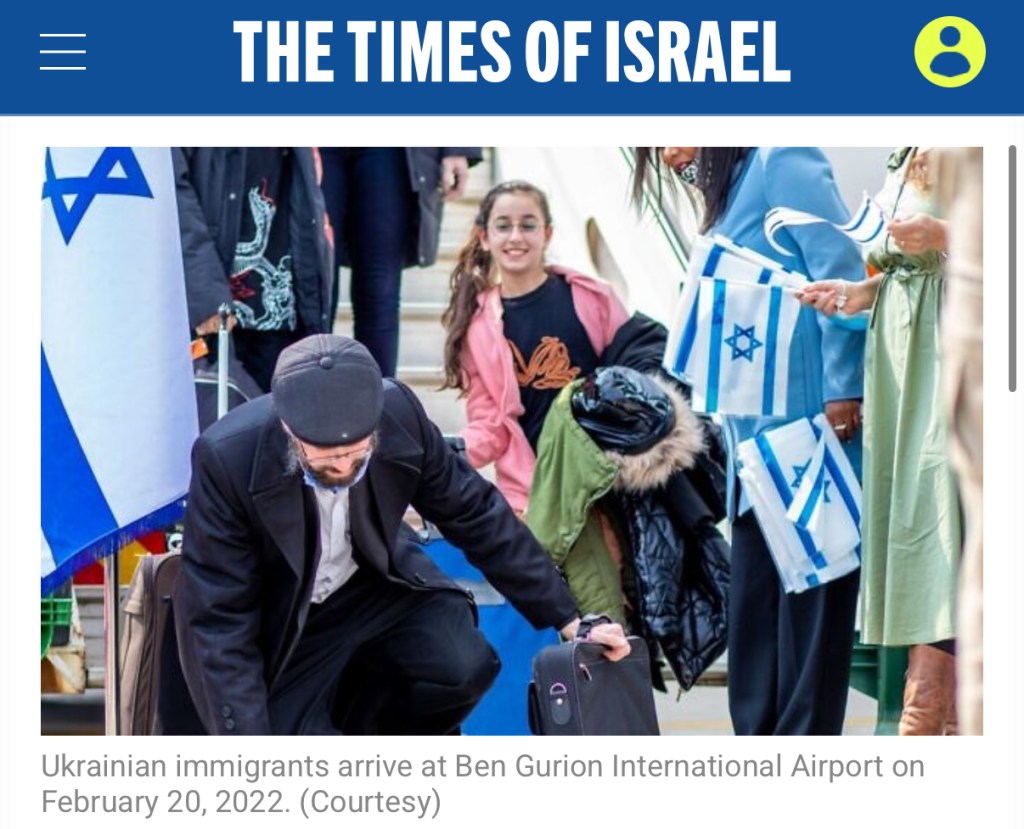
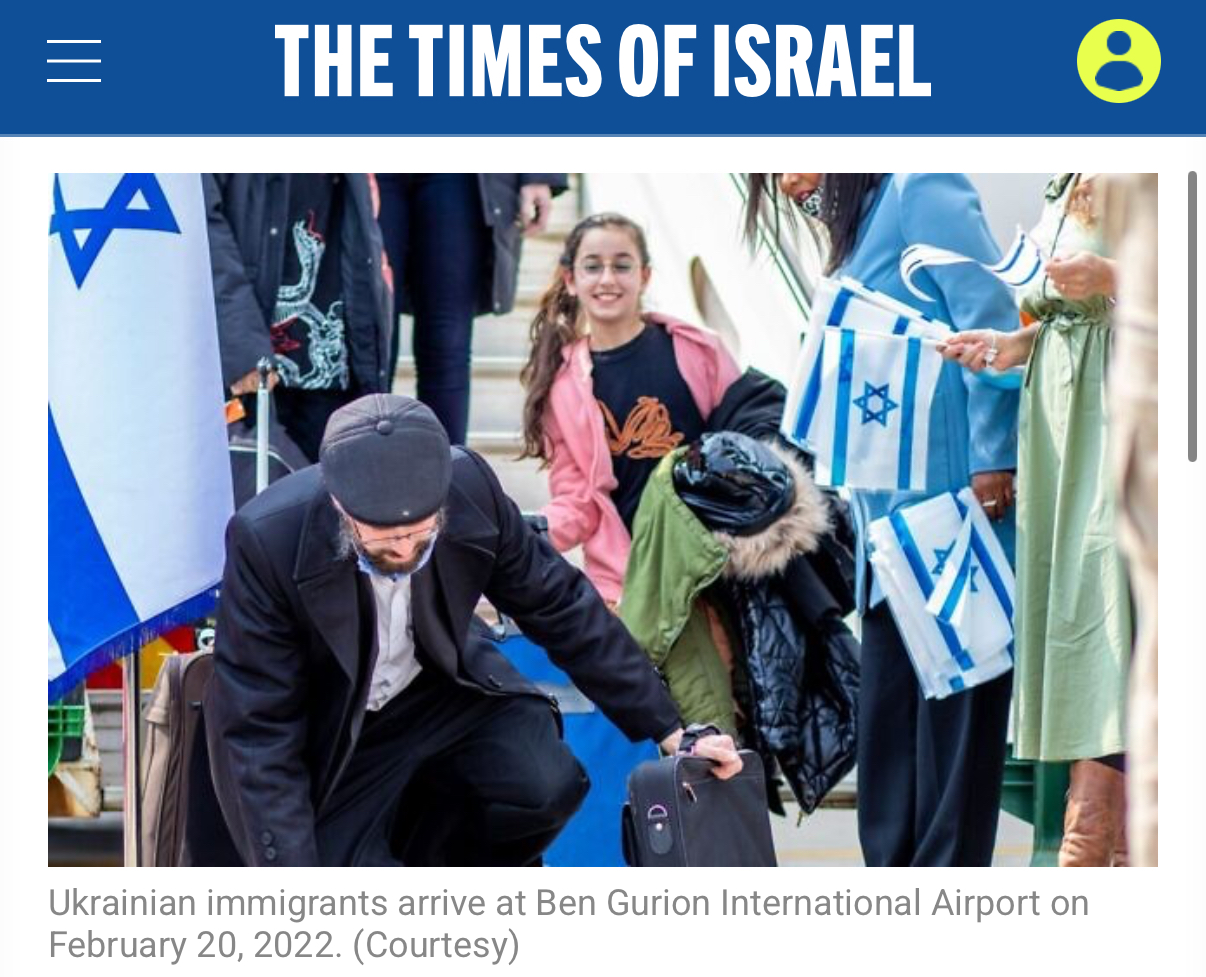
This system is not a new development from the horrific events of 10/7. It has been in place for decades. For example, when war broke out in Ukraine as a result of Russia’s aggressions, the JDC was ready to support tens of thousands of vulnerable Jews across more than 1,000 locations.
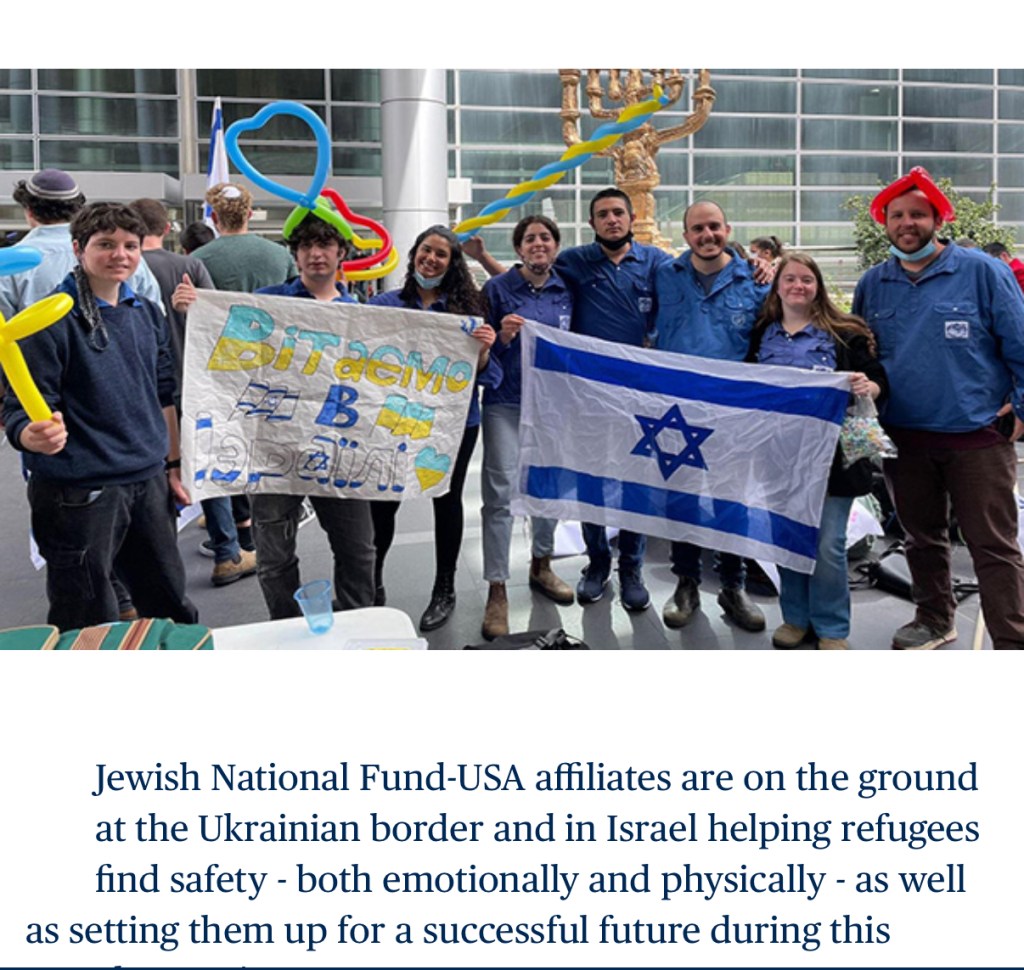
The infrastructure already existed. The response could begin immediately.
Beyond Israel: Absorbing Our Own
After October 7, thousands of Israelis temporarily left the country.
In the first weeks of the war, approximately 470,00 Israelis departed, with tens of thousands remaining abroad for a period of time (Source). Jewish communities in North America and beyond absorbed them.
Organizations like Federations, Jewish mental health and social service agencies (aka JFS), Jewish Community Centers, and day schools helped provide:
- temporary housing
- school placements for children
- childcare
- community integration
- trauma support
- job placement
- Hebrew-only gatherings
No one ended up on the streets because Jewish communities pushed their own limits to absorb people into existing systems.
This Has Been Built Over Generations
Organizations like:
- HIAS
- American Jewish Joint Distribution Committee
- Jewish Agency for Israel
- The Jewish Federations of North America
- Keren Hayesod
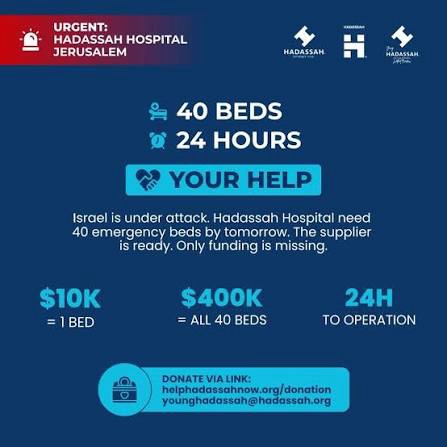
- Hadassah
- Jewish National Fund/KKF
were created over more than a century to do exactly this. To pool resources. To move quickly. To respond whenever and wherever Jews are in crisis.
A moral imperative became infrastructure.
It Doesn’t End
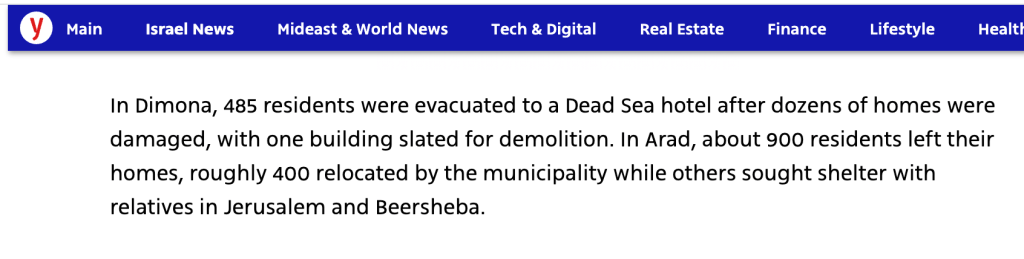
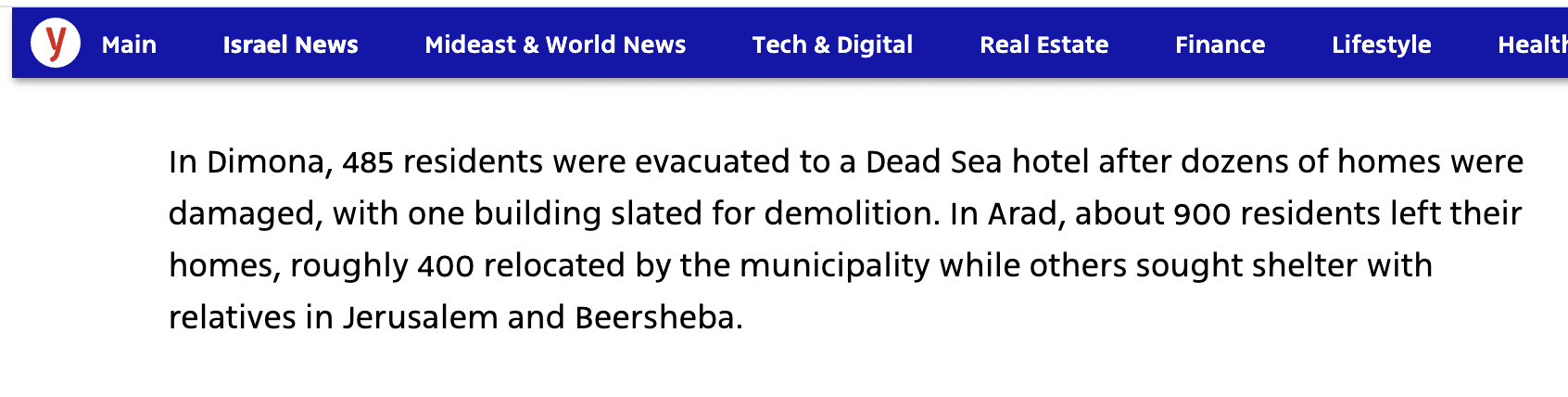
In recent days (3.21.26), following missile strikes connected to the latest war with Iran, hundreds of Israelis in cities like Arad and Dimona were displaced.
They were not placed in tent cities. They were moved into hotels and absorbed into surrounding communities. The system activated again.
The Name for This
There is a phrase from Talmud Shevuot 39a:
Kol Yisrael arevim zeh bazeh.
All Jews are responsible/guarantors for one another.
What that looks like in practice related to taking care of one another:
- a country with relatively minimal damage trhough a multi-year war due to several, layered protective systems in place
- a displaced family in a hotel instead of a tent
- a child back in school weeks after evacuation
- an ambulance funded by a community thousands of miles away
- a family arriving in a new country and already having support
What Does This Mean for Perception?
This is not the absence of suffering. It is the presence of preparation.
It is what happens when a global peoplehood builds systems so that when crisis comes to one group, everyone is taken care of.
And often, that is invisible. Until you know where to look.
-
What Might Have Been Possible (If the World Had Chosen It)
This past week, I was with a small group of friends (on a boat, on a lake, in December in 75 degree weather, outside of ATL). All of us Jewish but from different kinds of upbringing and current way of living Jewishly; all of us left-leaning in our American political lens, although not 100% aligned on all things; and all of us between the ages of 40-65. Somehow, the conversation at one point turned to what Israel could have done differently in the immediate days after 10/7 to minimize civilian suffering. Several of us shared that we each had some ideas that we had ruminated on as the news was breaking and while they were far from identical, they all had the same meta question: What could have happened if the world had decided to act together?
Not perfectly. Not heroically. Just responsibly.In the days immediately following October 7, there was a brief and fragile window when shock had not yet hardened into inevitability, when countries all over the world were displaying Israeli flags on their most prominent monuments, when the world’s citizens were collectively mourning Israeli lives. In that window, Israel — and the global community — still had choices. One of them was this: to pursue a narrowly defined, internationally supported humanitarian evacuation of Gaza’s most vulnerable civilians: children, elders, pregnant and nursing women, and the infirm. And to do so before large-scale ground operations began.
This was never about “emptying Gaza.” It was about buying time for human life.
This idea is not hindsight
I feel like I want to share what I was thinking of (and will explain later why I still wanted to share this even 2+ years later). It also matters to say this plainly: this idea did not come to me years later, after outcomes were known and positions entrenched. It came to me within the first 48 hours after the news broke. In complicated reflections in those first horrific days, my same instinct surfaced again and again: get the most vulnerable civilians out before the fighting begins. Evacuate children, elders, pregnant and nursing women, hospital patients—into Israeli desert camps, into Egypt, into Jordan, anywhere that could buy time and preserve life before the IDF moved in force. (which I always defended their right to do!)
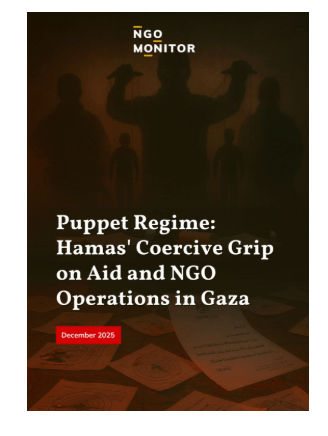
These thoughts were shaped not by naïveté, but by painful familiarity—with Hamas’s long-documented behavior: its theft and diversion of aid, its embedding of weapons and fighters in civilian infrastructure, and its systematic exploitation of innocent people as shields (see, for example, documentation by the UN itself on weapons found in UN facilities in Gaza.)
When my friends this past week shared our similar conclusions, driven by our values of saving innocent people and our knowledge of the depth of corruption by Hamas and other Gaza jihadi groups, it confirmed by thinking that it should not have been a conceptual leap for global leaders with vastly greater intelligence, humanitarian infrastructure, and diplomatic reach. This was not a failure of imagination at the margins; it was a failure of will at the center.
A request that would have changed the conversation
Had Israel openly asked for global cooperation it would have done more than create logistical pathways. It would have made something unmistakably clear: that civilian life mattered, and that harm to an excessive amount of innocents was not an acceptable byproduct of war.
Such a request would also have forced an early reckoning. Countries would have had to decide — publicly — whether they were willing to help save civilians or whether they would refuse. Responsibility for civilian outcomes would no longer have been rhetorically concentrated in a single place.
Silence would have become a choice.
Refusal would have become visible.
Shared responsibility would have been unavoidable.That kind of transparency reshapes narratives before they harden.
How it could have worked
Cruise ships and large military vessels already exist for one essential purpose: sustaining large numbers of people safely. They have beds, kitchens, potable water systems, sanitation, climate control, technology, and medical facilities. They are floating cities used routinely for disaster response and humanitarian relief.
In this framework, ships would not have been destinations. They would have been staging sanctuaries. From there, evacuees could have been transferred to temporary housing (hotels, modular housing, repurposed campuses) across multiple countries that agreed in advance to time-limited hosting with explicit guarantees of repatriation once active combat subsided.
[Photo: MONALISA 2.0 – MASS EVACUATION IN PORTS PILOT EXERCISE]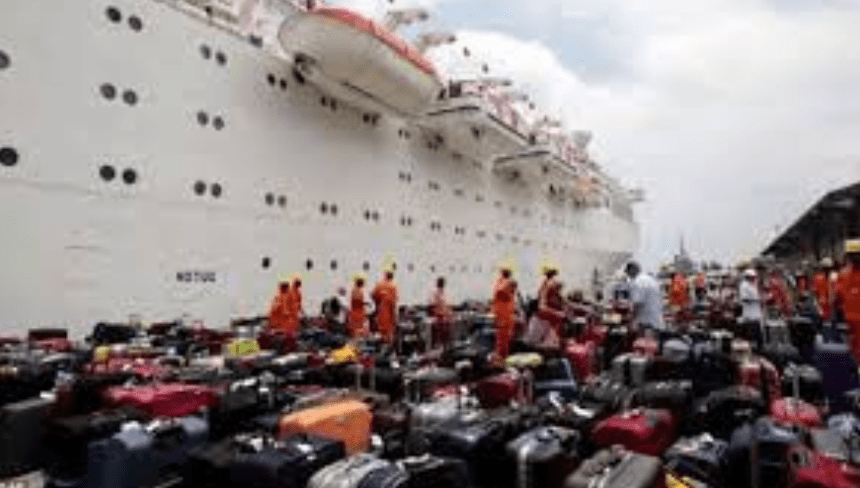
No single country would absorb the burden. No open-ended displacement would be normalized. The structure would have been temporary, distributed, and internationally monitored.
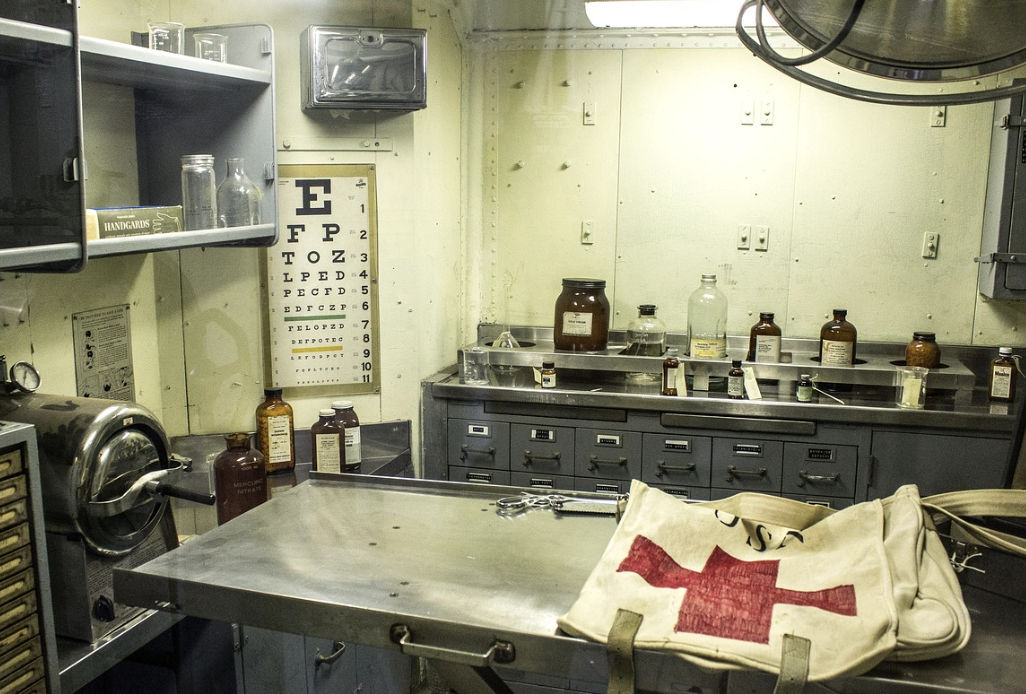
The goal evacuation would have to be accomplished through prioritization with integrity: beginning with hospitals, senior homes, neonatal units and mothers, dialysis and cancer treatment patients, and others for whom bombardment and infrastructure collapse are existential threats.
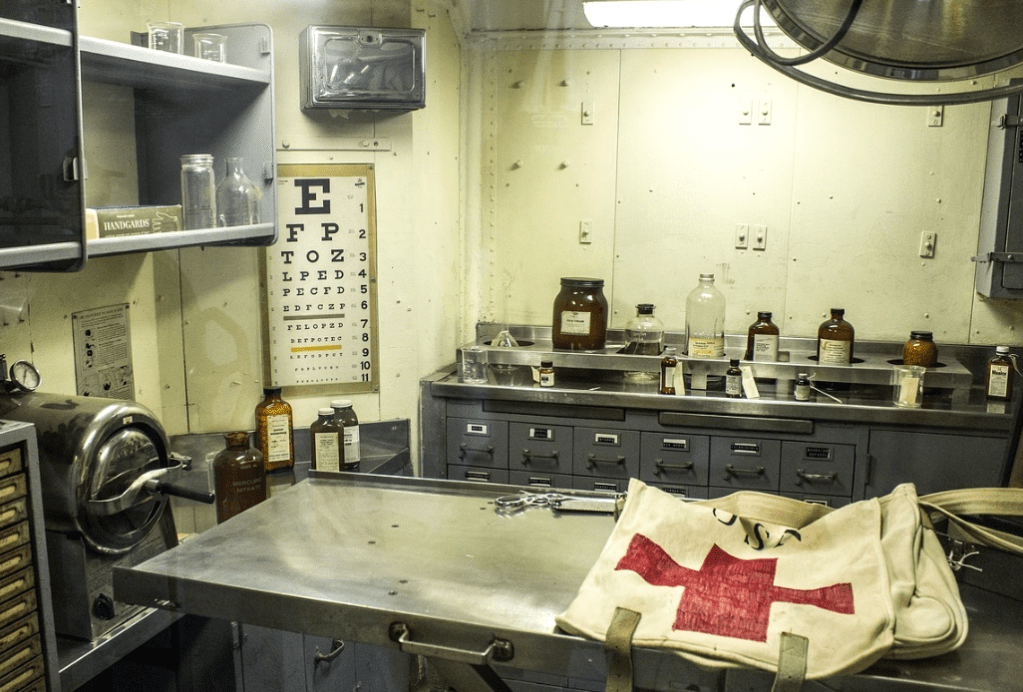
https://pixabay.com/photos/aircraft-carrier-infirmary-hospital-1415925/
Security without dehumanization
Security concerns are real. They always are. But refusing humanitarian corridors does not eliminate risk, it displaces it and in fact amplifies it.
Ships, ports, and host countries already know how to screen entrants. Metal detectors, X-ray scanners, controlled manifests, biometric checks, and layered supervision are standard practice in airports, refugee processing centers, and humanitarian evacuations worldwide. Screening does not require suspicion of everyone; it requires process.
A maritime evacuation would have created:
- controlled entry points
- verification before boarding
- supervision during transport
- monitored onward movement to host facilities
This would have been more secure, not less, than unmanaged displacement amid active conflict. And critically, it would have separated civilians from combatants (denying armed groups the ability to deliberately blur that line).
Blaming Hamas without erasing Gazans
It bears repeating, because this is an honest conversation, that must name what has long been documented: Hamas has repeatedly stolen and diverted humanitarian aid , embedded weapons in schools and homes, used hospitals and mosques for military purposes, and exploited civilian infrastructure to shield fighters. Everyone knew this. This wasn’t new information that emerged in the days after 10/7. It’s been documented and reported by numerous NGOs and other human rights organizations for a long ti8me.
Civilians have been used—systematically—as human shields.
Naming this reality is not an indictment of Gazans. It is a refusal to allow their suffering to be instrumentalized.
A structured evacuation of vulnerable civilians would have undercut Hamas’s strategy, not rewarded it. It would have reduced the civilian population Hamas hides behind, narrowed the space for manipulation, and made it harder to collapse all suffering into a single, distorted accusation that erases the role of those who intentionally embed war inside civilian life.
Where the United Nations failed repeatedly.
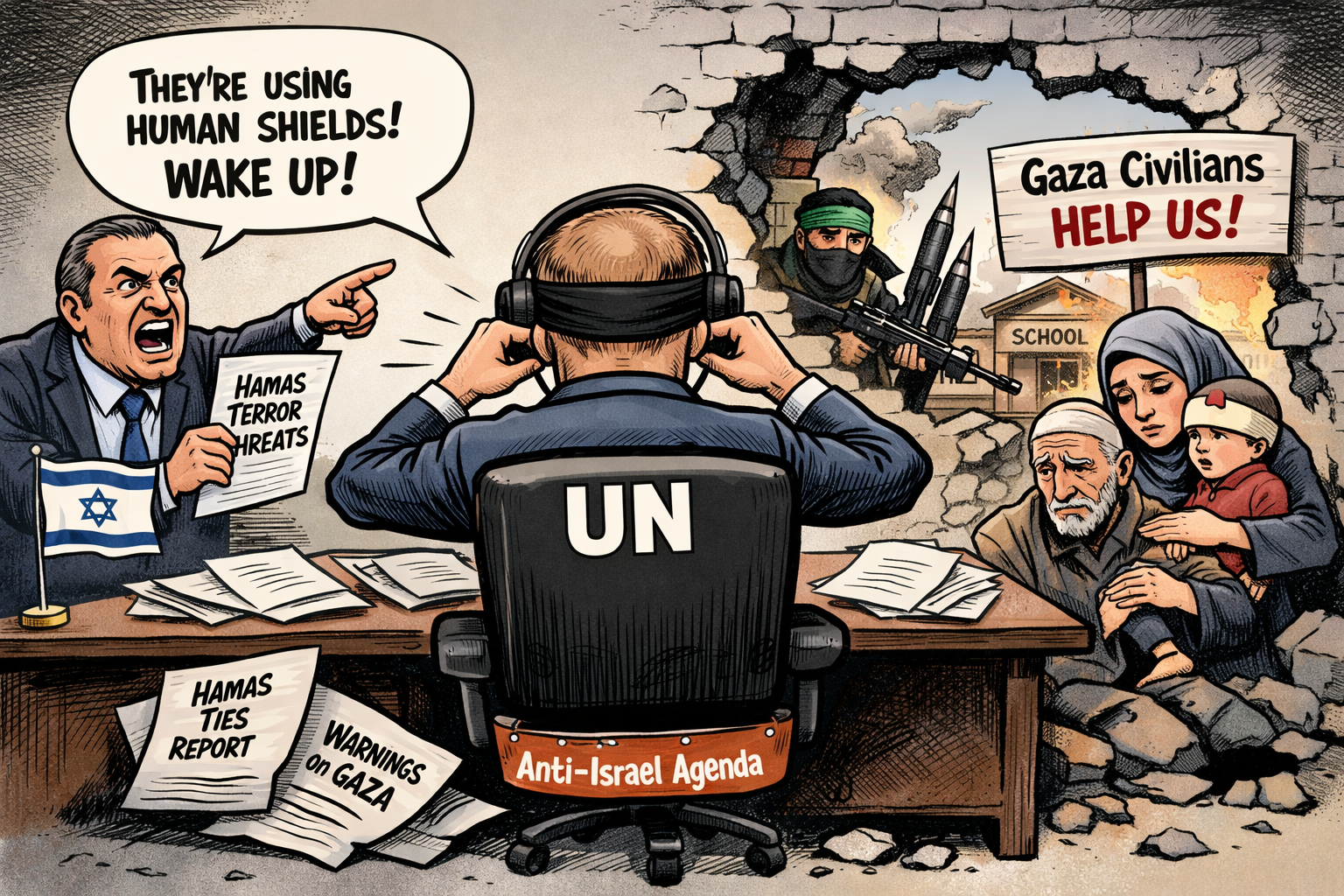
For years.It is also impossible to ignore the role the United Nations played — or failed to play — long before October 7. For years, Israel warned the UN and donor governments that UNRWA’s neutrality in Gaza was compromised. Those warnings were repeatedly dismissed as political deflection.
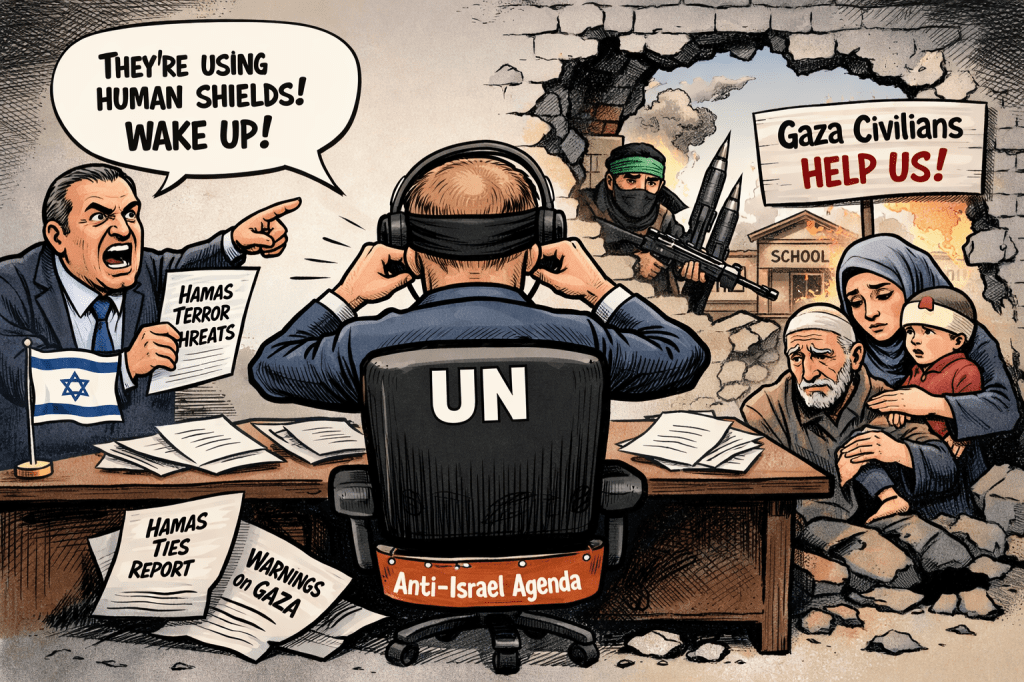
Image created by AI with my input. Yet evidence accumulated: weapons stored in or near UNRWA schools (UN statements above), staff members with ties to Hamas, and educational materials that promoted incitement rather than coexistence (see independent reviews such as IMPACT-se: https://www.impact-se.org/unrwa/). After October 7, multiple governments suspended funding following allegations that UNRWA employees participated in or assisted Hamas activities.
These revelations were not shocking. They reflected years of institutional complacency and an adversarial posture the UN has had towards Israel that treated warnings as propaganda rather than risk assessment.
Had the UN upheld its mandate of neutrality and accountability, it should have been the natural body to lead (in partnership with Israel, not against it) a rapid humanitarian evacuation of vulnerable civilians. Instead, its credibility deficit made such cooperation politically untenable, leaving a vacuum where moral leadership should have stood.
A message beyond Gaza
Such a plan would also have sent a powerful signal to Hamas, to Iranian-backed militias, and to their patrons, that atrocities, hostage-taking, and the exploitation of civilians would not be tolerated or rewarded.
That message matters because Hamas leaders themselves have framed October 7 as a model, not an anomaly. Hamas Political Bureau member Ghazi Hamad stated openly, “We must teach Israel a lesson, and we will do it twice and three times. The al-Aqsa Deluge is just the first time.”
Iranian leadership and IRGC commanders have likewise celebrated the attack’s impact and emphasized the continued readiness of allied militias within what Iran calls the “Axis of Resistance.”
This rhetoric is not abstract. It signals intent, repetition, and a worldview in which civilian suffering is instrumentalized rather than protected.
Why this mattered for the narrative
Much of the world’s outrage has been fueled not only by images of suffering, but by the perception that no alternative was even attempted. That vacuum became a canvas for accusation.
Had there been a visible, multinational effort which was presented early, very publicly, and framed in universal values-driven, the conversation would look different. Not simpler. But more honest.
It would have been harder to argue that Israel was indifferent to civilian loss. It would have complicated slogans. And it would have forced the world to hold two truths at once: that civilian life is sacred, and that responsibility for its endangerment is on Hamas and the jihadi groups.
Jewish values that frame this
On Oct 26, 2023, just a couple of weeks after the horrific pogrom on Israel, I wrote a lesson plan for Jewish educators and rabbis to use to help frame a really difficult discussion about Israel and Hamas, the hostages and the civilians. The concept is that we often have to weigh and measure many important and soul-moving values against each other when they sit in tension on a particular issue (a framing often used by M² in their values education work). This isn’t an easy task, but it is important to remember that Judaism does not demand perfection. It demands responsibility.

The idea of buying time, buying safety and security, of prioritizing evacuations are driven by a few key Jewish values: Pikuach nefesh teaches that saving life overrides almost everything. Lo ta’amod al dam re’echa commands us not to stand idly by. Areivut, mutual responsibility, insists that moral obligation does not end at borders. [Image AI generated]
Jewish ethical tradition understands triage—that saving some when all cannot be saved is tragic, but refusing to save any because not all can be saved is its own moral failure.
In addition, we have Jewish wisdom from the story of Moshe and Yitro about asking for help and delegating responsibility (i.e. asking for global assistance):
And the father-in-law of Moshe saw what he did for the nation. And he said, “What is this thing that you do for the nation? Why do you sit by yourself and all the nation stands before you from morning until evening?” And Moshe said to his father-in law, “(This is) because the nation comes to me to seek Hashem. When there is a dispute, they come to me and I judge between a man and his friend. And I make known to them the laws of Hashem and His Torah.” (Sefer Shemot 18:14-16)
And you should select from the entire nation men of valor, who fear Hashem, men of truth, who despise profit, and place them upon the nation as ministers of the thousands, ministers of the hundreds, ministers of the fifties, and ministers of the tens. And they will judge the nation at all times. Any great matter they will bring to you. All minor matters they will judge. Your burden will be lightened and they will bear it with you. (Sefer Shemot 18:21-22)
This plan was not naïve idealism. It is values-informed visioning.
Looking forward, not backward
None of this changes the reality for Gaza’s civilians today. But articulating this vision matters precisely because it could shape how the world responds next time (and there will almost certainly be a next time).
A visible, coordinated humanitarian framework would not only save lives. It would clarify responsibility early, expose who is willing to act and who is not, and establish a precedent that atrocities, hostage-taking, and the use of civilians as shields will not be rewarded with moral confusion.
It would allow the world to say that when faced with unbearable human vulnerability, we tried. That matters. Even when the outcome is imperfect.
-
Waiting…Silent. Because I knew.
I have not posted since the news came that the hostages were to be released and we had reached a ceasefire. That is because I knew … I knew it wouldn’t last, I knew Hamas couldn’t be trusted, I knew Israel would be blamed for violations when Hamas wouldn’t. I knew.
I sit here and since my last post, the following is true:
- There is still a deceased hostage not returned.
- Hamas murdered many Gazans in the streets because they were “opposition” and the world was mostly silent
- Hamas clearly has refused to disarm and in fact has re-armed and tactically repositioned fighters.
- Bibi, Ben-Gvir, and Smotrich continue to allow for violent acts against West Bank Palestinians and have not done much of anything to hold any IDF soldier who violated their oath in Gaza to be held responsible (the ones who crossed lines, acted outside of their mission to cause extra harm, etc).
- UNWRA – which has repeatedly been proven to be a part of systemic JewHate, is somehow “back in business.”
- Videos of hostages have been released to the public: some showing resilience in the darkest times, some showing outright murder
- Hamas has been proven (repeatedly) to have been withholding aid, fuel and other supplies to Gazans and yet somehow Israel is still being blamed for a crisis (which may or may not be inflated/may or may not be mis-reported)
- Trump has demonstrated his love for Qatari money at the cost of Israel’s security.
- Hamas has fired rockets and sniper fire towards Israel on several occasions (my red alert app going off) and when Israel responds, it’s their fault for violating the agreement.
- Senior Hamas leaders still remain in cushy surroundings in Doha, Qatar at the same time Qatar tries to position itself as a neutral arbiter of peace.
- Israel has taken out a few more Hamas operatives under the claim there was intelligence of new planned attacks – which may or may not be true.
- Thousands of Israelis are still displaced from the North due to Hezbollah threats and from the South where there is still rebuilding to be done. (Note: ask yourself why all these displaced Israelis aren’t living in tents cities the last two years. If you can’t figure it out, I am happy to explain.)
- The media has learned nothing and continues to take everything from Hamas as pure fact (even when images show AI manipulation in plain sight).
- JewHate via antiZionism has only worsened, proving the war itself isn’t the motivation.
I knew nothing would actually change. My heart is happy for the released living hostages – despite the ongoing medical and emotional trauma they are dealing with.
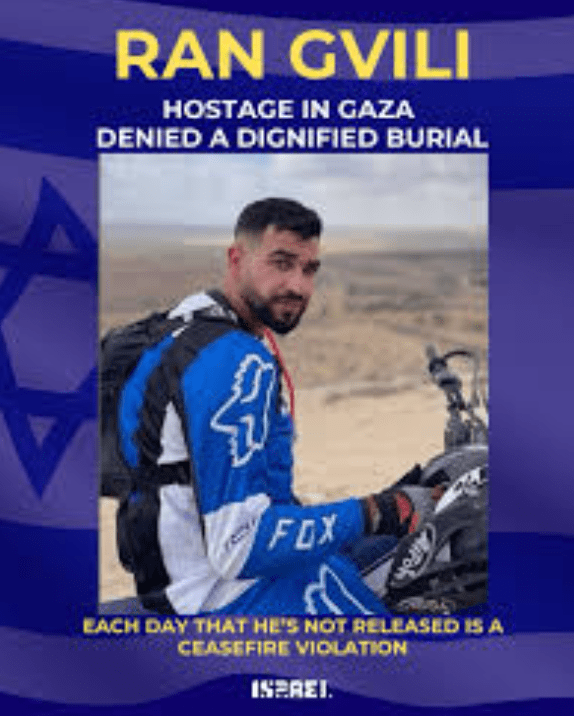




You must be logged in to post a comment.