
This blog is best viewed on desktop/laptop.
Imagine this:
A storm is coming.
Not abstract. Not theoretical. A real, dangerous storm that threatens your safety, your family, your future, your ability to remain who you are.
In front of you are three options. You can choose only one:
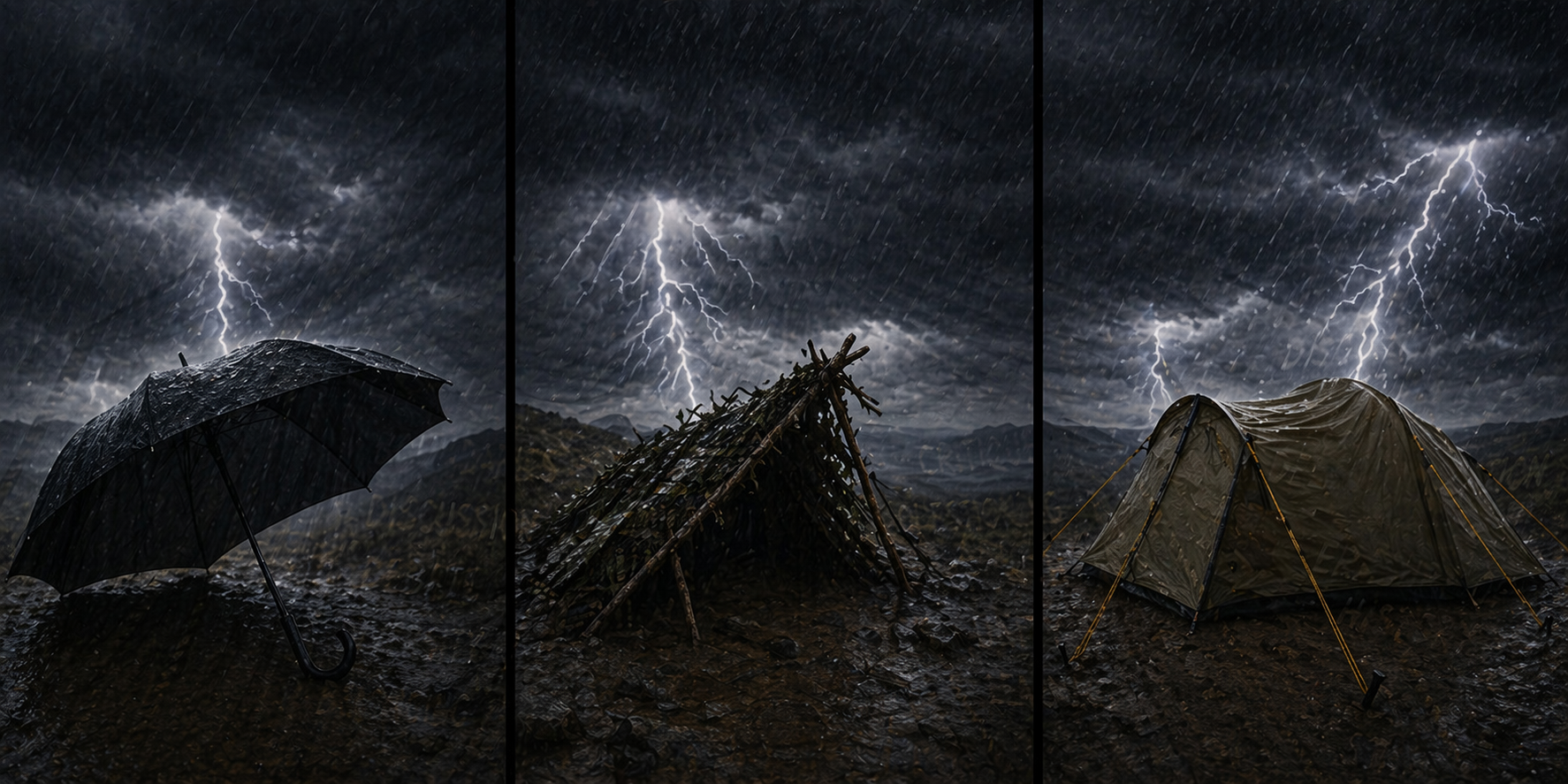
Umbrella? Lean-to? Tent?
No brick house is offered.
The umbrella gives minimal coverage but no boundaries.
The lean-to gives partial shelter but leaves you exposed and could dangerously collapse on you.
The tent has walls. Flexible, but real. It has edges you can see and sides you can close and use weights to anchor it down for additional safety.
In a storm, no one chooses the umbrella. No one chooses the lean-to.
You choose the tent because protection requires structure. Shelter requires boundaries.
But there is one more part of the image that matters.
A tent only works if it is maintained.
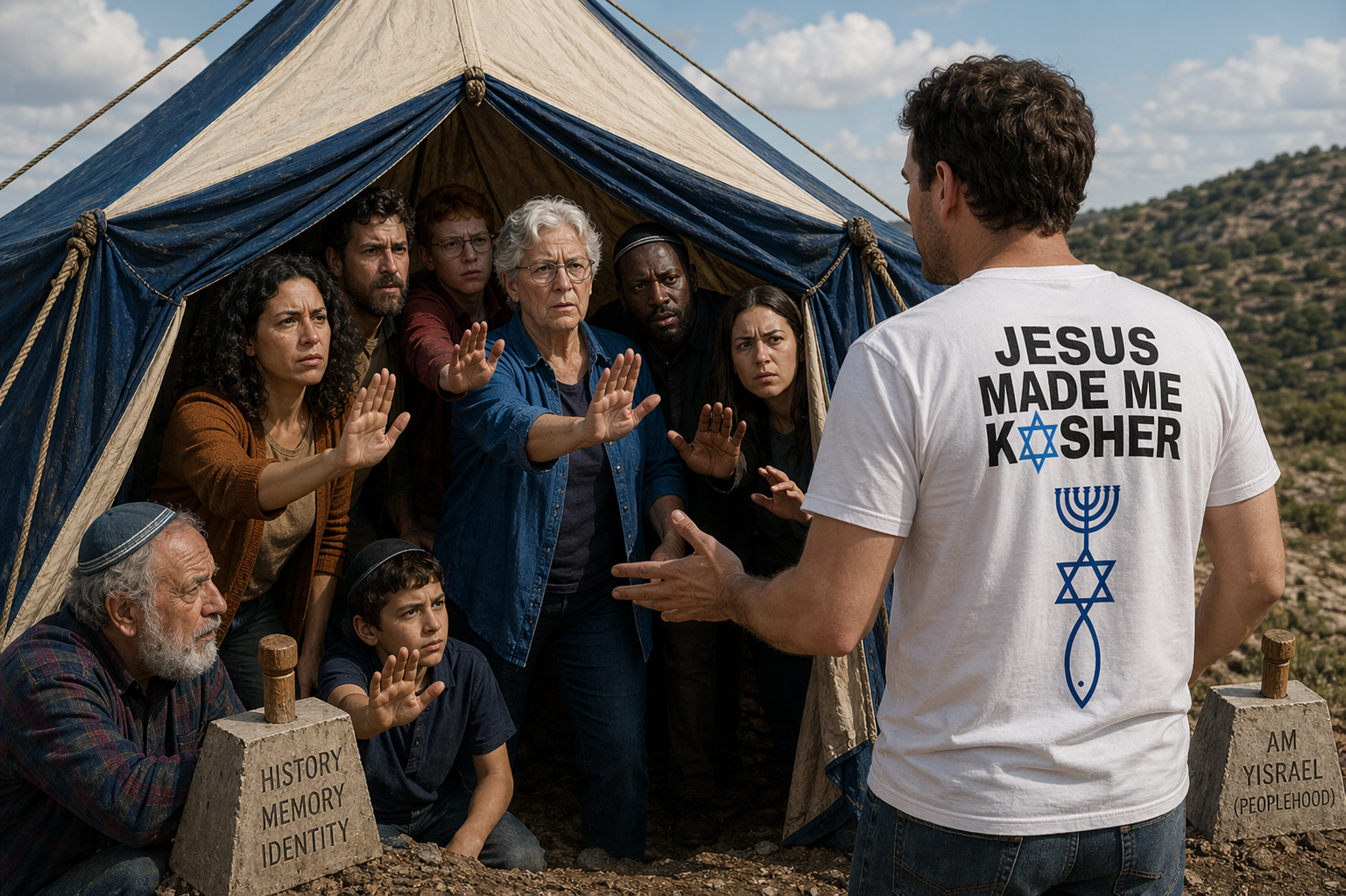
If someone pokes a hole in the side of the tent and we do nothing, the problem is not only the hole. The storm gets in. The structure weakens. Over time, the tent stops functioning as a shelter at all. So we patch the hole and rebuke the behavior. That is part of what it means to rely on a tent. We maintain its integrity because we depend on it.
But there is a harder question: What if the same kinds of holes keep appearing, and we choose not to name where they came from or the danger those leaks cause? What if we allow the tent to gradually fall apart to the point it is only an umbrella? What if we allow people to chip away at the anchors to the point the tent can be swept away?
At some point, the issue is no longer a single opening. It is the loss of the structure itself. We are exposed and can no longer call it shelter.
That is the metaphor underlying everything that follows.
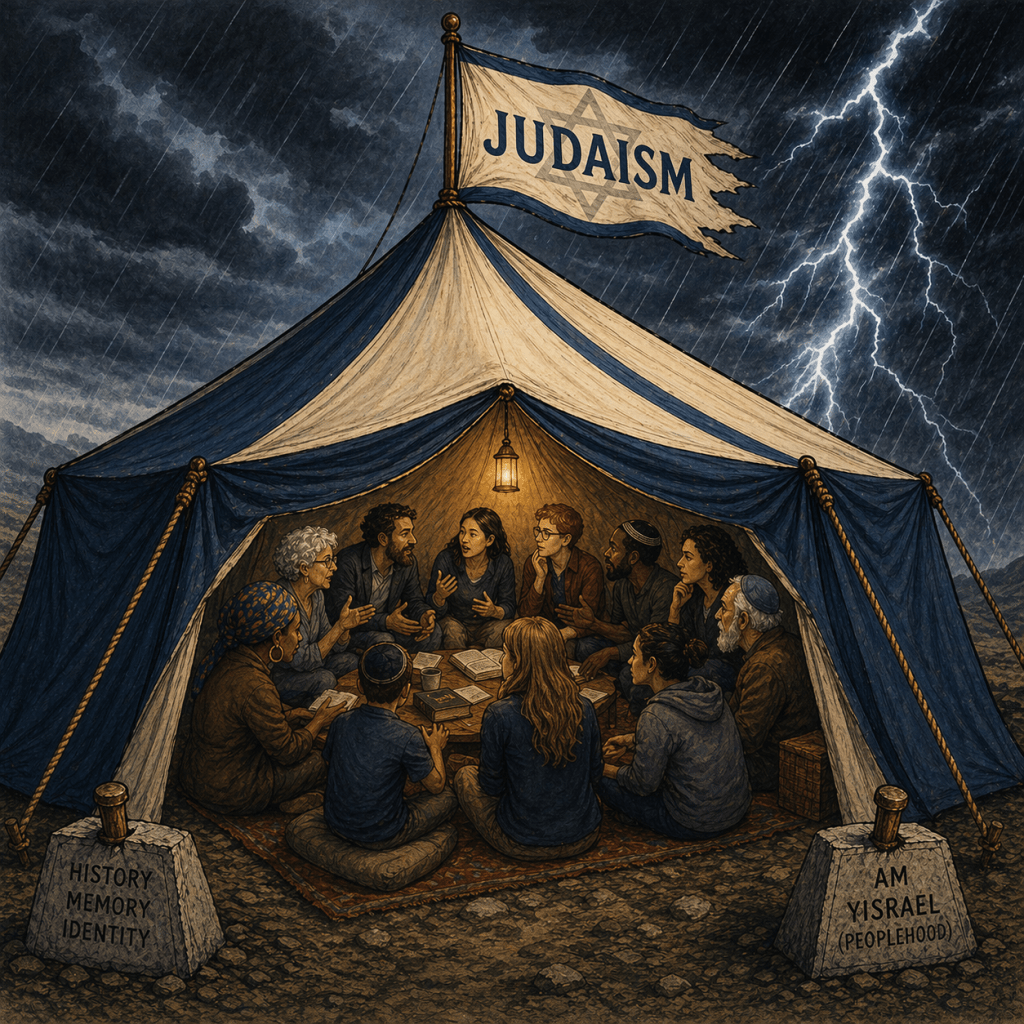
The Tent of Judaism
We often describe Judaism as a “big tent.” That metaphor matters, but it is often misunderstood.
A tent is not boundless. A tent is not an open field.
A tent has open walls, edges, a defined shape, and critical ground anchors.
Those walls may stretch. At times we roll the sides up to welcome people in. But when the storm comes, we pull them down and securely tie them down.
Without the walls, there is no safe shelter.
The Tent Wall We Already Recognize
There is at least one place where the mainstream Jewish community has long been clear on where the sides of the tent exist and why: God.
Inside the tent, a Jew can:
- struggle with God
- doubt God
- reject belief in Adonai entirely
- (You can read my blog on the lack of requirement for a God-belief in Judaism to understand more.)
But there is a line. Across denominations, Jewish leadership has been consistent that belief in the divinity of Jesus is incompatible with Judaism (summarized here). Reconstructionist Rabbi Carol Harris-Shapiro writes in her book Messianic Judaism: A Rabbi’s Journey through Religious Change in America, “A Jew can believe almost anything but Jesus as Lord.” She also asserts:
“a Jewish embrace of Jesus
amounts over time to
an act of ethnocultural suicide.”
In Jesus for Jews: The Unique Problem of Messianic Judaism by Faydra Shapiro, she posits: “… is activism against Messianic Judaism actually about these Jews’ faith in Jesus … Is it simply that these people have violated a fundamental group expectation?”
The work of Harris-Shapiro and Shapiro make it clear that Jewish communities have historically tolerated a wide range of belief, including non-belief, but draw a boundary where the framework itself is restructured rather than interpreted. They are clear that this integration of Judaism and Jesus is a violation of, and a threat to, Jewish peoplehood.
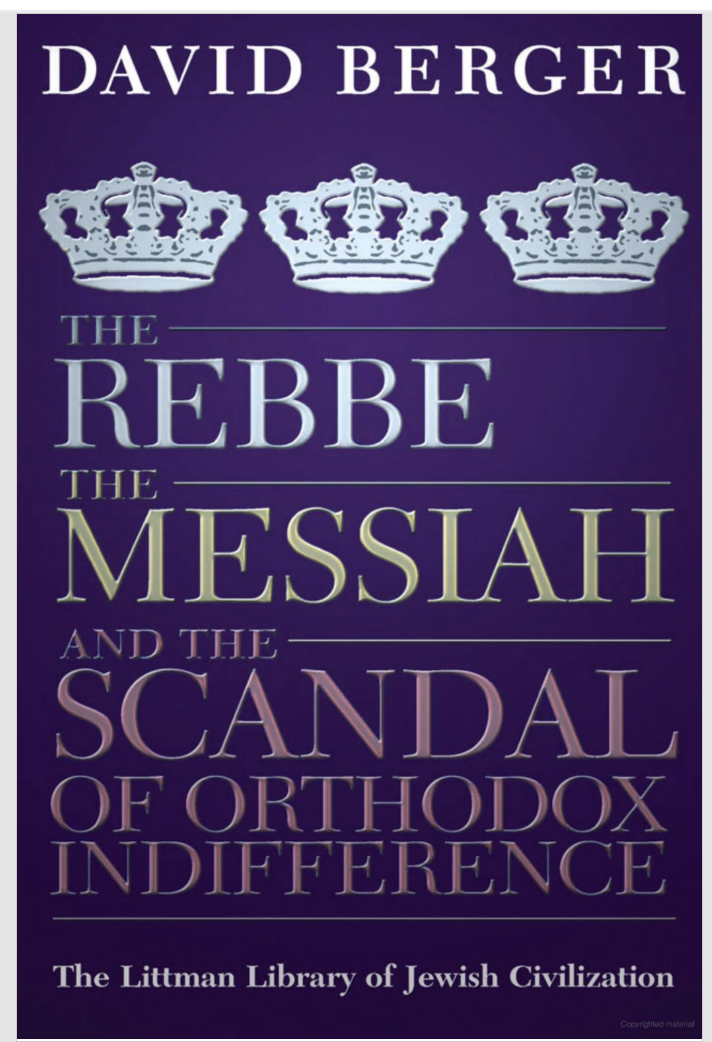
But messianic belief in Jesus isn’t the only departure from Jewish boundaries that has been challenged. Orthodox scholar Rabbi David Berger, author of The Rebbe, the Messiah, and the Scandal of Orthodox Indifference, similarly argues that beliefs such as divine incarnation within Lubavitch Orthodox Judaism (re: the Rebbe) are not simply outside Jewish tradition, but incompatible with its core theological structure. As a result, he not only wrote this book, but went on to sponsor a Rabbinical Council of America (RCA) resolution “excluding this belief from authentic Judaism.”
He writes that allowing a messianic belief to stand within the Jewish community is a, “dramatic abandonment of the age-old Jewish resistance to a quintessentially Christian belief is a development of striking importance for the history of religions, an earthquake in the history of Judaism.”
This is not a language of disagreement. It is the language of rupture.
Berger also explains that his book, “assesses the threat posed by the messianists of Lubavitch and points to the consequences, ranging from undermining a fundamental argument against the Christian mission.”
And importantly, the concern is not only about proselytizing.
Jewish organizations have repeatedly emphasized the danger of misrepresentation. When a Jesus-centered framework is presented in Jewish language, symbols, or institutions, it blurs the boundary of what Judaism is.
The outcome of Berger’s work and sponsored resolution was The Rabbinical Council of America’s adopted resolution rejects any attribution of divinity to a human being. This was not a response to external pressure, but to a perceived breach within the framework itself. In other words, Jewish leadership has not only defended the tent from the outside. It has patched holes from within. When this boundary was blurred, the response was not to widen the tent, but to reinforce its walls.
A similar concern about misrepresentation surfaced in the debate over Messianic chaplains wearing Jewish insignia. Jewish groups warned that this creates confusion and falsely signals Jewish authenticity. The JTA article covering this issue is an important read, and sheds significant insight including a rabbi saying, “The Messianics are a very dangerous group.”
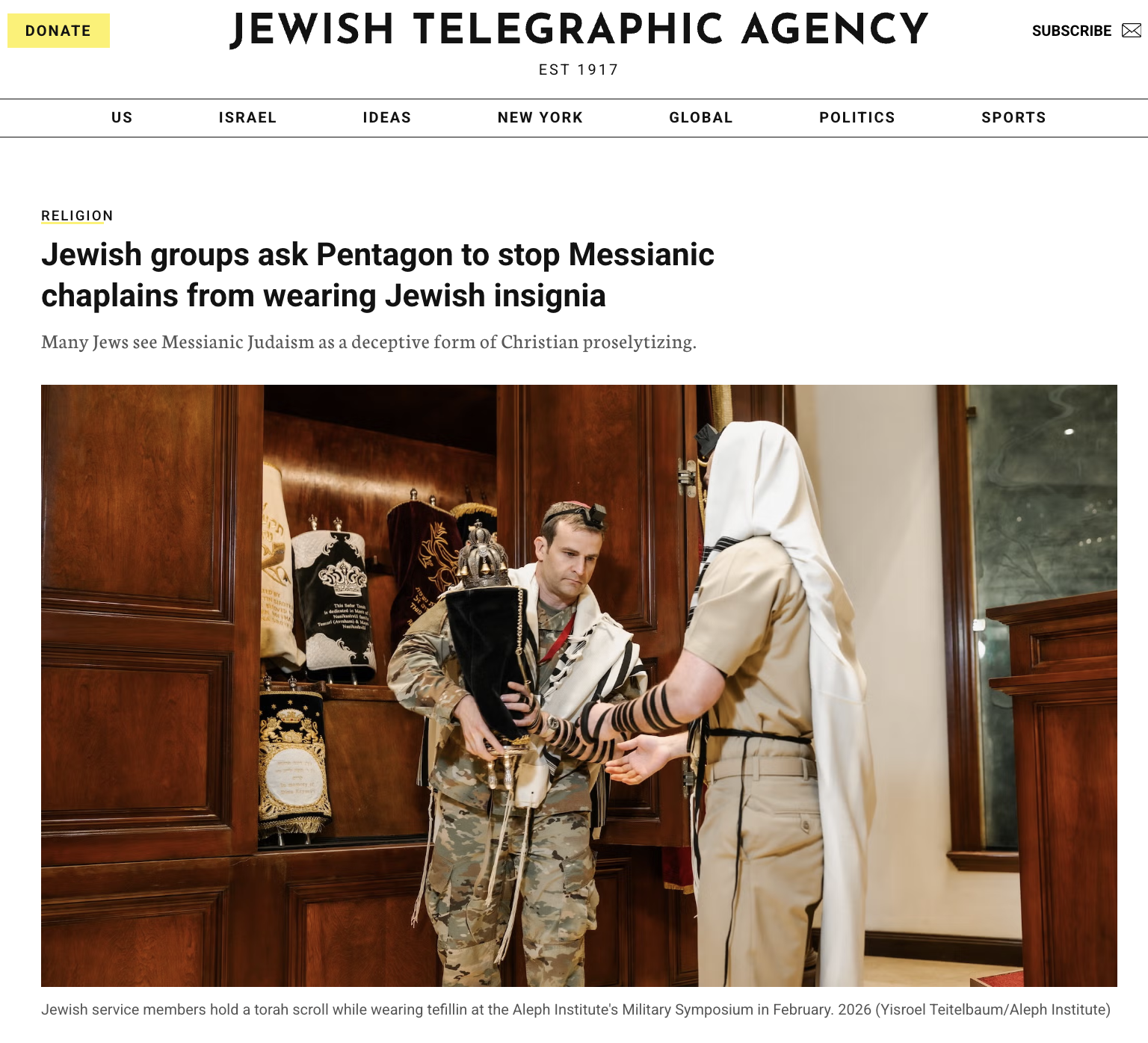
The letter to the Pentagon summarizes: “This is not a theological dispute … [rather] the protection of religious freedom for a minority faith community that depends on clear institutional signals.”
The issue is not only what someone believes. It is what that belief communicates about Judaism itself and what people misrepresent and who they confuse when they are communicating with others about what Judaism is or isn’t.
In the eyes of many Jewish leaders, even private or quiet expressions of this belief raise concern, not because of individual intent, but because they embody a claim that the boundary itself does not exist. I have seen this boundary maintained in very real ways.
Story 1:
The Invisible Boundary
In the early 2000s, while working for a congregation in Dallas, I enrolled in a synchronous video-conference Master’s program through a partnership with the Siegal College of Judaic Studies. It was there I met a man who was brilliant, funny, and deeply versed in Jewish text. He was of Mexican descent, and given his profound literacy in liturgy and history, I simply assumed he was a fellow Jew.
The Inclusion
We became fast friends. We began to spend time together outside of class. I invited him to my synagogue for the High Holy Days, and eventually, he decided to join the congregation. On his membership form, he listed me as the person who recruited him.
The trouble began when his name appeared in the monthly newsletter welcoming new members. Within days, the senior rabbi called me into his office, visibly upset. A congregant who knew the man through other experiences had reached out to the rabbi to alert him to an issue. The rabbi showed me an article from a Jewish newspaper published a few years prior. It revealed that my friend had co-owned a Messianic bookstore. I was shaken to the core. To me, he was a peer who prayed with fervor and knew the texts better than most.
The Confrontation
When I confronted him (explaining that we could no longer socialize and that he was being asked to leave the congregation) he was devastated. He offered a perspective I had never heard: that while movements like “Jews for Jesus” are known for aggressive proselytizing, there are individuals who view their Messianic identity as a private reconciliation of history. His family were Conversos from Monterrey, Mexico. For him, this was the only way to honor his ancestral Jewish roots without abandoning the Christianity his family had held for generations. “Who I pray to in my heart is not public knowledge,” he told me, describing the profound loneliness of being rejected by the Jewish community while no longer identifying as Christian.
The Community Guardrails
The fallout was swift and systemic. Because the local Jewish Federation subsidized the degree program specifically for the Jewish community, his scholarship was revoked. The Federation and the college leadership had to wrestle with a difficult question: Could he even remain in the program? Ultimately, he was allowed to stay, but only if he paid his own way.
The tension reached a breaking point during a class visit to an Orthodox synagogue. He was wearing a kippah and tallit and praying beautifully. The service leaders, assuming he was a halakhic Jew, called him up for a Torah honor. He accepted. To me, this was a height of deception. To him, it was an expression of an identity he felt he rightfully possessed.
The Lingering Question
At the time, he challenged me by asking why an ultra-Orthodox Jew who believes their Rebbe is the Messiah is still considered a Jew, but he was not. It was not until years later, while researching for this blog, that I found David Berger’s work addressing that very distinction.
This experience forced me to look at the guardrails we build. We did not exclude him because he was proselytizing; he was not. We excluded him because his very presence challenged the boundaries of where “Jewish” ends and “Other” begins.
Story 2:
The Database and
the Doorstep
By 2007, I was working as a Jewish communal professional in Atlanta. Under my direction, my team and I developed a mifgash exchange program in funding partnership with the Jewish Federation of Greater Atlanta that brought ten Israeli teenagers to Atlanta for two weeks. The Israeli teens were paired with local host families, and both groups had undergone months of preparation. The teens learned about cultural differences, hosting etiquette for foreign visitors, and the nuances of American versus Israeli Jewish life.
The Red Flag
Literally the day before the Israeli delegation was set to arrive, while the teens were already in the air, I received a frantic phone call from a member of the Federation staff. They had been cross-referencing our list of host families with their donor database.
When they reached one particular family, a “red flag” popped up in the system. The family was Messianic. The Federation staff was clear that they could not host and that this was a major problem.
The Conflict
I was caught in an impossible position. The teens had already been communicating via email and video, so the relationships were already forming. The host family’s daughter was active in the local JCC and had been nominated for the program by a department of the community center. To the outside world, they were involved members of the Jewish community.
We had only hours to debate the implications. Could we, in good conscience, place an Israeli teen in a home where they might be told that Jesus is part of Judaism? Or in a home where Messianic symbols, art, and books may be present? This was not about an interfaith family dynamic (which was something the Israeli teens learned about during their preparation classes). This was a fundamental shift in the definition of Jewish identity.
The Exclusion
The conversation with the father was agonizing. He was born Jewish but had embraced Messianic beliefs later in life. He insisted that he was still a Jew.
We had to deliver a hard truth. We told him that while he has Jewish heritage, by centering Jesus, he had moved outside the tent of mainstream Jewish life. Therefore, we could not place an Israeli teen in his home.
The fallout for the daughter was heartbreaking. To mitigate the trauma, we allowed her to participate in secular activities, like our trip to the World of Coca-Cola, but she was barred from any religious programming. The line that we drew was public and immediate.
The Institutional Memory
What struck me most was the role of the system. The Federation knew this family was Messianic because of a recorded encounter from years prior. That institutional memory acted as a silent gatekeeper.
Even though the family was not proselytizing, their lived “Judaism” was viewed as a threat to the integrity of a program about Jewish people and Jewish identity. Once again, we chose the safety of the communal boundary over the inclusion of the individual. This proved just how firm the wall around Jesus remains in Jewish life.
These are not acts of exclusion for their own sake. They are acts of protecting the integrity of the framework.
They are how we patch the holes.
The Assertion I’m Making Now
Which brings me to a second domain that I believe is an equal “ethnoreligious suicide” and a ripping of holes in the safety of our tent — anti-Zionism within the Jewish community.
Judaism is not only a theology; it is a civilizational system that depends on our relationship to Eretz Yisrael — it depends on Zionism.
The World Zionist Organization (WZO) currently uses the Jerusalem Program (last updated in 2004) as its official platform. It defines Zionism through several pillars:
- The unity of the Jewish people and the centrality of Israel in Jewish life.
- The gathering of the Jewish people in its historic homeland, Eretz Yisrael, through Aliyah (immigration) from all countries.
- The strengthening of the State of Israel as a democratic, Jewish state.
- The preservation of the identity of the Jewish people through the fostering of Jewish, Hebrew, and Zionist education and the cultivation of Jewish spiritual and cultural values.
That definition and the extrapolated system is built around:
- a land that binds people
- a collective identity originated in the land
- a narrative of exile and return
- a calendar of festivals and holidays rooted in the land
- prayers oriented toward Jerusalem
- laws tied to the land (ie shmita)
This is not peripheral. It is structural.
The Law of Return (1950) and the extrapolated system is the expression of Zionism within the State of Israel.
Why This Matters Now
While major Jewish organizations describe Israel as a central expression of Jewish self-determination and also align on what the accepted definition of Zionism is, there are far too many Jews (and a few Jewish organizations) that are rejecting this.
We are living in a moment of real pressure on Jewish life.
In that environment, anti-Zionism often functions not only as political critique, but as a challenge to Jewish legitimacy, belonging anywhere, and connection to the land. Here are a few examples from influential non-Jewish anti-Zionists that elevate this rhetoric:
- Rashid Khalidi, the Edward Said Professor of Modern Arab Studies at Columbia University, in his work The Hundred Years’ War on Palestine: A History of Settler Colonialism and Resistance, 1917–2017, frames Zionism not as a national liberation movement but as a European colonial endeavor that replaces indigenous history with a “biblical coat.” He says Israel is, “A late-nineteenth-century colonial-national movement thus adorned itself with a biblical coat that was powerfully attractive to Bible-reading Protestants… blinding them to the modernity of Zionism and to its colonial nature.”
- Joseph Massad, a professor of Middle Eastern Politics at Columbia University, describes the Jewish presence in Israel as a “right of conquest” rather than a return to a homeland, categorizing Jews as “settler-colonists.” He says in a 2018 article called Against Self-Determination, “As in the rest of the settler-colonies, the ‘right of conquest’ of land in Palestine continues to be safeguarded as a ‘right of self-determination’ for the Jewish settler colonists and their descendants.”
If It is hard enough when that critique comes from outside of the community, but these claims coming from Jews (even knowledgeable ones) is deeply problematic:
- Shlomo Sand, an emeritus professor at Tel Aviv University, is a prominent voice in the “post-Zionist” movement. In his work, The Invention of the Land of Israel: From Holy Land to Homeland, he argues that the Jewish people are a “constructed” nation with no ancestral right to the territory: “It is entirely illegitimate to identify the Jewish links with the ancestral land of Israel… with the desire to gather all Jews into a modern territorial state situated on the ancient Holy Land.”
- Ilan Pappé, an expatriate Israeli historian, argues that Jews do not constitute a “nation” with the right to self-determination, but rather a religious group, thereby delegitimizing the foundation of a Jewish state. Pappé has stated that while national movements deserve a state of their own, this principle does not extend to Jews because they constitute a religious group rather than a nation. His work, Ten Myths About Israel, is frequently cited and summarized by educational resources like the Zinn Education Project.
These beliefs are a challenge to a core Jewish framework. And when that challenge is presented as fully within the tent of Judaism, without communal response, it risks normalizing the erosion of that framework. It risks leaving the hole unpatched. (Read further to understand the impact of misrepresentation.)
There is another aspect of Jewish anti-Zionism that rips at the fabric of the tent, and that’s when Jews use terminology that is not based on nuance, honest history, nor fact. Accusations of genocide and ethnic cleansing are two of the sharpest examples of this. Claiming that Israelis and Jews are colonizers is another and insisting that Israel as a whole is an apartheid-state, both function as misinformation when used without precision. [NOTE: see sidebar at the bottom on terminology and definitional nuance.]
One such case of this happening is with groups like Rabbis for Ceasefire. One of its most prominent members is Rabbi Abby Chava Stein. She was interviewed on The Marc Steiner Show, and in his introduction he summarizes her as “a fierce opponent of Zionism and Israel’s Occupation and ethnic cleansing of Palestinians.” During the show, she makes a distinction, “Religious anti-Zionism is very different than what I call social justice anti-Zionism, injustice-based anti-Zionism” and considers herself the latter but was raised in the former (Stein grew up in an ultra-Orthodox Hasidic Jewish enclave).

Stein also sits on the rabbinic board of JVP (Jewish Voice for Peace) where their vision and position on Zionism statements explicitly uses this language: “Zionism… is a movement that emerged in the context of European colonialism and has functioned as a colonial project by displacing the indigenous Palestinian people.”
Just like the military chaplains who identify as Messianic Jews, these anti-Zionist Jewish leaders are mis-communicating about the indigenous nature of Judaism, misrepresenting Jewish and Zionist history, and confusing outsiders about the nuance of Jewish peoplehood vs. Judaism solely as a religion. The dangers of this, the threat of attempting to disassociate Judaism and Zionism, led prominent leaders Natan Sharansky and Gil Troy, in a Tablet Magazine article, to define anti-Zionist Jews as “the un-Jew.”
And, similar to the condemnation of the Lubavitch movement by Berger and RCA for their messianic beliefs, mainstream Jewish leaders also strongly oppose the religious anti-Zionism that Stein was raised under in groups such as the Satmars, Edah HaChareidis, and Neturei Karta. Mainstream Orthodox leaders, refer to their beliefs and behaviors as Hillul Hashem (an affront to God) and have actually put them in herem (excommunicated them). The RCA said, in response to these groups engaging with anti-Zionist terror groups: “Their actions constitute a monstrous Hillul Hashem… By embracing those who seek the destruction of the Jewish people, these individuals have placed themselves outside the boundaries of the Jewish community.” Religious scholar Rabbi Joseph B. Soloveitchik wrote in his work, Kol Dodi Dofek:
“A Jew who participates in the suffering of his nation and its fate, but does not join in its destiny, which is expressed in a life of Torah and mitzvot, destroys the essence of Judaism … a Jew who is observant but does not feel the hurt of the nation, and who attempts to distance himself from Jewish fate, desecrates his Jewishness.”
In an ADL backgrounder on the dangers of this extremism, they write: “… the more mainstream ultra-Orthodox community to join the broader Jewish community, to disavow and repudiate Neturei Karta. Indeed, Neturei Karta’s views are not in any way representative of the vast majority of the Jewish community. While these denouncements are important, it is still likely that the average passer-by [sic] who witnesses Neturei Karta’s participation at an anti-Israel protest surmises that many Jews who dress similarly agree with this position. And, while it is true that the ultra-Orthodox community largely disapproves of Israel’s secular government and liberal policies, the vast majority thoroughly abhors and rejects Neturei Karta’s ideology.”
It is because of the dangers that come from both the “Jewish social justice anti-Zionists” and the “religious anti-Zionists” that there is strong condemnation of these voices. William Daroff, as the CEO of the Conference of Presidents, has publicly denounced them saying:
“The loudest fringes, amplified far beyond their size or influence, do not define Jewish mainstream or its future. The defense of Israel is not a partisan cause. It is a moral one… Attacks on Israel’s legitimacy mirror older attacks on Jewish identity because the right of Jews to self-determination in our ancestral homeland lies at the heart of Jewish peoplehood.”
What Is Lost:
Jewish Continuity, Collective Memory, and Safety
The Risk of Losing Judaism
If Judaism is detached from Eretz Yisrael, something more than geography is lost.
- Holidays lose their native landscape
(see post on “anti-Zionist Seders) - Prayers lose their direction
- The language of return becomes metaphor instead of memory
- Historical continuity becomes easier to deny
If we treat that connection as optional, others will as well. This is not only about internal meaning. It is about external legitimacy. Rejecting Israel and Zionism (not its policies but its legitimacy) raises a real question: What replaces it?
Jewish life has always depended on shared anchors. When a core anchor is removed, not reinterpreted but replaced, the system begins to thin: shared language fragments, collective memory weakens, and common identity becomes unstable.
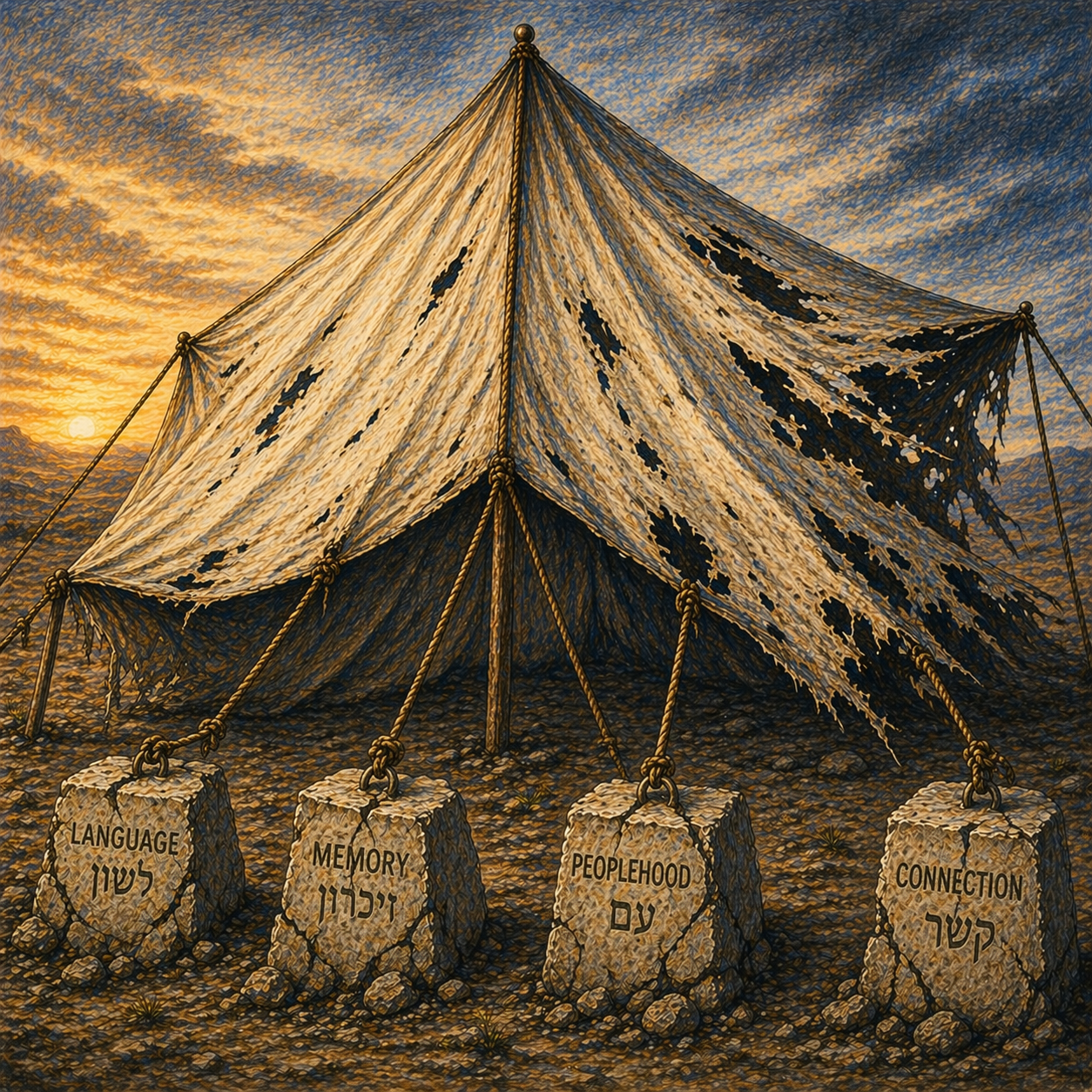
Israel is widely understood within Jewish life not only as a country, but as a realized vision that has existed for millennia. In a 2024 AJC resource called 5 Facts About the Jewish People’s Ancestral Connection to the Land of Israel they write:
“The establishment of the State of Israel in 1948 realized the long-held dream of a Jewish homeland, and it has since become the center of Jewish identity and culture for millions of Jews worldwide. Israel is seen as a place of refuge, a cultural renaissance, and a symbol of Jewish self-determination.”
The Risk of Losing History
There is more at risk than physical human safety. Jewish connection to the land is not only textual, but it is also historical and physical as repeatedly proven with archaeological evidence . Major Jewish organizations, academic scholars, and rabbinic leadership point to both artifacts which affirm long-standing Jewish presence, such as these two pieces:
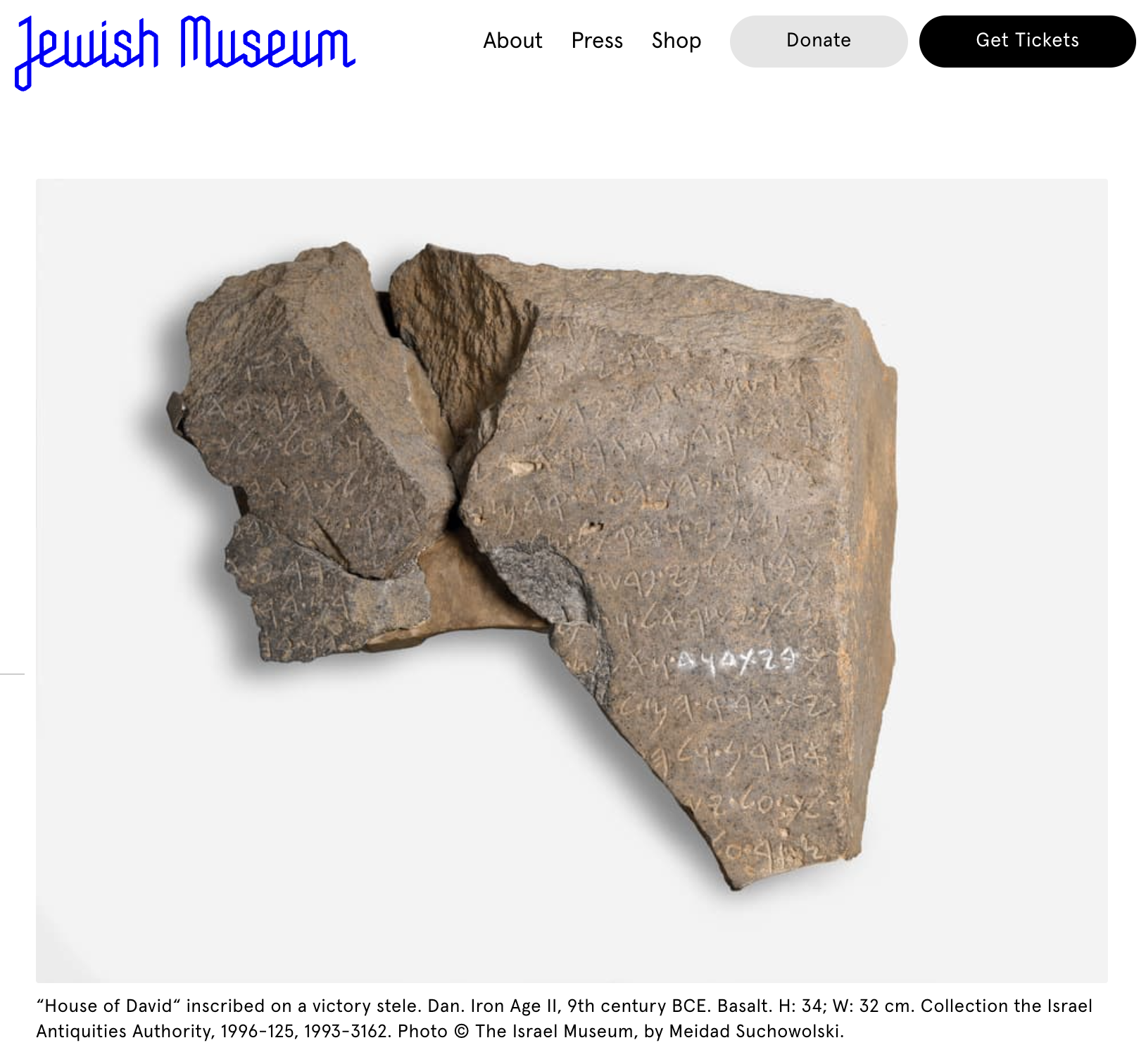
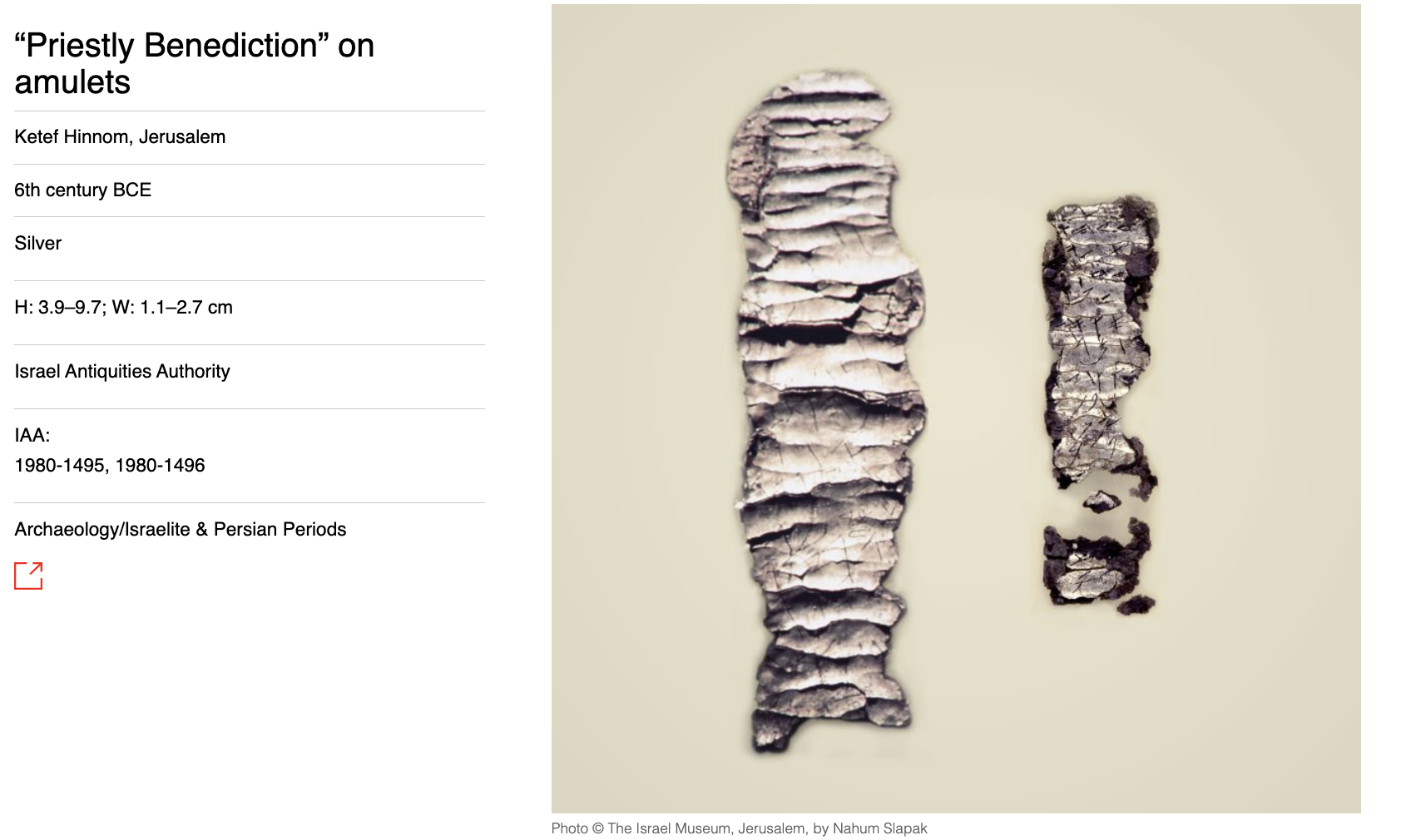
It is well known that Israeli society holds archaeological artifacts of supremely high importance. So much so, that no construction in Israel can be conducted — whether in a Jewish, Muslim, or Christian neighborhood — must be preceded by an archaeological survey. If significant remains of any period (Ottoman, Byzantine, Roman, etc.) are found, the state must document or preserve them. This work is supervised by the Israel Antiquities Authority (IAA). In an interview with IAA Head Archaeologist, Gideon Avni, he shares about the Salvage Excavation policies: “If you have antiquities on your property — whether you own a house or you are a municipality or the government — any discovered sites and artifacts are owned by the State of Israel, through the IAA, which is the governmental agency that has a duty to protect antiquities.”
It is not only Jewish archeological treasures that Israel protects. In the article, The Preservation and Exhibition of Christian Church Sites in Israel, Mayumi Okada writes, “it has not been discussed enough how non- Jewish sites, such as those of Christians, Muslims and other religious groups, have been treated from the standpoint of heritage management.”
If IRGC and their proxies should succeed in their goals of wiping out Israel (see Hezbollah Charter’s language: “entity is obliterated” and Hamas Charter “There is no solution for the Palestinian question except through Jihad”) the safekeeping of archeology is also at risk. Their lack of respect and concern for heritage sites and artifacts is well-documented.
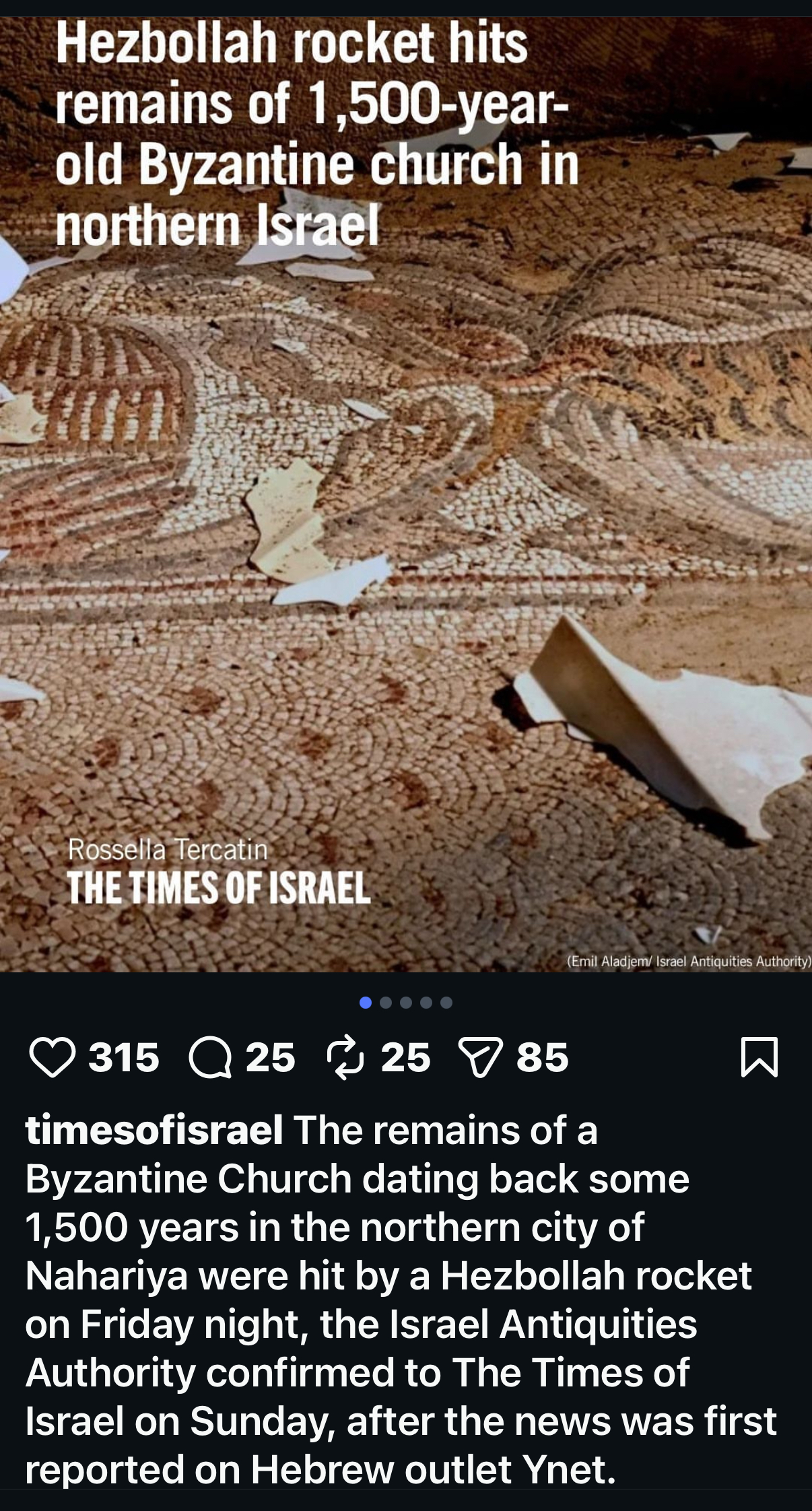
In April 2026, multiple news outlets reported that “the remains of a Byzantine Church dating back some 1,500 years in the northern city of Nahariya were hit by a Hezbollah rocket on Friday night, the Israel Antiquities Authority confirmed to The Times of Israel on Sunday, after the news was first reported on Hebrew outlet Ynet.
The rocket hit a modern structure inaugurated in 2022 to preserve an impressive mosaic floor spanning over 500 square meters (nearly 5,400 square feet) and make it accessible to the public.” (Times of Israel) Here are other examples over time of IRGC and proxy disregard for archeological sites:
- A major report by the Combating Terrorism Center (CTC) at West Point, titled “Digging In and Trafficking Out,“ identifies that Shia militias and proxies have been involved in the illicit antiquities trade. The report notes that “antiquities markets in Lebanon are flush with freshly looted artifacts” from Syria, often moving through Hezbollah-controlled areas like the Bekaa Valley.
- Similarly, in “Tearing the Historic Fabric: The Destruction of Yemen’s Cultural Heritage” (Published by the Antiquities Coalition in collaboration with the General Organization for the Preservation of Historic Cities of Yemen), the AC has documented how Houthi forces (an IRGC proxy) have used ancient sites, including the UNESCO World Heritage city of Sana’a, as military barracks or weapons depots, effectively turning “protected history into a legitimate military target.”
- In April 2013, one of the military wings of Hamas, seized 3,000 year old ruins to use as a training camp. The ruins, which were discovered in 1997 but never fully excavated due to the political instability and violence in the Gaza Strip, boast exquisite mosaics and ancient pillars. “It is devastating, very devastating to hear this site is under threat after all the efforts we made to have it recognised by Unesco,” said one Palestinian official based in the West Bank. “It makes us look bad, the Palestinians, that we cannot preserve our own sites.” In contrast, Muhammad Khela, a Deputy Minister of Tourism in the Gaza Strip, told the Al-Monitor news site that his ministry had agreed to the area being used to train militants. “We can’t stand as an obstacle in the way of Palestinian resistance…”
- In a May 2018 report to the UN, Ambassador Dr. Ahmed Awad Binmubarak, said, “Terrorists and extremists alike, also destroy cultural heritage sites for ideological or propaganda reasons, while looting and trafficking antiquities to finance additional brutalities. Yemen is especially vulnerable to this cultural racketeering. Organized criminals, armed insurgents, and violent groups are plundering our treasures and are smuggling them overseas. Let us combat this crime against civilization and work together for long-term solutions to protecting our cultural heritage and in a manner writ large.”
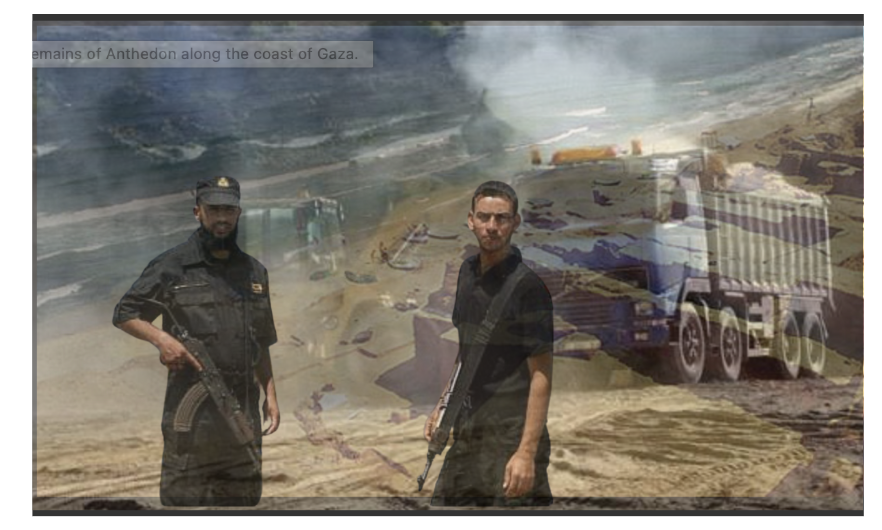
- In 2017, archeologists lamented the destruction Gaza’s earliest archaeological site — a rare 4,500-year-old Bronze Age settlement. “There is a clear destruction of a very important archaeological site,” said Palestinian archaeology and history professor Mouin Sadeq, who led three excavations at the site along with French archaeologist Pierre de Miroschedji after its accidental discovery in 1998. “I don’t know why the destruction of the site was approved.” The linked article asserts: “Hamas officials say they have no choice but to develop the area, making archaeology a low priority.”
space
The Risk of Losing Safety
This Law of Return, as mentioned above, codifies the Zionist principle that Israel serves as a refuge and national home for all Jews globally.
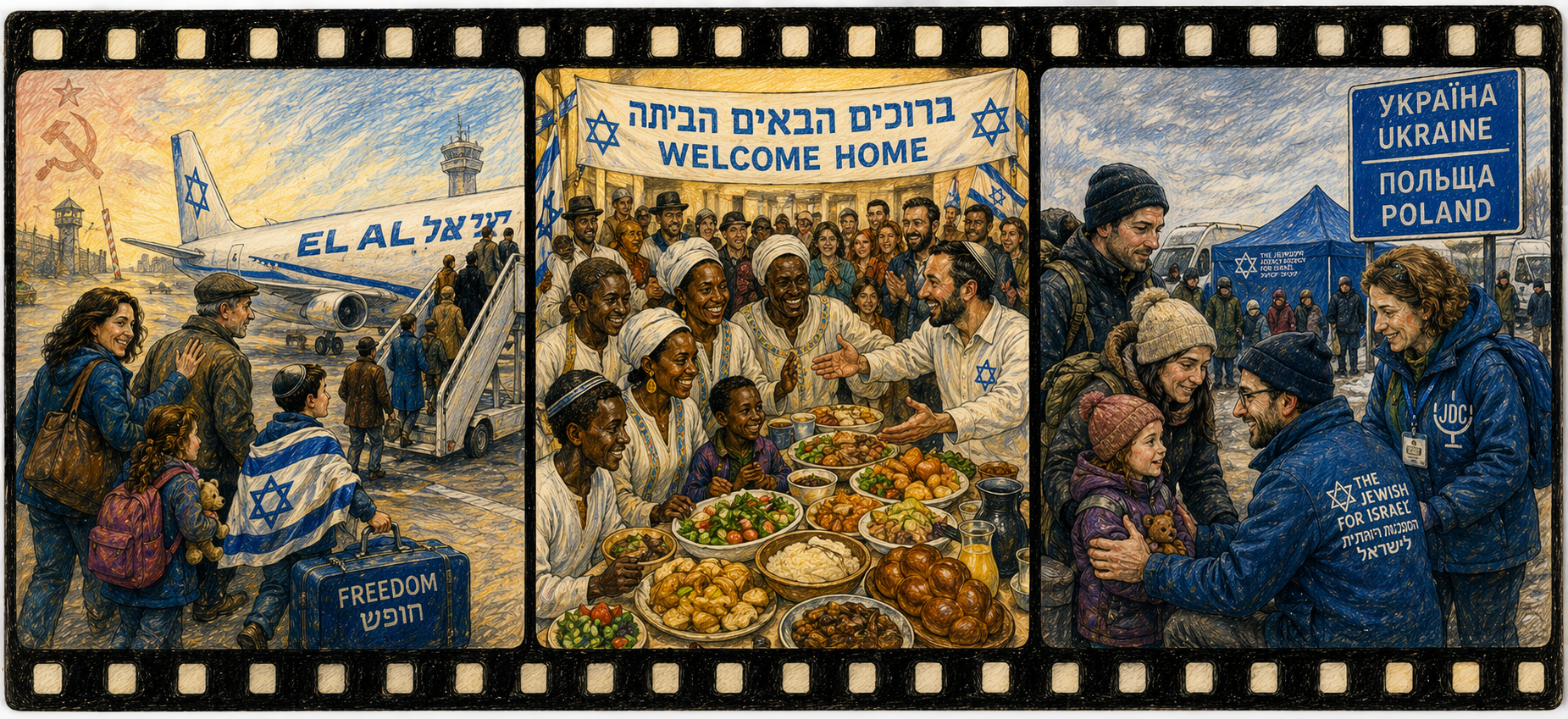
The reality that we need a place of refuge is one we cannot ignore. For most of Jewish history, Jews did not control the conditions of their own safety. The existence of a sovereign Jewish state has changed that. Medinat Yisrael is structured to protect:
- Jews being persecuted elsewhere [i.e. Soviet Jewry]
- Jews in danger of outside threats in the diaspora [i.e. Ethiopia and Ukraine]
- Jewish history via archaeological preservation
(see below for more detailed information on this issue)
In her book, As a Jew: Reclaiming Our Story from Those Who Blame, Shame, and Try to Erase Us, Sarah Hurwitz writes, “… while they offered detailed analyses of Israel’s flaws, some of which I agreed with, I was struck by how uninterested they seemed in thinking through the details of what would happen if Jews were stripped of power in Israel. They never provided a convincing answer to the obvious question of how, exactly, Jews without a state of their own would be safe in a part of the world where so many people wish to annihilate them.”

She also asserts, “When Jews lack a state of their own and have nowhere to go when persecuted, millions of them can be murdered by their fellow citizens while hundreds of millions of people worldwide do nothing to help.”
So while a Jew can live fully in the diaspora, and feel ambivalent about Israel, even strongly critiquing the policies of the State of Israel and still sit within the tent, we have a different challenge when the relationship itself is rejected. Not wrestled with. Not critiqued. But replaced or simply eliminated.
There is also a broader context that cannot be ignored.
In policy and security discussions, Israel is not only understood as a national home, but as part of a wider system of regional stability. U.S. congressional testimony notes that Israel’s efforts to constrain Iranian activity and counter proxy networks help advance shared security interests and limit the spread of destabilizing forces. The report says, “today the threats to Israel’s existence come from a broad array of forces with a diverse set of weapons — conventional and unconventional, symmetrical and asymmetrical — that are largely aimed at Israel’s civilian population. It is in America’s vital interest for Israel — our sole reliable democratic ally in the region — to have the military capabilities it needs to decisively defeat these enemies.”
Israel operates within a broader regional system in which states and alliances respond to shared security challenges. Within that system, it plays a role in constraining Iranian regional expansion, disrupting proxy networks such as Hezbollah and Hamas, and contributing to deterrence across an increasingly unstable landscape.
Analysts have documented how Iran relies on proxy forces to project power and destabilize the region, and how regional actors, including Israel, work to counter and contain those efforts. (See, for example, the Center for Strategic and International Studies on Iran’s proxy networks, the Washington Institute for Near East Policy on Israel’s “campaign between wars,” and Brookings on Iran’s regional proxy strategy.) This framing does not position Israel as acting alone, but as part of a wider system that shapes regional balance and the capacity to respond to destabilizing forces.
Taken together, these dynamics do not position Israel as acting alone, but as part of a wider system in which the containment of destabilizing forces has implications beyond the immediate region. When Iranian influence expands through proxy networks, its effects are not confined to a single border. And when that expansion is constrained, the resulting stability is likewise not confined to a single state.
This is not a claim that Israel “protects the world” in simple terms. It is a recognition that its role within this system shapes what becomes more or less possible, not only in its immediate surroundings, but across a broader network of allied societies.
It is that Israel exists within a system where its presence affects: regional balance, the projection of power by actors such as Iran, and the capacity of allied societies to respond to shared threats. Remove that structure, and the system does not remain neutral. It shifts. A very dangerous shift.
Misrepresentation in a Second Domain
This brings me back to misrepresentation.
When a Jew presents a Jesus-centered belief as fully compatible with Judaism, it reshapes how Judaism is understood. I believe something similar happens when Jewish connection to Eretz Yisrael is denied while still being presented as fully within Judaism.
That claim communicates that:
- the land is optional
- the relationship is interchangeable
- Jewish peoplehood can be detached from its historical center
Over time, that reshapes both internal identity and external perception.
The issue is not disagreement. It is recasting the framework. It is, in its own way, another kind of hole in the tent.
Patching the Holes
Judaism can hold: argument about HOW Medinat Yisrael was established. It can hold significant critique of the current government, the handling of the war with Hamas, the treatment of Palestinians in the disputed West Bank, the ongoing systemic microaggressions and oppressions of non-Jewish Israelis. It can hold a lot of “what ifs” (see my recent blog on this). It can hold people at the edges. But it cannot hold everything without losing its shape. There is a difference between:
- distance and disconnection
- struggle and substitution
- critique and elimination or replacement
- nuance and binaries
- fact and misinformation/exaggeration
(again, reminder to see the sidebar at the bottom)
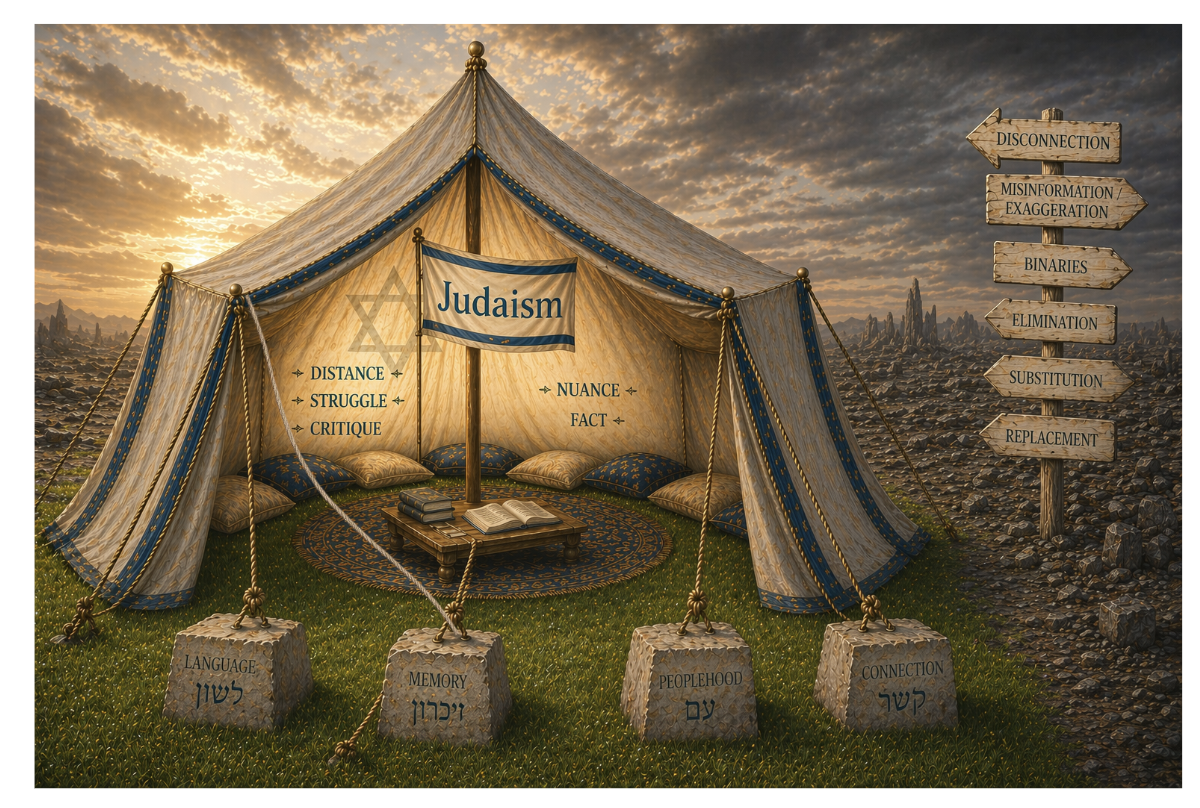
We have been willing to clearly name that difference and boundary in the domain of messianism. I am asking why we are so reluctant to name it in another.
Berger’s work and his book propose “a strategy to protect authentic Judaism from this assault” and in many ways, I am writing this as a way to advocate for the same as it relates to protecting authentic Judaism and the future of Jewish life as we know it from this internal assault of anti-Zionism.
When the storm comes, no one chooses the umbrella. We choose the structure with walls. Because without boundaries, there is no shelter.
And a tent does not fail all at once. It fails when the holes go unpatched.
spacer
spacer


Leave a Reply